Books Like The Golden Compass: 12 Fantasy Novels
If The Golden Compass captivated you with Lyra, the dæmons, and Pullman's richly imagined universe, these fantasy novels deliver the same sense of discovery and moral seriousness.

The Golden Compass is one of the defining fantasy novels of the past thirty years — not because of its adventure plot, but because of what Philip Pullman builds around it. A world where human souls walk beside their owners as animal companions called dæmons. A church that controls knowledge and hunts for a mysterious particle called Dust. A girl named Lyra who discovers that the most important lies told to children are the ones told for their own good. Pullman was doing something ambitious: writing a fantasy for young readers that took its readers seriously enough to engage with free will, consciousness, and the origins of human experience.
Finding books that offer the same combination — genuine wonder, a fully imagined world, and ideas that reward reflection — is harder than it sounds. The books below are chosen for different aspects of what makes Pullman’s trilogy work.
The Rest of His Dark Materials
#1 — The Subtle Knife — Philip Pullman
The second volume introduces Will Parry, a boy from our world who discovers a knife that can cut between parallel universes, and the city of Cittàgazze — a beautiful, empty world haunted by soul-devouring Specters. The Subtle Knife expands Pullman’s world-jumping framework and deepens the theological stakes. Lyra and Will’s parallel storylines are structured to converge gradually; the novel ends at one of the trilogy’s emotional peaks.
#2 — The Amber Spyglass — Philip Pullman
The conclusion resolves everything Pullman has built across two volumes and is his most philosophically explicit work — the land of the dead, the nature of consciousness, the war against the Authority. Some readers find it overextended; others consider it the trilogy’s best volume for exactly the same reason. Either way, essential reading after the first two.
The Foundations of Fantasy World-Building
#3 — A Wizard of Earthsea — Ursula K. Le Guin
A young boy on the archipelago world of Earthsea discovers his gift for magic and is sent to a school of wizardry on the island of Roke, where pride leads him to release a shadow that pursues him across the world. Le Guin’s novel is the most economical work of world-building in the fantasy tradition — every detail carries weight, nothing is wasted. The magic system (based on the true names of things) is as original as Pullman’s dæmons. For readers who want the depth of Pullman’s world-building achieved in 200 pages.
#4 — The Hobbit — J.R.R. Tolkien
The most accessible entry to Tolkien — a reluctant burglar, a party of dwarves, and a quest to reclaim a dragon-held mountain. The sense of world as a place with its own history that precedes and exceeds the story is something Tolkien invented for modern fantasy and that Pullman inherits. The Hobbit is lighter in tone than His Dark Materials but shares its quality of immersion: the feeling that you have arrived somewhere that was already there before you arrived.
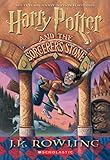
#5 — Harry Potter and the Sorcerer’s Stone — J.K. Rowling
The inevitable companion recommendation. Rowling’s world-building — the hidden magical society existing alongside the ordinary world, the detailed rules and history of Hogwarts, the feeling of a world with social texture — is closer to Pullman’s approach than Tolkien’s. Both series are concerned with institutions that claim to serve children while actually exploiting them, though Rowling’s is significantly gentler in its conclusions.
For Readers Who Want the Same Scale of Adventure
#6 — Eragon by Christopher Paolini
A teenage farm boy finds a dragon egg in the mountains, bonds with the hatchling, and is drawn into a war between an oppressive empire and the rebel Varden. Paolini wrote the first draft at fifteen, which explains both its derivative qualities (the Tolkien and Star Wars debts are clear) and its genuine excitement — it was written by someone who wanted to be living inside exactly this kind of adventure. For younger readers or adults who want the purest hit of fantasy adventure.
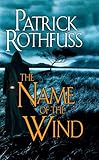
#7 — The Name of the Wind by Patrick Rothfuss
The most beautifully written epic fantasy of the twenty-first century, narrated by Kvothe — part musician, part arcanist, part legend — telling the story of how he became what he became. Rothfuss’s world has the same quality of depth as Pullman’s: the sense that this place has a history that the story is touching only obliquely. The University sequences in particular share Pullman’s interest in the politics of knowledge and who controls it. Note: the series is unfinished.
Fantasy That Takes Big Ideas Seriously
#8 — The Way of Kings by Brandon Sanderson
For readers who want epic scope and serious world-building at the highest level currently being attempted. Roshar is a world shaped by its storms, its history of near-extinction, and a magic system tied to the same storms. Sanderson’s ambition is comparable to Pullman’s: he is building something that rewards attention to detail across thousands of pages. Start here only if you’re ready for a multi-volume commitment.
If You Want Something More Contained
#9 — The Subtle Knife — already listed above
For the thematic strand specifically — the critique of institutional authority, the hidden truths that children are protected from — The Handmaid’s Tale (Atwood), Brave New World (Huxley), and 1984 (Orwell) are the adult fictional tradition that Pullman is working within and translating for younger readers. All three are on the site and serve as natural next reads for older fans of His Dark Materials who want that strand developed at length.
Frequently Asked Questions
What order should I read His Dark Materials?
Read His Dark Materials in order: The Golden Compass, The Subtle Knife, The Amber Spyglass. Then The Book of Dust trilogy (La Belle Sauvage, The Secret Commonwealth, and the forthcoming third volume), which expands the same universe. The Book of Dust is set partly before and partly after the events of His Dark Materials.
Is The Golden Compass suitable for adults?
Absolutely. Philip Pullman wrote His Dark Materials for younger readers but the theological and philosophical ambitions of the trilogy — its engagement with Milton's Paradise Lost, its critique of institutional religion, its ideas about consciousness and free will — have made it one of the most discussed works of fantasy at any age level. Many adults encounter it first as adults and consider it more intellectually substantial than most adult fantasy.
What fantasy series has the best world-building after His Dark Materials?
For world-building of comparable originality, A Wizard of Earthsea (Le Guin) is the closest in terms of depth achieved with economy. For sheer scale, The Way of Kings (Sanderson) or The Name of the Wind (Rothfuss) are the modern equivalents of Pullman's world-building ambition. For readers who want another multi-world, multi-reality framework, the Chronicles of Narnia function as the template Pullman was writing against.