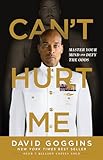
Editors Reads Verdict
Goggins's story is one of the most extreme self-transformation narratives ever documented, and his philosophy of mental hardness — however brutal — has helped millions of people push through their own limits.
What We Loved
- The transformation story is genuinely extraordinary and well-documented
- The 40% rule (you have more capacity than you think) is practically powerful
- Goggins's brutal honesty about his own shortcomings and failures is rare
- The accountability mirror concept is one of the most direct self-assessment tools available
Minor Drawbacks
- The extreme approach may not be healthy or appropriate for most people
- The conversational insert format (with Adam Skolnick) disrupts the narrative flow
- Goggins's philosophy can be misapplied as toxic motivation rather than genuine growth
Key Takeaways
- → The 40% rule: when your mind says stop, you are typically only 40% of your actual capacity
- → Accountability mirror: confront your own excuses and failures honestly, without justification
- → Cookie jar: deliberately recall past challenges you've overcome to fuel current effort
- → Callousing your mind through deliberate discomfort expands your tolerance for hardship
- → Your worst enemy is yourself — specifically, the part of you that chooses comfort over growth
| Author | David Goggins |
|---|---|
| Publisher | Lioncrest Publishing |
| Pages | 364 |
| Published | December 4, 2018 |
| Language | English |
| Genre | Memoir, Self-Help, Health |
| Difficulty | Beginner |
| Best For | Anyone seeking extreme motivation to push past comfort zones, with the caveat that Goggins's approach is demanding and not universally appropriate. |
How Can't Hurt Me Compares
Can't Hurt Me at a glance against 3 similar books readers weigh alongside it.
| Book | Author | Rating | Best for |
|---|---|---|---|
| Can't Hurt Me (this book) | David Goggins | ★ 4.7 | Anyone seeking extreme motivation to push past comfort zones, with the caveat |
| Born a Crime | Trevor Noah | ★ 4.8 | Anyone interested in apartheid South Africa, memoir as a form, questions of |
| Grit | Angela Duckworth | ★ 4.5 | Students, athletes, educators, parents, and anyone seeking to understand what |
| Outlive | Peter Attia | ★ 4.7 | Adults of any age who want to approach their long-term health proactively |
The Most Extreme Self-Transformation in Print
David Goggins did not start from a position of advantage. He grew up in a household with an abusive father, experienced poverty and racism, struggled in school, and by his early twenties was working as a pest control sprayer, obese and without prospects. He was 297 pounds when he decided to become a Navy SEAL.
He lost 106 pounds in three months.
Can’t Hurt Me is the account of that transformation and everything that followed: three attempts at SEAL training (the third successful), a career as one of the military’s most accomplished special operations soldiers, and a subsequent life as an ultramarathon runner who has completed more than sixty races of a hundred miles or more, often in record times.
The 40% Rule
Goggins’s most famous psychological concept is the 40% rule: the idea that when your mind tells you to stop — when you’re exhausted, in pain, done — you are typically at about 40% of your actual physical and psychological capacity. The remaining 60% is locked behind a mental barrier that most people never push through.
This principle is backed by exercise physiology: the brain’s fatigue signals are protective rather than accurate — they fire well before actual physiological limits are reached. Goggins’s training methodology involves systematically practicing the navigation of these signals, extending his capacity by refusing to stop when his mind first suggests it.
The Accountability Mirror
One of the book’s most practical tools is the accountability mirror: Goggins describes looking at himself in a mirror every morning and confronting, honestly, the gap between who he was and who he wanted to be. Not with self-criticism for its own sake, but with the kind of honesty that produces real action rather than comfortable self-deception.
This simple practice — daily confrontation with the stories we tell ourselves to avoid growth — is one of the most psychologically honest self-assessment methods available.
A Word of Caution
Goggins’s approach is extreme by design, and it has produced extraordinary results in his own life. But his methods include training through injuries that required subsequent surgery, sleep deprivation that damaged his health, and psychological rigidity that he acknowledges has cost him in relationships. His philosophy is most useful as inspiration and occasional catalyst, not as a permanent operating mode.
Final Verdict
Can’t Hurt Me is one of the most motivating books ever written — an account of human will that makes your own obstacles feel genuinely surmountable. Apply the 40% rule; moderate the extreme.
Our rating: 4.7/5 — Extraordinary motivation from an extraordinary person. Use it to expand your limits, not to punish yourself.
A Memoir Built to Provoke
Can’t Hurt Me is part autobiography, part motivational manifesto, and its force comes from the gap between where Goggins started and what he made himself into. Raised amid poverty and abuse, overweight and directionless, he remade himself into a Navy SEAL and an ultra-endurance athlete through a regime of relentless self-confrontation, and the book recounts that transformation as both story and challenge. Interspersed with the narrative are direct “challenges” to the reader, which makes the book function less as a memoir to absorb than as a programme to act on.
The Philosophy of Callousing the Mind
Goggins’s central idea is that most people stop at perhaps forty percent of their capacity, and that growth comes from deliberately seeking out discomfort to “callous the mind” against it. His concepts — the accountability mirror, taking souls, the cookie jar of past victories — are tools for pushing past the point where the body and mind beg to quit. It is an uncompromising, sometimes harsh philosophy, and its power lies in the example: Goggins has done the extreme things he describes, which lends the exhortations a credibility that softer motivational writing lacks.
Who It’s For, and How to Read It
This is a polarising book by design, and readers should know what they are getting. Its relentless intensity is inspiring to some and exhausting or even troubling to others, and the celebration of pushing through all limits sits uneasily with what is known about rest, recovery, and mental health. Taken as one extreme data point about human capacity rather than a universal prescription — and read for its galvanising example rather than as a balanced guide to wellbeing — it is a genuinely motivating account of self-transformation that has driven many readers to attempt more than they thought possible.
An Extreme Data Point, Not a Universal Plan
The honest way to recommend Can’t Hurt Me is as one extreme example of human capacity rather than a template anyone should copy wholesale. Goggins has genuinely done the punishing things he describes, which gives the book a credibility softer motivational writing lacks, and his core idea — that most people quit far short of their real limits — can genuinely shift what a reader believes is possible. But the relentless intensity that inspires some readers exhausts or troubles others, and the gospel of pushing through every limit sits awkwardly beside what is known about rest, recovery, and mental health. Read for its galvanising example and adapted to your own life rather than swallowed whole, it is a powerful account of self-transformation that has driven many to attempt more than they thought they could.
Reading Guides
Frequently Asked Questions
What is "Can't Hurt Me" about?
The memoir of Navy SEAL and ultramarathon runner David Goggins — from a traumatic childhood and an overweight, unfulfilled existence to becoming one of the world's elite endurance athletes.
Who should read "Can't Hurt Me"?
Anyone seeking extreme motivation to push past comfort zones, with the caveat that Goggins's approach is demanding and not universally appropriate.
What are the key takeaways from "Can't Hurt Me"?
The 40% rule: when your mind says stop, you are typically only 40% of your actual capacity Accountability mirror: confront your own excuses and failures honestly, without justification Cookie jar: deliberately recall past challenges you've overcome to fuel current effort Callousing your mind through deliberate discomfort expands your tolerance for hardship Your worst enemy is yourself — specifically, the part of you that chooses comfort over growth
Is "Can't Hurt Me" worth reading?
Goggins's story is one of the most extreme self-transformation narratives ever documented, and his philosophy of mental hardness — however brutal — has helped millions of people push through their own limits.
Ready to Read Can't Hurt Me?
Check the current price on Amazon.
Check Price on Amazon (paid link)Prices and availability are subject to change. See Amazon for current price.
Review last updated: