Where to Start with Daniel Kahneman: A Reading Guide
Where to start with Daniel Kahneman — whether to begin with Thinking, Fast and Slow or Noise. A complete reading guide to the Nobel Prize-winning behavioural economist.
By Lena Fischer
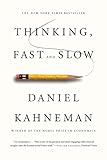
Daniel Kahneman (1934–2024) was the Israeli-American psychologist and Nobel laureate whose career — conducted primarily at Princeton and in collaboration with Amos Tversky — established the field of behavioural economics and produced the most comprehensive account of human cognitive biases in the psychological literature. His popular masterwork, Thinking, Fast and Slow (2011), synthesises forty years of research into a framework accessible to general readers and has sold over ten million copies worldwide. He was awarded the Nobel Prize in Economic Sciences in 2002 for his work on decision-making under uncertainty, despite being a psychologist rather than an economist — a recognition of how thoroughly his research had transformed the field of economics.
Where to Start: Thinking, Fast and Slow (2011)
The essential Kahneman — and one of the most important books on human cognition ever written for a general audience. The framework is the two-system model: System 1, which operates automatically (producing impressions, recognising patterns, making emotional responses), and System 2, which operates deliberately (doing effortful reasoning, following rules, checking System 1’s conclusions). Most of our thinking is done by System 1, which is efficient and usually correct — and which produces systematic errors in precisely predictable circumstances.
Kahneman explains the specific errors: anchoring (the first number you encounter influences all subsequent estimates), the availability heuristic (you judge probability by how easily examples come to mind), the representativeness heuristic (you judge category membership by similarity to a prototype, ignoring base rates), the planning fallacy (you underestimate how long things will take), loss aversion (losses loom larger than equivalent gains), the fourfold pattern (different weighting of probabilities at different levels), and dozens more. Each is explained with experiments you can run in your own head, which makes the book unusually interactive for popular science writing.
The later sections on expert intuition (when System 1’s automatic pattern recognition is reliable, and when it is not), on the difference between the experiencing self and the remembering self, and on well-being and its measurement are Kahneman’s most philosophically rich material. The book is comprehensive and demanding; it rewards reading slowly.
Noise (2021)
The follow-up — co-authored with Cass Sunstein (legal scholar) and Olivier Sibony (business strategy consultant). Where Thinking, Fast and Slow examines bias (systematic directional error), Noise examines variability in judgements that should be consistent: different doctors give different diagnoses to the same patient; different judges impose radically different sentences for the same crime; different insurance adjusters assess the same claim at vastly different values. Noise is the unexamined equivalent of bias, and the book argues it is equally damaging in professional contexts. More practically oriented than the first book; more directly applicable to organisational decision-making.
Why Thinking, Fast and Slow Is the Ideal First Book
For a reader new to Daniel Kahneman, Thinking, Fast and Slow is the ideal and essential first book because it is his landmark work, one of the most influential books on the mind ever written, and the fullest expression of his groundbreaking research into how we think and decide. A Nobel laureate whose work founded much of behavioral economics, Kahneman presents in Thinking, Fast and Slow his influential model of the two systems of thought, the fast, intuitive system and the slow, deliberate system, and the many ways in which our thinking is systematically biased. As an entry point, it is the essential and natural place to begin, for it is Kahneman’s landmark and defining work, the comprehensive account of his groundbreaking research. It welcomes the newcomer with its profound insights, its influential framework, and its rich research, drawing the reader into a transformative understanding of the mind. It is his most important book and the one that best represents his work, so that the new reader encounters Kahneman’s central ideas directly. For the newcomer, then, Thinking, Fast and Slow is the natural and ideal starting point.
What to Expect as a New Reader
As a new reader, you can expect Thinking, Fast and Slow to be a profound, rich, and influential account of how the mind works, grounded in groundbreaking research. You can expect Kahneman’s central framework, the model of two systems of thought, the fast, automatic, intuitive system and the slow, effortful, deliberate system, and the interplay between them. You can expect a wealth of insight into the systematic biases and errors of human thinking, for Kahneman draws on decades of research to reveal the many ways in which our intuitions mislead us. You can expect rigor and depth, for the book is grounded in genuine science and rewards careful reading, while remaining accessible to the general reader. You can expect a transformative understanding, for the book changes how readers understand their own minds and decisions. You should expect a substantial and serious book that rewards the engaged reader. Expect, in short, a profound, rich, and influential account of how the mind works, grounded in groundbreaking research, the essential introduction to Kahneman’s ideas.
Going Deeper After Your First Book
Once Thinking, Fast and Slow has given you Kahneman’s account of the two systems and the biases of thought, the reader who wishes to go deeper can explore his other work and the wider field of behavioral economics and the psychology of judgment that his research founded. His later work, written with collaborators, extends his investigation into further dimensions of human judgment and its flaws, while the broad field of behavioral economics and decision science builds in large part on his pioneering research. Reading more deeply deepens your engagement with the psychology of judgment and decision-making, but Thinking, Fast and Slow provides the foundational, comprehensive account. His central insights, the two systems and the systematic biases of thought, underlie much of the field, and the reader who has absorbed them possesses the key. Building your reading journey from Thinking, Fast and Slow is a matter of pursuing its ideas through Kahneman’s further work and the wider field of behavioral economics. The reader who begins with Thinking, Fast and Slow will have a foundational understanding of how the mind thinks, judges, and decides.
Reading Daniel Kahneman
Begin with Thinking, Fast and Slow — it is the most comprehensive account of human cognition available to a general reader and the foundation on which all subsequent discussion of cognitive bias rests. Read slowly; pause after each section to apply the ideas to your own thinking. Read Noise afterward for the practical extension. The two books together constitute the most important pair of popular psychology texts published in the twenty-first century.
Frequently Asked Questions
Where should I start with Daniel Kahneman?
Thinking, Fast and Slow (2011) is the only starting point — Kahneman's comprehensive account of the two systems that govern human cognition, drawing on decades of research in behavioural economics and cognitive psychology. System 1 operates automatically, quickly, and emotionally; System 2 operates deliberately, slowly, and rationally. The book explains how these systems interact, when they produce good decisions, and when they produce predictable errors — and it is the most important book on human cognition and decision-making published in the twenty-first century. Noise (2021) is the best follow-up, co-authored with Cass Sunstein and Olivier Sibony.
What is Thinking, Fast and Slow about?
Thinking, Fast and Slow (2011) presents Kahneman's dual-process theory of cognition: System 1 thinking is fast, automatic, intuitive, and emotionally driven; System 2 thinking is slow, deliberate, logical, and effortful. The book explains how these two systems interact and when each is dominant — and more importantly, how System 1's efficiency creates systematic cognitive biases (anchoring, availability heuristic, confirmation bias, the planning fallacy, loss aversion) that lead to predictable errors in judgement. Kahneman draws on over forty years of research, much of it conducted with his long-term collaborator Amos Tversky (who died in 1996 and would have shared Kahneman's 2002 Nobel Prize).
What is Noise about?
Noise (2021), co-authored with Cass Sunstein and Olivier Sibony, extends Kahneman's analysis of decision-making by introducing the concept of noise alongside bias. Bias is systematic error (always in the same direction); noise is random error (variability in judgements that should be consistent). In professional contexts — medicine, law, finance, insurance — noise is as damaging as bias but far less studied. The book argues that most organisations have far more noise in their decision-making than they realise, and offers interventions for reducing it. More practically oriented than Thinking, Fast and Slow; best read after it.
Is Thinking, Fast and Slow difficult to read?
Thinking, Fast and Slow is accessible to general readers who have no prior training in psychology or economics — Kahneman writes clearly and uses specific, vivid examples for each concept. However, it is substantial (over 400 pages) and covers a large number of distinct cognitive phenomena, each requiring careful attention. Most readers find it rewarding but slow; it is not a book to read quickly. Kahneman himself has said that his goal was to give readers a vocabulary for discussing cognitive errors, and the book achieves this: people who have read it have specific language for phenomena they previously experienced without being able to name.