Where to Start with Dan Ariely: A Reading Guide
Where to start with Dan Ariely — whether to begin with Predictably Irrational or The Upside of Irrationality. A complete reading guide to the behavioural economist.
By Lena Fischer
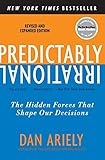
Dan Ariely (born 1967) is the Israeli-American professor of psychology and behavioural economics at Duke University whose Predictably Irrational (2008) — an account of his research into the systematic irrationalities that shape human decision-making — became one of the defining popular science books of its decade, helping to establish behavioural economics as a field of widespread public interest. Ariely’s research was shaped partly by his recovery from severe burns sustained in an accident at age eighteen; his observations about the psychology of pain treatment during his hospitalisation became foundational to his academic work.
Where to Start: Predictably Irrational (2008)
The essential Ariely — and one of the best introductions to behavioural economics for general readers. The book’s central proposition is that human irrationality is not random but structured: we make the same kinds of mistakes in the same kinds of situations, which means those mistakes are predictable and, once understood, partially correctable.
Each chapter presents an experiment: how a free zero adds disproportionate value to any offer; how the first price we’re shown for anything (an anchor) shapes our willingness to pay for it forever after; how switching from social norms to market norms in a relationship changes its entire character; how sexual arousal reduces the ability to make thoughtful decisions; how ownership inflates perceived value; how the anticipation of a good experience differs from the experience itself.
The writing is unusually engaging for an economics-adjacent book — Ariely is a natural storyteller, and his experiments often have elegantly counterintuitive designs. The book does not require any economics or psychology background; the only requirement is curiosity about why people (including the reader) consistently fail to act in their own interest.
For readers interested in decision-making, consumer psychology, or the gap between intentions and actions, Predictably Irrational is among the best starting points in popular science.
The Upside of Irrationality (2010)
The follow-up — examining the cases where our irrationality works in our favour, and extending the framework to workplace motivation and long-term decision consequences. The IKEA effect, the power of meaning in work, why big bonuses can hurt performance. Standalone, but enriched by reading the first book.
Why Predictably Irrational Is the Ideal First Book
For a reader new to Dan Ariely, Predictably Irrational is the ideal first book because it is his most influential and engaging work and the fullest expression of his central subject, the systematic and predictable ways in which human beings behave irrationally. A behavioral economist, Ariely presents in Predictably Irrational the surprising finding that our irrationality is not random but follows consistent, predictable patterns, and he demonstrates these patterns through a series of ingenious experiments and engaging examples. As an entry point, it is ideal because it lays out this fascinating subject clearly and entertainingly, drawing on Ariely’s own research to reveal the hidden forces that shape our decisions in ways we do not realize. It welcomes the newcomer with its surprising insights, its engaging experiments, and its entertaining style, making the science of irrational behavior both illuminating and fun. It is his best-known book and the one that best represents his approach, so that the new reader encounters Ariely’s central subject from the first. For the newcomer, then, Predictably Irrational is the natural and ideal starting point, the engaging book that reveals the predictable patterns of our irrationality.
What to Expect as a New Reader
As a new reader, you can expect Predictably Irrational to be an engaging and surprising exploration of human irrationality, drawing on ingenious experiments to reveal the systematic ways in which we behave irrationally. You can expect Ariely’s central insight, that our irrationality is not random but follows consistent, predictable patterns, and you can expect these patterns to be demonstrated through a series of clever experiments and engaging examples drawn from everyday life. You can expect surprising findings, for Ariely reveals the hidden forces, the biases and influences we do not realize are shaping us, that affect our decisions about money, relationships, choices, and much else. You can expect an engaging and entertaining style, for Ariely writes with humor and clarity, making the science approachable and enjoyable. You can expect insights with practical relevance, for understanding our predictable irrationality can help us make better decisions. Expect, in short, an engaging and surprising exploration of the predictable patterns of human irrationality, an entertaining and illuminating introduction to Ariely’s work.
Going Deeper After Your First Book
Once Predictably Irrational has introduced you to Ariely’s subject, the reader who wishes to go deeper can explore his other books, which continue his engaging investigation of human irrationality and behavior, applying the same combination of ingenious experiments and entertaining storytelling to further dimensions of how we think and act. His other work explores the irrational forces that shape our behavior in areas such as honesty and dishonesty, work and motivation, and decision-making, in the same accessible and engaging style. Reading these after Predictably Irrational deepens your engagement with Ariely’s distinctive approach, the use of clever experiments and entertaining storytelling to illuminate the hidden, predictable patterns of human behavior. His characteristic subject and method run through his work, and the reader who has enjoyed Predictably Irrational will find the same surprising insights in his other books. Building your reading journey through Ariely’s work is a matter of following his investigation of human irrationality across the various domains of behavior. The reader who begins with Predictably Irrational and continues through his work will find a consistently engaging and illuminating guide to the predictable irrationality of human behavior.
Reading Dan Ariely
Begin with Predictably Irrational — it is his foundational work and the right introduction. Read The Upside of Irrationality after for a more nuanced look at the benefits of irrationality. Both books stand alone.
For the full Dan Ariely bibliography, reviews, and biography, visit the Dan Ariely author page on Editors Reads.
Affiliate disclosure: Links to Amazon on this page are affiliate links. We earn a small commission at no extra cost to you.
Frequently Asked Questions
Where should I start with Dan Ariely?
Predictably Irrational (2008) is the essential starting point — Ariely's examination of the hidden forces that shape human decisions, demonstrating that irrational behaviour follows predictable patterns that can be understood and anticipated. The foundational work in popular behavioural economics; one of the defining books of its decade. The Upside of Irrationality is the natural follow-on, applying the same framework to different domains.
What is Predictably Irrational about?
Predictably Irrational presents a series of Ariely's experiments revealing how human decision-making departs from the rational model in systematic, predictable ways. Key findings include: the power of free (zero-cost options are disproportionately attractive), the effect of arbitrary anchors on pricing expectations, the difference between social norms and market norms, the impact of arousal on decision-making, the way ownership inflates perceived value (the endowment effect), and the difference between expected and experienced pleasure. Each chapter is based on actual experiments; the prose is accessible and often funny.
What is The Upside of Irrationality about?
The Upside of Irrationality (2010) is Ariely's second major book — applying the behavioural economics framework to workplace motivation, long-term consequences of short-term decisions, and the surprising ways that irrational behaviour can be beneficial. Where Predictably Irrational focuses on the costs of irrationality, this book examines cases where our departures from rationality produce unexpected advantages. The IKEA effect (we value things more highly when we've built them ourselves) is one of its most cited findings.
How does Ariely compare to other behavioural economics writers?
Ariely is among the most accessible and entertaining writers in the behavioural economics genre, alongside Daniel Kahneman (Thinking, Fast and Slow) and Richard Thaler (Nudge). Ariely writes with more personal narrative and humour than Kahneman; his books are lighter but cover similar territory. Predictably Irrational is the right starting point for readers new to the field; Kahneman's Thinking, Fast and Slow is the more comprehensive and rigorous treatment for readers who want to go deeper.