Where to Start with Morgan Housel: A Reading Guide
Where to start with Morgan Housel — whether to begin with The Psychology of Money or Same As Ever. A complete reading guide to the personal finance author.
By Marcus Webb
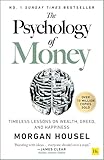
Morgan Housel (born 1984) is the American financial writer and venture partner whose The Psychology of Money (2020) — published by Harriman House and initially marketed through Housel’s Collaborative Fund blog — became one of the bestselling personal finance books of the decade, selling over five million copies and demonstrating that the most useful financial writing addresses not investment mechanics but human psychology. Housel previously wrote for The Wall Street Journal and The Motley Fool; his writing is characterised by historical breadth, accessible prose, and a focus on the principles that determine financial outcomes rather than the specific tactics. His work sits at the intersection of personal finance, behavioural economics, and popular history.
Where to Start: The Psychology of Money (2020)
The essential Housel — and the most useful personal finance book published in the last decade for readers who are not already deeply knowledgeable about investing. The book’s premise is simple: the reason most people make poor financial decisions is not a lack of information but a set of psychological tendencies that are entirely predictable and addressable.
The nineteen essays cover the full range of financial psychology: the way that seeing your investments drop 30% in a bear market feels more painful than a 30% gain feels good; the way that appearing wealthy and actually being wealthy are almost completely opposed (the people driving expensive cars are often the ones with the least savings); the compounding argument (why starting early matters so much more than earning high returns); and the ‘enough’ question (the failure mode of many high earners who keep raising their lifestyle spending until there is never anything left).
Housel writes with historical examples — the different financial outcomes of different people in the same generation, the way timing and luck shape wealth — and without the jargon that makes financial writing inaccessible. The book’s ideas are genuinely useful; its format (short chapters, accessible prose) makes them easy to absorb.
Same As Ever (2023)
Housel’s second book — the same psychological and historical lens applied to human behaviour more broadly. Essays on risk, narrative, expectations, and how consistent human psychology produces predictable outcomes even in unpredictable situations.
Why The Psychology of Money Is the Ideal First Book
For a reader new to Morgan Housel, The Psychology of Money is the ideal first book because it is his breakout work and the fullest expression of his distinctive insight, that success with money depends far more on behavior and psychology than on intelligence or technical knowledge. Through a series of short, engaging essays, The Psychology of Money explores the timeless lessons of wealth, greed, and happiness, arguing that how we behave with money, our patience, our temperament, our relationship to greed and contentment, matters more than what we know. As an entry point, it is ideal because it lays out this powerful insight clearly and memorably, in short accessible chapters that distill wisdom about money and behavior into engaging and quotable form. It welcomes the newcomer with its accessible essays, its memorable lessons, and its focus on behavior rather than technical complexity, making the wisdom of money approachable for everyone. It is his best-known book and the one that best represents his approach, so that the new reader encounters Housel’s central insight from the first. For the newcomer, then, The Psychology of Money is the natural and ideal starting point.
What to Expect as a New Reader
As a new reader, you can expect The Psychology of Money to be an accessible and engaging collection of short essays on the behavior and psychology of money, distilling timeless lessons about wealth, greed, and happiness. You can expect Housel’s central insight, that success with money depends far more on behavior and psychology, on patience, temperament, and one’s relationship to greed and contentment, than on intelligence or technical knowledge. You can expect short, accessible essays, for the book is structured as a series of brief, focused chapters, each exploring a single lesson in engaging and memorable form. You can expect timeless wisdom rather than technical instruction, for Housel is concerned with the enduring truths of how we behave with money rather than with specific strategies or formulas. You can expect engaging storytelling and memorable, quotable lessons that illuminate the human relationship to wealth. Expect, in short, an accessible and engaging collection of short essays on the psychology of money, distilling timeless wisdom about wealth and behavior, a memorable and illuminating introduction to Housel’s insight.
Going Deeper After Your First Book
Once The Psychology of Money has introduced you to Housel’s insight into money and behavior, the reader who wishes to go deeper can explore his other work, which extends his distinctive approach, the distillation of timeless wisdom into short, engaging essays, to broader questions of how the world works and how we can navigate it. His subsequent work applies the same gift for memorable insight and accessible essay to wider questions of behavior, history, and the enduring patterns of human life and the world. Reading these after The Psychology of Money deepens your engagement with Housel’s distinctive approach, the focus on timeless wisdom, behavior, and the patterns that endure, conveyed in accessible and memorable form. His characteristic gift for distilling wisdom into engaging essays runs through his work, and the reader who has valued The Psychology of Money will find the same insight in his other writing. Building your reading journey through Housel’s work is a matter of following his distillation of timeless wisdom from money into the broader patterns of life and the world. The reader who begins with The Psychology of Money and continues through his work will find a consistently wise and accessible guide to behavior, wealth, and the enduring patterns of life.
Reading Morgan Housel
Begin with The Psychology of Money — it is his essential work and the most useful financial psychology book available. Read Same As Ever when you want to extend his framework beyond personal finance to human behaviour generally.
For the full Morgan Housel bibliography, reviews, and biography, visit the Morgan Housel author page on Editors Reads.
Affiliate disclosure: Links to Amazon on this page are affiliate links. We earn a small commission at no extra cost to you.
Frequently Asked Questions
Where should I start with Morgan Housel?
The Psychology of Money (2020) is the essential starting point — Housel's collection of essays about the ways human psychology interferes with good financial decisions. The book's central argument is that financial success has less to do with intelligence or information than with behaviour: understanding your own relationship with money, managing your emotional responses to risk and reward, and recognising the role of luck and timing in wealth accumulation. One of the most widely read and most recommended personal finance books of the decade.
What is The Psychology of Money about?
The Psychology of Money is structured as nineteen short essays, each examining a different aspect of how people think about and mismanage money. Key ideas include: the distinction between being wealthy (having unspent resources) and looking wealthy (spending on visible status); the importance of long time horizons and the power of compounding; the role of luck in financial outcomes; and the insight that knowing what to do is not the same as being able to do it. Written accessibly, without technical financial jargon, and focused on principles rather than specific investment advice.
What is Same As Ever about?
Same As Ever (2023) is Housel's second book — applying his psychological and historical lens to human behaviour more broadly, not just finance. The central argument is that while specific events are unpredictable, human responses to certain situations are highly predictable because they are products of consistent human psychology. Essays on risk, narratives, expectations, and the relationship between stories and belief. A natural follow-up to The Psychology of Money for readers who want more of his thinking.
Is The Psychology of Money for beginners or experienced investors?
The Psychology of Money is explicitly not a technical investing book — it contains no specific investment advice, no portfolio recommendations, and no complex financial models. It is useful for readers at any level of financial sophistication precisely because it focuses on the psychological and behavioural dimensions of financial decisions, which affect beginners and experienced investors equally. It is best read as a companion to more practical personal finance books rather than as a substitute for them.


