Where to Start with Richard Thaler and Cass Sunstein: A Reading Guide
Where to start with Richard Thaler and Cass Sunstein — how to approach Nudge, their landmark book on choice architecture and libertarian paternalism that changed how governments design public policy. A complete reading guide.
By Marcus Webb
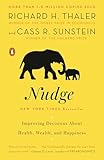
Richard Thaler is an American economist at the University of Chicago who won the Nobel Prize in Economics in 2017 for his contributions to behavioral economics. Cass Sunstein is an American legal scholar and former administrator of the White House Office of Information and Regulatory Affairs. Together they wrote Nudge: Improving Decisions About Health, Wealth, and Happiness (2008, substantially revised in 2021 as Nudge: The Final Edition) — a book that became one of the most influential works of applied social science of the past two decades, directly shaping the creation of behavioural insight teams in the United Kingdom, the United States, and dozens of other governments.
Where to Start: Nudge (2008)
The essential Thaler and Sunstein — and the book that brought choice architecture into mainstream policy thinking. Nudge begins with an observation so simple it is easy to miss: the way choices are arranged affects what people choose, even when the options themselves stay the same.
A cafeteria that arranges food so that the most nutritious items are at eye level and the desserts require deliberate seeking sells different food than one with the opposite arrangement — with identical menus and no restrictions. A retirement plan that automatically enrolls employees and requires active effort to opt out produces higher participation rates than one that requires active enrollment — with identical contribution limits and investment options. An organ donation system that defaults to consent (with opt-out available) produces higher donation rates than one that defaults to non-consent (with opt-in available) — with identical legal rights in both cases.
These are nudges: changes to the choice environment that steer people in one direction without restricting their freedom to choose otherwise. No options are removed. No choices are forbidden. The architecture of the choice — which option is the default, how options are ordered, what is made salient — is simply designed thoughtfully rather than carelessly.
The power of defaults is the book’s central empirical finding. Human beings have a strong tendency to stick with whatever is pre-selected, whatever is the existing state, whatever requires no active decision. This tendency — status quo bias — operates even when the stakes are high, even when people have strong preferences, even when they understand intellectually that the default was set arbitrarily. The reasons are multiple: inertia, implicit endorsement of what was pre-selected, loss aversion (changing feels like potentially losing something), and the cognitive cost of making deliberate decisions.
The implication is that every institution designing choice environments is already nudging people, regardless of whether it intends to or recognises it. The question is not whether to nudge but whether to nudge thoughtfully or carelessly. A retirement plan that defaults to zero participation is not a neutral choice environment — it is a nudge toward non-saving. A cafeteria that places food in whatever order is most convenient for restocking is not neutral — it is a nudge toward whatever the convenience arrangement produces.
Libertarian paternalism is the philosophy Thaler and Sunstein propose for designing nudges deliberately. It sounds paradoxical: paternalism implies restricting choice, libertarianism implies maximising it. The synthesis: design defaults toward outcomes that most choosers would, upon reflection, prefer, while preserving complete freedom to opt out with minimal friction. This is not coercion — no one is prevented from choosing differently. It is not manipulation — the optimal path is made easier, not the others made harder. It is the recognition that choice environments are never neutral, and that designing them in the interest of the choosers is both possible and defensible.
Applications across the book span retirement savings, mortgage disclosure, school choice, energy consumption, and organ donation — each domain where the evidence shows that structural changes to choice architecture produce large behavioural shifts. The finding that automatic 401(k) enrollment increases retirement savings substantially, implemented as policy in multiple countries, is perhaps the most directly impactful application of any social science research of the past twenty years.
Why Nudge Is the Ideal First Book
For a reader new to the collaboration of Richard Thaler and Cass Sunstein, Nudge is the ideal first book because it is their landmark, influential work and the fullest expression of their distinctive contribution, the idea that the design of choices can gently steer people toward better decisions. Nudge introduces the concept of choice architecture, arguing that the way options are presented, the nudges built into our environment, profoundly shapes our choices, and that this can be used to help people make better decisions while preserving freedom. As an entry point it is ideal, for it is their defining joint book and a clear statement of the influential ideas for which it is known. It welcomes the newcomer with its central concept, its many examples, and its accessible style, drawing the reader into the world of behavioral economics applied to choice and policy. It is their most important collaboration, so the new reader encounters their ideas directly. For the newcomer, then, Nudge is the natural and ideal starting point.
What to Expect as a New Reader
As a new reader, you can expect Nudge to be an accessible, influential, and example-rich book about choice and decision-making. You can expect a central concept, choice architecture, the idea that the way options are presented shapes the choices people make. You can expect the idea of the nudge, a gentle steer built into the environment that guides people toward better decisions without restricting their freedom. You can expect grounding in behavioral economics, for the book draws on research about how people actually make decisions. You can expect many examples, drawn from areas such as savings, health, and public policy. You can expect a philosophy the authors call libertarian paternalism, helping people choose better while preserving freedom. You can expect an accessible, engaging style. Expect, in short, an accessible, influential, and example-rich book about choice and decision-making, a fine introduction to the authors’ ideas.
Going Deeper After Your First Book
Once Nudge has introduced you to the authors’ ideas, the reader who wishes to go deeper can explore the wider literature of behavioral economics and decision-making to which their work is a landmark contribution. Richard Thaler’s engaging account of the rise of behavioral economics offers a fuller picture of the field and his own role in it, while Cass Sunstein’s many books extend his thinking on choice, behavior, law, and policy. The broad field of behavioral economics and the psychology of decision-making, including the work of the psychologists who inspired it, offers many further perspectives the reader is well prepared to explore. Reading more widely deepens your engagement with the authors’ distinctive contribution, the idea that choice architecture shapes decisions. Their characteristic insight runs through the field. Building your reading journey from Nudge is a matter of following its ideas into the authors’ other work and the wider behavioral-economics literature. The reader who begins here will have an influential foundation in the design of choice and decision-making.
Reading Richard Thaler and Cass Sunstein
Nudge is their essential collaboration. Thaler’s solo work — Misbehaving: The Making of Behavioral Economics — provides the academic foundation and is an excellent follow-up.
For the full Richard Thaler and Cass Sunstein bibliography, reviews, and biography, visit the Richard Thaler and Cass Sunstein author page on Editors Reads.
Affiliate disclosure: Links to Amazon on this page are affiliate links. We earn a small commission at no extra cost to you.
Frequently Asked Questions
Where should I start with Richard Thaler and Cass Sunstein?
Nudge: Improving Decisions About Health, Wealth, and Happiness (2008, revised 2021) is their essential collaboration — a landmark behavioral economics book that introduced the concept of choice architecture to a broad audience and made the case that small, unintrusive changes to how options are presented can produce large improvements in decisions about retirement, health, and environment. One of the most influential social science books of the past two decades, with documented policy impact across multiple governments.
What is Nudge about?
Nudge argues that the way choices are structured affects decisions even when people believe they are choosing freely. Default options are the most powerful nudge — most people stick with whatever is pre-selected, whether in retirement account enrollment, organ donation, energy plans, or health insurance. Thaler and Sunstein show that any institution designing choice environments is already nudging people; the only question is whether those nudges are thoughtful. Their solution — libertarian paternalism — designs defaults toward better outcomes while preserving complete freedom to opt out.
What is libertarian paternalism?
Libertarian paternalism is the philosophy Thaler and Sunstein propose as an alternative to both unrestricted choice and authoritarian regulation. It preserves complete freedom of choice — no options are banned, and opting out of any default requires only a simple decision — while structuring the choice environment so that the path of least resistance leads toward better outcomes. A cafeteria can place fruit at eye level (a nudge) without removing any desserts. A retirement plan can auto-enroll employees (a nudge) while allowing easy opt-out.
What should I read after Nudge?
After Nudge, Richard Thaler's Misbehaving provides the academic autobiography behind behavioral economics — the story of how Thaler developed the insights Nudge applies, with more depth on the theoretical foundation. Daniel Kahneman's Thinking, Fast and Slow provides the cognitive science foundation for the two-system model that underlies Nudge's framework. Daniel Ariely's Predictably Irrational covers irrational decision patterns from a different angle with more focus on personal applications.