Where to Start with Burton G. Malkiel: A Reading Guide
Where to start with Burton G. Malkiel — how to approach A Random Walk Down Wall Street, the definitive fifty-year case for passive index-fund investing. A complete reading guide.
By Marcus Webb
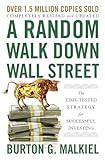
Burton G. Malkiel (born 1932) is an American economist who spent his career at Princeton University, where he was the Chemical Bank Chairman’s Professor of Economics, while also serving on the boards of Vanguard Group and other investment companies. He published the first edition of A Random Walk Down Wall Street in 1973, when the efficient market hypothesis was a controversial academic claim and the index fund did not yet exist as an investment product for ordinary investors. Fifty years later, the ideas he helped popularise — that markets are hard to beat and that low-cost passive investing is the rational choice for most people — have been validated by decades of market data and have reshaped the investment industry.
Where to Start: A Random Walk Down Wall Street (1973, 13th ed.)
The essential Burton G. Malkiel — and the most durable investment book in print. A Random Walk Down Wall Street opens with the central claim: stock prices follow a random walk, meaning that past price movements provide no reliable information about future movements. If this is true — and Malkiel spends the book arguing that it largely is — then technical analysis (using charts to predict future prices) is pattern-finding in noise, market timing is a fool’s errand, and most stock-picking strategies are unlikely to beat the market consistently after fees.
The efficient market hypothesis is the book’s theoretical foundation. Malkiel’s formulation: financial markets are efficient in the sense that prices at any moment reflect all publicly available information. When new information arrives, prices adjust almost instantly as thousands of analysts and traders act on it simultaneously. This means that for any individual investor, the information needed to outperform the market is either already priced in or unavailable. The implication is not that the market is always right — it is often wrong, and bubbles and crashes are real — but that reliably identifying when it is wrong, and profiting from the identification, is much harder than it looks.
The case against active management builds on this foundation. Even if some fund managers have genuine skill (a claim Malkiel regards with scepticism), fees consume the excess returns before they reach investors. The expense ratios of actively managed funds — typically 0.5% to 1.5% annually — compound over decades into the difference between meeting and missing financial goals. The data is unambiguous: roughly 90% of actively managed funds underperform their benchmark indices over 15-20 year periods, not because all fund managers are incompetent but because fees set a bar that skill alone cannot reliably clear.
The demolition of technical analysis is the book’s most entertaining section. Malkiel demonstrates that the chart patterns technical analysts claim to identify as predictive — the head-and-shoulders formation, the double bottom, the ascending wedge — are statistically indistinguishable from patterns generated by coin flips. A chart produced by a random number generator looks exactly like a chart of real stock prices to a trained technical analyst. This is not a new argument; it was established in academic finance by the 1960s. Malkiel’s contribution is explaining it accessibly enough that non-specialists understand why it is decisive.
The life-cycle investment advice is the practical heart of the book. Having demolished the alternatives, Malkiel constructs a positive programme: diversify across asset classes (stocks, bonds, real estate), allocate more heavily to stocks when young and time horizons are long, shift toward safety as retirement approaches, and implement everything through low-cost index funds. The logic is straightforward and backed by historical data. The difficulty is behavioural rather than analytical: most investors find it harder to hold index funds passively through market downturns than to feel the activity of trading.
Why A Random Walk Down Wall Street Is the Ideal First Book
For a reader new to Burton G. Malkiel, A Random Walk Down Wall Street is the ideal first book because it is his classic, enormously influential work and the fullest expression of his distinctive contribution, the case that markets are largely efficient and that most investors are best served by low-cost index investing. A Random Walk Down Wall Street presents Malkiel’s famous argument, drawn from decades of evidence, that trying to beat the market is largely futile and that broad, low-cost index funds are the wisest path for most investors. As an entry point it is ideal, for it is his defining book and the comprehensive statement of his influential thesis. It welcomes the newcomer with its clear argument, its evidence, and its accessible style, drawing the reader into the case for sensible, low-cost investing. It is his most important work and the one that best represents his thinking, so the new reader encounters Malkiel directly. For the newcomer interested in investing, then, A Random Walk Down Wall Street is the natural and ideal starting point.
What to Expect as a New Reader
As a new reader, you can expect A Random Walk Down Wall Street to be a clear, evidence-based, and influential guide to investing. You can expect a central thesis, that markets are largely efficient and that trying to beat the market is largely futile for most investors. You can expect the random walk idea, that stock prices move in ways that are largely unpredictable. You can expect a case for index investing, for Malkiel argues that broad, low-cost index funds are the wisest path for most investors. You can expect a critique of attempts to beat the market, including stock-picking and market timing. You can expect a thorough, evidence-based, but accessible treatment. You can expect a comprehensive guide that has been updated across many editions. Expect, in short, a clear, evidence-based, and influential guide to investing, a definitive introduction to Malkiel’s thesis.
Going Deeper After Your First Book
Once A Random Walk Down Wall Street has introduced you to Malkiel’s thesis, the reader who wishes to go deeper can explore his other writing and the wider literature of index and efficient-market investing that his work helped shape. His concise collaboration distills the essentials of sensible investing into a short, practical form, complementing his classic, while the broad tradition of low-cost, index-based investing, including the work of its other champions, offers many further perspectives the reader is well prepared to explore. Reading more widely deepens your engagement with Malkiel’s distinctive contribution, the case for efficient markets and low-cost index investing. His characteristic thesis runs through his work, and the reader who has absorbed A Random Walk Down Wall Street will find it across the field. Building your reading journey from A Random Walk Down Wall Street is a matter of following its thesis into his other work and the wider index-investing literature. The reader who begins here will have an evidence-based foundation in sensible, low-cost investing.
Reading Burton G. Malkiel
A Random Walk Down Wall Street is Malkiel’s essential and most widely read book. Read the most recent edition — the thirteenth edition covers developments in factor investing, the rise of ETFs, and the cryptocurrency question. It stands alone and requires no prior knowledge of finance or economics.
For the full Burton G. Malkiel bibliography, reviews, and biography, visit the Burton G. Malkiel author page on Editors Reads.
Affiliate disclosure: Links to Amazon on this page are affiliate links. We earn a small commission at no extra cost to you.
Frequently Asked Questions
Where should I start with Burton G. Malkiel?
A Random Walk Down Wall Street (first published 1973, now in its thirteenth edition) is Malkiel's essential book — the most thorough and best-evidenced case for passive investing in print, arguing that stock prices reflect all available information and that most actively managed funds underperform low-cost index funds after fees over time. It is the foundational text of the index fund revolution that now manages trillions of dollars on behalf of ordinary investors.
What is A Random Walk Down Wall Street about?
A Random Walk Down Wall Street argues that stock prices follow a random walk — meaning past prices provide no reliable information about future prices — and that this makes stock-picking and market-timing strategies unlikely to outperform the market consistently. Malkiel systematically examines and dismisses both technical analysis (chart-based prediction) and most forms of fundamental analysis for individual investors, then builds the positive case for low-cost diversified index funds as the rational investment vehicle for most people.
Is A Random Walk Down Wall Street still relevant after fifty years?
More relevant than ever. The evidence for the efficient market hypothesis and against active management has only accumulated since the first edition in 1973. Long-term studies consistently show that the majority of actively managed funds underperform their index benchmarks after fees over 15-20 year periods. Malkiel updates the book regularly — the thirteenth edition covers factor investing, behavioural finance, and cryptocurrency. The core thesis has not changed because the evidence supporting it has not changed.
What should I read after A Random Walk Down Wall Street?
After A Random Walk Down Wall Street, John Bogle's The Little Book of Common Sense Investing provides a shorter, complementary argument from the founder of Vanguard — the man who built the index fund industry Malkiel argued for. Benjamin Graham's The Intelligent Investor is the foundational text for value investing, the approach Malkiel's book is partly in dialogue with. JL Collins's The Simple Path to Wealth is the most practical implementation guide for Malkiel's conclusions, aimed at individual investors building index fund portfolios.


