Best Books About Immigration: Essential Reading List
The best books about immigration — from Pachinko and The Namesake to Americanah and The Kite Runner. Literature on belonging, displacement, and the immigrant experience.

Books about immigration are books about belonging — about the specific experience of being between worlds, of carrying one culture inside you while living in another, of the ways that displacement changes identity and the ways that identity resists displacement. The best novels on this subject don’t reduce the immigrant experience to victimhood or triumph but render its specific, contradictory texture: the longing, the adaptation, the generational differences, the ways that belonging is negotiated and refused.
The Multigenerational Sagas
Pachinko — Min Jin Lee (2017)
The most ambitious immigration novel of recent decades. Lee follows a Korean family across four generations in Japan — from a teenage girl’s accidental pregnancy in 1910 Busan, through her children and grandchildren’s lives in Osaka and Tokyo, to 1989. The Korean community in Japan occupies a specific, painful position: permanent outsiders in a country that refuses to accept them as Japanese regardless of how many generations they have lived there.
The novel examines discrimination, class mobility (the pachinko industry, which employs many Koreans, as both opportunity and stigma), romantic possibility across ethnic lines, and the specific ways that outsider status shapes the choices available to people across generations.
Homegoing — Yaa Gyasi (2016)
Gyasi’s multigenerational novel traces two lineages — one remaining in Ghana through colonialism and independence, the other enslaved and sent to America — across eight generations to the present. The divergence between the two lineages, and what each inherits from the histories they cannot escape, is the novel’s central subject: a study of what displacement and belonging mean across centuries.
The Contemporary Experience
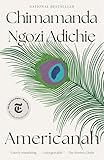
Americanah — Chimamanda Ngozi Adichie (2013)
The most perceptive contemporary novel about immigration and racial identity. Ifemelu, who does not think of herself as Black in Nigeria, moves to America and discovers that she is — and the novel examines her navigation of American racial categories with the clarity available to someone encountering them from the outside. The comparison between her experience and that of Obinze (who goes to England rather than America) illuminates how differently the same person is received in different countries.
The Namesake — Jhumpa Lahiri (2003)
The most intimate account of Indian immigration to America and its effects across generations. Lahiri’s portrait of the Ganguli family — the first generation’s careful maintenance of Bengali identity in Massachusetts, the second generation’s discomfort with both their parents’ world and the American world they inhabit — is rendered with unusual specificity and warmth. The relationship between Gogol Ganguli and his name — what it means to his father, what it costs him — is one of the most beautifully developed symbols in contemporary American fiction.
Interpreter of Maladies — Jhumpa Lahiri (1999)
Lahiri’s Pulitzer Prize-winning story collection — nine stories about Indian and Indian-American characters negotiating between cultures. The title story, in which an Indian interpreter working as a tour guide encounters a visiting Indian-American family, examines the specific gap between what each party expects the other to be, and finds it unbridgeable. The collection’s quiet precision is the most concentrated expression of Lahiri’s gifts.
Immigration and Diaspora
The Kite Runner — Khaled Hosseini (2003)
Hosseini’s novel is about betrayal and redemption, but it is also about what exile does to the relationship between an immigrant and the country they left. Amir’s relationship to Afghanistan — what he abandoned, what was destroyed while he was away, what he must return to — is the novel’s moral centre, and the Afghan-American community’s specific experience (suspended between countries, unable to fully belong to either) is rendered with unusual accuracy.
A Fine Balance — Rohinton Mistry (1995)
Mistry’s novel is set in 1975 India during the Emergency — technically not an immigration novel, but it is about internal displacement and the specific experience of people from different regions and castes negotiating a shared space that does not welcome all of them equally. It is among the most devastating novels about displacement and human dignity in contemporary fiction.
The Immigrant Story as the Modern Story
The literature of immigration has become one of the central and most vital strands of contemporary fiction, and this is no accident, for the immigrant experience speaks to something fundamental about the modern condition itself. In an age defined by unprecedented movement of peoples — by globalization, displacement, the mixing of cultures, and the blurring of national boundaries — the figure of the immigrant, caught between worlds and remaking a life in unfamiliar territory, has come to embody experiences that extend far beyond literal migration. The immigrant’s situation dramatizes, in concentrated form, themes that resonate with vast numbers of readers: the loss of a known world and the effort to build a new one, the negotiation of multiple and sometimes conflicting identities, the experience of being an outsider, the tension between assimilation and the preservation of one’s origins, and the universal human struggle to belong. This is why immigration literature has acquired such prominence and power: it is not a niche subject but a lens onto the defining realities of a mobile, interconnected, and culturally mixed world. The best of these books render the specific, often painful particulars of the migrant experience — the practical hardships, the dislocations, the discrimination, the homesickness — while also illuminating the broader human questions that the experience throws into sharp relief. They speak with special force to the descendants of immigrants, to members of diaspora communities, and to anyone who has ever felt themselves between cultures or in search of a place to belong. In capturing the immigrant’s journey, this literature captures something essential about the contemporary world and about the perennial human need for home, identity, and belonging, which is why it has become one of the most important and widely resonant forms of fiction being written today.
Between Two Worlds
The defining condition that immigration literature explores, and the source of much of its dramatic and emotional richness, is the experience of living between two worlds — belonging fully to neither the homeland left behind nor the new country not yet wholly one’s own, and inhabiting instead the difficult, generative space between them. This in-betweenness is the immigrant’s characteristic situation, and the fiction renders its many dimensions with great subtlety. There is the relationship to the homeland: the memory of it, the longing for it, the way it persists in language, food, custom, and family even as it recedes, and the complicated knowledge that one can never fully return to a place that continues changing in one’s absence. There is the relationship to the new country: the effort to learn its codes and make a place within it, the experience of being marked as foreign, the gradual and partial process of belonging, the gains and the losses that assimilation entails. And there is the irreducible fact of occupying both at once, of being shaped by two cultures and at home in neither, of carrying a doubled or divided self. The best immigration fiction refuses to treat this condition as simply a problem to be solved by successful assimilation; it recognizes the in-between state as a permanent and complex reality, full of loss but also of a particular richness, the expanded vision that comes from knowing more than one world. The characters in these books navigate the perpetual negotiation between where they came from and where they now live, and in their struggles the fiction illuminates one of the most profound experiences of modern life: what it means to belong partially, to be formed by multiple worlds, and to construct an identity across the gap between them.
Generations and the Long Arc of Belonging
Some of the most powerful immigration fiction takes the long view, following families across generations to trace how the experience of migration and belonging transforms over time — and this generational perspective reveals dimensions of the immigrant story that a single lifetime cannot contain. The immigrant experience does not end with the first generation; it unfolds across decades and descendants, changing its character as it passes from those who made the original journey to their children and grandchildren. The first generation typically bears the sharpest dislocations — the loss of the homeland, the struggle with a new language and culture, the labor of establishing a foothold — while remaining most deeply rooted in the world they left. The second generation occupies a different and often painful position, raised between their parents’ culture and the only country they themselves have known, frequently embarrassed by or alienated from their origins even as they are marked by them, caught in the friction between immigrant parents and native-born children. Later generations may achieve a fuller assimilation but at the cost of a growing distance from their roots, sometimes accompanied by a yearning to recover the heritage that has faded. The multigenerational immigration saga captures this entire arc — the gradual transformation of a family’s relationship to both homeland and adopted country, the tensions between generations with profoundly different experiences and loyalties, the slow and incomplete process by which outsiders become insiders, and what is preserved and what is lost along the way. These books understand that belonging is not an event but a process spanning generations, and that the immigrant story is ultimately the story of how families and cultures change over time, remaking themselves across the decades while carrying forward, in altered form, the memory of where they began.
Reading Order
Start contemporary: Americanah → The Namesake → Interpreter of Maladies.
Historical depth: Pachinko → Homegoing → The Kite Runner.
By region: Interpreter of Maladies (South Asian America) → White Teeth (South Asian Britain) → Americanah (West African America/Britain).
Also Worth Reading
One further essential title is Mohsin Hamid’s Exit West, which blends migration and magical realism into one of the most acclaimed recent novels about displacement and belonging.
Frequently Asked Questions
What is the best novel about immigration?
Pachinko by Min Jin Lee is the most ambitious novel about the immigrant experience — its account of a Korean family across four generations in Japan, from 1910 to 1989, examines what it means to live as a permanent outsider in a country that refuses to accept you as belonging. The Namesake by Jhumpa Lahiri is the most intimate account of the specific experience of first and second-generation Indian immigration to America. Americanah by Chimamanda Ngozi Adichie is the most perceptive examination of how immigration changes identity, particularly racial identity.
What is Pachinko about?
Pachinko by Min Jin Lee (2017) begins in Korea in 1910, the year of Japanese colonisation, and follows a Korean family across four generations — from a teenage girl's pregnancy and her marriage to a kind minister, to her descendants' lives in Japan, where Koreans remain a stigmatised minority even after three and four generations. The novel examines what it means to be permanently foreign — to live in a country you were born in that still considers you an outsider — and the specific ways that discrimination shapes economic choices, romantic possibilities, and self-conception across generations.
What is The Namesake about?
The Namesake by Jhumpa Lahiri (2003) follows the Ganguli family — Ashoke and Ashima, who immigrate from Calcutta to Cambridge, Massachusetts in the 1960s, and their American-born son Gogol (named after Gogol after a train accident that nearly killed Ashoke). The novel traces the specific experience of first-generation immigrants (Ashoke and Ashima's negotiation of American life while maintaining their Bengali identity) and second-generation immigrants (Gogol's discomfort with both his name and the Indian-American community his parents inhabit). The relationship between Gogol and his name — what his father meant by it, what it means to him — is the novel's central symbol.
What is the immigrant experience like according to these books?
The novels on this list describe the immigrant experience as simultaneously enriching and costly — enriching because immigration provides perspectives and possibilities unavailable in the origin country, costly because it involves a loss of belonging, a negotiation of identity, and a relationship to the host country that is rarely as simple as the immigrant or the host expects. Pachinko shows how discrimination can persist for generations. Americanah shows how immigration changes racial identity. The Namesake shows how the immigrant experience diverges between generations. The Kite Runner shows how exile creates a relationship to the origin country defined by what was left behind.