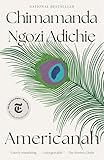
Chimamanda Ngozi Adichie is a Nigerian author whose novels and essays on race, gender, and identity have made her one of the most important literary voices of her generation.
Chimamanda Ngozi Adichie grew up in Nigeria as the daughter of academics and began writing early, publishing her debut novel as a young woman. She has since established herself as one of the defining literary voices writing in English today. Half of a Yellow Sun, her second novel, is set during the Biafran War of the 1960s and follows several characters across the conflict with extraordinary empathy and precision. It is a war novel that refuses to reduce its characters to symbols, and its emotional honesty won it the Orange Prize for Fiction in 2007. The novel remains her most formally accomplished work.
Americanah, her third novel, shifts register — it is contemporary, satirical, and frankly comic as well as serious, following a Nigerian woman who moves to the United States and a Nigerian man who ends up in England. The novel’s observations about race in America — particularly in its blog passages narrated by the protagonist — are sharp and have generated significant discussion. Some readers find the novel’s scope slightly unwieldy in its final third; others consider it her masterpiece. We Should All Be Feminists, adapted from her TED talk, is a brief, pointed argument for feminism that reached a global audience after being sampled in a Beyoncé song and distributed to schoolchildren in Sweden.
Adichie’s writing is distinguished by its intelligence, its formal range, and its refusal to offer comfortable conclusions. She writes about Nigeria and the Nigerian diaspora with both critical distance and deep love, and her voice — precise, assured, often wry — is immediately recognizable.
From Nsukka to the World Stage
Adichie grew up in the university town of Nsukka in southeastern Nigeria, in a house that had once belonged to the celebrated novelist Chinua Achebe, whose work would become an early and lasting influence on her sense of what African literature could be and do. Her father was a professor of statistics and her mother the university’s first female registrar, and the academic, Igbo, post-independence world of her childhood supplies the texture of much of her fiction. She left Nigeria for the United States as a teenager to attend university, an experience of dislocation and racial reclassification that would later animate Americanah, and her debut novel Purple Hibiscus (2003) drew on the Nigeria she knew to tell the story of a girl growing up under a tyrannical, religiously fanatical father against a backdrop of political turmoil. That first book, with its quiet precision and its themes of silence, faith, and liberation, announced a major talent and was shortlisted for the Orange Prize, setting the trajectory that Half of a Yellow Sun would so spectacularly confirm. From these beginnings, Adichie built a body of work that moves fluidly between continents while remaining rooted in a deep and specific knowledge of Nigeria.
The Power of Story and the Danger of the Single Story
Beyond her novels, Adichie has become one of the most influential public voices of her generation, and her widely shared talks have shaped global conversations about narrative, identity, and power. In “The Danger of a Single Story,” she argued with disarming clarity that reducing any people or place to one flattening narrative — Africa as nothing but poverty and catastrophe, for instance — is a form of dispossession, robbing people of dignity and obscuring the fullness of their humanity. The insight has been embraced far beyond literature, in classrooms, boardrooms, and discussions of representation across the world. Her talk “We Should All Be Feminists,” later published as a slim, pointed book, brought a lucid and accessible case for gender equality to a vast audience, was distributed to schoolchildren, and was famously sampled in popular music. Through these interventions Adichie has insisted that storytelling is never neutral, that who gets to tell a story and how shapes whose lives are valued, and that the antidote to a single, diminishing story is a multiplicity of fuller, truer ones.
Themes, Controversy, and Stature
Adichie’s enduring preoccupations — the legacies of colonialism, the complexities of immigration and belonging, the workings of race and gender, the relationship between the personal and the political — recur across her fiction and essays with deepening sophistication. Her work is admired for combining sweeping historical and social concerns with intimate, fully realised characters whose inner lives are rendered with great care, refusing the temptation to let the political swallow the human. A recipient of a MacArthur “genius” Fellowship and numerous literary honours, she has achieved the rare combination of critical esteem, popular success, and genuine public influence. Her prominence has also drawn her into public controversy, particularly around her remarks on gender and trans identity, which generated significant debate and criticism; she has responded with essays defending the value of disagreement and free expression. Whatever one makes of those interventions, her standing as one of the most important writers and thinkers of the contemporary moment is widely acknowledged. She has expanded the global readership for African literature and demonstrated, book after book, that fiction grounded in a specific place can speak with urgency to the whole world.
Where to Start with Adichie
The ideal entry point depends on the reader’s appetite. Those wanting her most ambitious and acclaimed work should begin with Half of a Yellow Sun, the Orange Prize–winning novel of the Biafran War that many consider her masterpiece, though its scope and historical weight ask for some commitment. Readers seeking something more contemporary and immediately accessible will find Americanah the natural choice, a sweeping, often funny novel of immigration, race, and return that showcases her social observation at its sharpest. Newcomers who prefer a shorter introduction can start with her debut, Purple Hibiscus, an intimate coming-of-age story, or with the brief, pointed essay We Should All Be Feminists, which distills her thinking on gender into a single sitting. Her short-story collection The Thing Around Your Neck offers another low-commitment way in. Whatever the starting point, readers quickly encounter the qualities that define her: precision, emotional honesty, and a refusal of easy answers.
Reading Guides