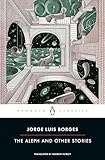
Editors Reads Verdict
Borges's most emotionally direct collection, The Aleph includes his single most astonishing story — a vision of total simultaneity that is also, unexpectedly, a story about grief — alongside a dozen stories that demonstrate why no writer of the twentieth century changed fiction more.
What We Loved
- The title story is Borges's greatest single achievement — philosophically staggering and personally affecting in ways his cooler work is not
- The collection is more emotionally varied than Ficciones, including grief, rivalry, and personal loss alongside philosophical play
- The Penguin Classics edition is a well-curated introduction that places the title story's emotional directness in context
Minor Drawbacks
- Some stories feel more like philosophical sketches than completed fictions — Borges's compression occasionally becomes truncation
- The biographical context — Borges's feelings about Beatriz Viterbo and her cousin Daneri — enriches the title story but is not available to all readers
- The translation choices vary in quality across the collection's different stories
Key Takeaways
- → The Aleph is a point that contains all points — total knowledge, total simultaneity, achieved in a cellar on Garay Street — and it is still not enough
- → The Zahir is the inverse of the Aleph: one object that fills consciousness entirely, excluding everything else, which is also a kind of infinity
- → Knowledge of everything cannot substitute for knowledge of one particular beloved person who is gone
- → Borges's most philosophical stories are also his most personal — the metaphysics and the biography are inseparable
| Author | Jorge Luis Borges |
|---|---|
| Publisher | Penguin Classics |
| Pages | 240 |
| Published | January 1, 1949 |
| Language | English |
| Genre | Short Stories, Literary Fiction, Latin American Literature |
How The Aleph and Other Stories Compares
The Aleph and Other Stories at a glance against 3 similar books readers weigh alongside it.
| Book | Author | Rating | Best for |
|---|---|---|---|
| The Aleph and Other Stories (this book) | Jorge Luis Borges | ★ 4.5 | Short Stories |
| Don Quixote | Miguel de Cervantes | ★ 4.5 | Readers who want to understand where the novel came from — and those who enjoy |
| Ficciones | Jorge Luis Borges | ★ 4.5 | Readers of literary fiction comfortable with intellectual density and |
| Labyrinths | Jorge Luis Borges | ★ 4.6 | Short Stories |
The Aleph and Other Stories Review
Jorge Luis Borges published El Aleph in Buenos Aires in 1949, three years after Ficciones, and the collection is in some ways his most personal work: the title story was written in the wake of the death of Beatriz Viterbo, a woman Borges had loved for years, and the grief underneath it gives the story an emotional weight that his more purely ludic fictions sometimes lack. The narrator, named Borges, visits the house of Beatriz’s insufferable cousin Carlos Argentino Daneri every year on her birthday, ostensibly to maintain a connection with her memory, and discovers in the man’s cellar an Aleph — a point in space approximately two or three centimetres in diameter that contains all other points simultaneously, from which it is possible to see everything in the universe at once.
The passage in which the narrator lies on the cellar floor and looks into the Aleph is Borges’s most celebrated sustained piece of prose, and rightly so. He sees the populous sea, the dawn and the dusk, the multitudes of America, a silver cobweb at the centre of a black pyramid, a broken labyrinth (which was London), his own face. He sees everything at once, all times and all places superimposed: the Aleph contains the universe and the universe contains the Aleph. The vision is described in a torrent of present participles, item after item, impossible and impossible and impossible again, and ends with the narrator finding, among all the things the Aleph contains, Beatriz Viterbo’s letters. He has looked at the entirety of existence and what he cannot get past is the woman who is gone.
This is Borges at his most emotionally direct, and it alters the stories around it. “The Zahir” — the inverse of the Aleph, an ordinary coin that, once seen, fills all consciousness until the person who has seen it can think of nothing else — is a meditation on obsessive love filtered through a philosophical conceit. “The Dead Man” is a compressed tragedy about a young man who achieves everything he desires and dies without understanding that the achievement was already his execution. “The Theologians” takes two Christian theologians whose careers are spent refuting heretics and eventually each other, and ends with a revelation about identity and theological opposition that is both funny and devastating.
Where Ficciones is the collection in which Borges’s games are most brilliantly constructed, The Aleph is the collection in which they most clearly have something at stake beyond the game. The emotional undertow — grief, rivalry, the impossibility of complete knowledge — keeps breaking the surface of the philosophical play. Reading Ficciones and The Aleph together is the complete experience of Borges: the cooler, more rigorous collection and the warmer, more troubled one, together mapping a mind that thought about infinity and felt it as a personal loss.
Our rating: 4.5/5 — Borges’s most emotionally resonant collection, and the one that demonstrates most clearly that the greatest literary metaphysician of the twentieth century was also, underneath it all, a man who had loved someone and lost her.
A Master of the Short Story
The Aleph and Other Stories is one of the essential collections by Jorge Luis Borges, the Argentine writer who transformed the short story and became one of the most influential figures in twentieth-century literature. The collection gathers many of his most celebrated tales, intricate, philosophical, and dazzlingly imaginative fictions that explore infinity, labyrinths, mirrors, memory, and the nature of reality and identity. In compact, precise, and intellectually exhilarating stories, Borges created a body of work unlike any other, blending erudition, fantasy, and metaphysical speculation into a distinctive and endlessly inventive art.
Infinity and the Labyrinth
The title story, “The Aleph,” exemplifies Borges’s genius, describing a point in space that contains all other points, a place from which the entire universe can be seen simultaneously. This fascination with infinity, with the infinite and the all-encompassing, runs throughout his work, alongside his recurring images of labyrinths, libraries, and mirrors. Borges uses these concepts to explore dizzying philosophical questions about time, space, knowledge, and the limits of human understanding, compressing vast ideas into the small, perfect space of the short story.
Philosophy as Fiction
What distinguishes Borges is his ability to transform abstract philosophical and metaphysical ideas into compelling, imaginative fiction. His stories function as thought experiments and intellectual puzzles, engaging questions of identity, reality, free will, and infinity with playfulness and depth, yet they are never dry, animated as they are by his wit, erudition, and storytelling craft. This fusion of philosophy and fantasy, of intellect and imagination, is the hallmark of his work and a key to his enormous influence on writers around the world.
An Influential and Rewarding Master
Borges’s influence on modern literature is immense, shaping magical realism, postmodern fiction, and the work of countless writers who followed. His stories are brief but inexhaustible, rewarding rereading and reflection, and their combination of intellectual depth with imaginative brilliance offers a reading experience unlike any other. For readers new to Borges, The Aleph and Other Stories provides an ideal introduction to his distinctive vision, and for all readers it offers some of the most original, thought-provoking, and dazzling short fiction ever written, the work of one of literature’s true originals. Compact yet limitless, his tales continue to inspire writers, philosophers, and readers around the world, and they confirm Borges as one of the most original and enduring imaginations in the history of literature.
Frequently Asked Questions
What is "The Aleph and Other Stories" about?
The title story — in which the narrator discovers a point in space that contains all other points simultaneously — is Borges's most ambitious and most affecting piece, alongside 'The Zahir,' 'The Dead Man,' 'The Theologians,' and other stories engaging with infinity, identity, and the impossibility of complete knowledge.
What are the key takeaways from "The Aleph and Other Stories"?
The Aleph is a point that contains all points — total knowledge, total simultaneity, achieved in a cellar on Garay Street — and it is still not enough The Zahir is the inverse of the Aleph: one object that fills consciousness entirely, excluding everything else, which is also a kind of infinity Knowledge of everything cannot substitute for knowledge of one particular beloved person who is gone Borges's most philosophical stories are also his most personal — the metaphysics and the biography are inseparable
Is "The Aleph and Other Stories" worth reading?
Borges's most emotionally direct collection, The Aleph includes his single most astonishing story — a vision of total simultaneity that is also, unexpectedly, a story about grief — alongside a dozen stories that demonstrate why no writer of the twentieth century changed fiction more.
Ready to Read The Aleph and Other Stories?
Check the current price on Amazon.
Check Price on Amazon (paid link)Prices and availability are subject to change. See Amazon for current price.
Review last updated: