Best Books of All Time: 30 Titles Every Reader Should Know (2026)
From ancient epics to modern masterpieces, these are the 30 books that define what literature can do — the titles that appear on every great reading list for good reason.

There is no universally agreed list of the best books ever written, and there shouldn’t be. Readers bring different experiences, different cultures, and different hungers to books, and what constitutes a “best” book is partly a matter of what you need at a given moment in your life.
That said, certain books keep appearing across cultures, eras, and readers — titles that demonstrate, again and again, that literature can do things nothing else can. These are the books that shaped other writers, that changed how we think about language and story, and that remain alive decades or centuries after they were written.
Here are 30 that belong on any serious reading life — fiction and non-fiction, classic and modern, across the full range of what literature has been.
Quick Reference: All 30 Books at a Glance
| # | Book | Author | Year | Why It’s Essential |
|---|---|---|---|---|
| 1 | The Odyssey | Homer | ~800 BCE | Founding text of Western narrative |
| 2 | Don Quixote | Miguel de Cervantes | 1605 | The first modern novel |
| 3 | Pride and Prejudice | Jane Austen | 1813 | The template for romantic irony |
| 4 | Anna Karenina | Leo Tolstoy | 1878 | The fullest portrait of human psychology |
| 5 | Middlemarch | George Eliot | 1871 | The greatest English-language novel |
| 6 | Crime and Punishment | Fyodor Dostoevsky | 1866 | The standard for psychological fiction |
| 7 | The Brothers Karamazov | Fyodor Dostoevsky | 1880 | The deepest novel about faith and doubt |
| 8 | War and Peace | Leo Tolstoy | 1869 | The greatest novel ever written |
| 9 | Moby-Dick | Herman Melville | 1851 | American literary ambition at its fullest |
| 10 | Les Misérables | Victor Hugo | 1862 | Law vs. justice, across a century |
| 11 | The Count of Monte Cristo | Alexandre Dumas | 1844 | The greatest revenge novel ever written |
| 12 | To Kill a Mockingbird | Harper Lee | 1960 | American justice and moral courage |
| 13 | 1984 | George Orwell | 1949 | The definitive warning about totalitarianism |
| 14 | Brave New World | Aldous Huxley | 1932 | The more prescient dystopia |
| 15 | Animal Farm | George Orwell | 1945 | The most efficient political satire ever written |
| 16 | The Great Gatsby | F. Scott Fitzgerald | 1925 | The American Dream and its cost |
| 17 | East of Eden | John Steinbeck | 1952 | Free will and the Cain and Abel story |
| 18 | The Grapes of Wrath | John Steinbeck | 1939 | The most compassionate American protest novel |
| 19 | One Hundred Years of Solitude | Gabriel García Márquez | 1967 | The defining Latin American novel |
| 20 | Beloved | Toni Morrison | 1987 | The most important American novel of the last 50 years |
| 21 | Catch-22 | Joseph Heller | 1961 | The funniest serious novel in American literature |
| 22 | Slaughterhouse-Five | Kurt Vonnegut | 1969 | The most formally inventive antiwar novel |
| 23 | The Road | Cormac McCarthy | 2006 | Survival, love, and the end of everything |
| 24 | Blood Meridian | Cormac McCarthy | 1985 | The most demanding novel in American fiction |
| 25 | A Farewell to Arms | Ernest Hemingway | 1929 | The defining romantic tragedy of the 20th century |
| 26 | The Old Man and the Sea | Ernest Hemingway | 1952 | Hemingway’s iceberg theory perfected |
| 27 | The Sun Also Rises | Ernest Hemingway | 1926 | The Lost Generation defined |
| 28 | For Whom the Bell Tolls | Ernest Hemingway | 1940 | Hemingway’s most politically engaged novel |
| 29 | Sapiens | Yuval Noah Harari | 2011 | A new frame for all of human history |
| 30 | Man’s Search for Meaning | Viktor Frankl | 1946 | The most permanently useful short book |
The Foundational Texts
1. The Odyssey by Homer
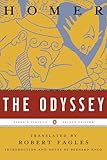
Odysseus’s ten-year voyage home from Troy — through the Cyclops’s cave, Circe’s island, the underworld, and the Sirens — is Western literature’s founding journey narrative. Homer’s poem established the conventions that all subsequent adventure and quest literature has used: the hero who must prove himself, the faithful wife who waits, the son who must grow up in his father’s absence, the gods who meddle in human affairs. Nearly three thousand years of storytelling descends from this poem.
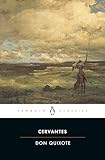
2. Don Quixote by Miguel de Cervantes
Published in two parts in 1605 and 1615, Don Quixote is widely considered the first modern novel — and the best novel ever written, according to a 2002 survey of 100 leading authors worldwide. An ageing Spanish gentleman, his mind addled by reading too many chivalric romances, arms himself and rides out to become a knight-errant, seeing giants in windmills and adventure everywhere. Cervantes wrote what is simultaneously a comedy, a tragedy, a meditation on the nature of fiction itself, and an argument about the relationship between idealism and reality that has never been resolved.
3. Pride and Prejudice by Jane Austen
Austen’s 1813 novel remains the template for romantic comedy and the most perfectly constructed ironic narrative in English. Elizabeth Bennet and Mr. Darcy misread each other — she sees arrogance where there is reserve; he sees inferiority where there is sharpness — and the novel is the gradual correction of those misreadings. The prose is flawless; the social observation is relentless; the wit is formidable. Every romantic novel written since has been in conversation with this one.
4. Middlemarch by George Eliot
Virginia Woolf called it “one of the few English novels written for grown-up people.” Published in instalments in 1871-72, Eliot’s masterpiece follows the interlocking lives of Dorothea Brooke, Dr. Lydgate, and the residents of a fictional Midlands town during the years of the first Reform Act. Unlike most nineteenth-century novels, it does not guarantee that virtue will be rewarded or that idealism will find its outlet. It offers something harder and more nourishing: a rigorous, compassionate account of how people actually live and how ordinary lives can achieve a kind of quiet heroism. The single greatest English-language novel.
The Russian Peaks
5. Crime and Punishment by Fyodor Dostoevsky
An impoverished student commits murder and then spends the rest of the novel being destroyed by his own conscience. Dostoevsky’s psychological depth is extraordinary — Crime and Punishment remains the standard by which psychological fiction is measured. The cat-and-mouse between Raskolnikov and the detective Porfiry is riveting even 160 years after it was written.
6. The Brothers Karamazov by Fyodor Dostoevsky
Dostoevsky’s final novel pits three brothers — the sensualist Dmitri, the intellectual Ivan, and the saintly Alyosha — against each other and against their debauched father, whose murder drives the plot. But the novel is really a sustained interrogation of faith, doubt, free will, and the existence of God. Ivan’s “Grand Inquisitor” chapter is one of the most debated passages in all of literature.
7. Anna Karenina by Leo Tolstoy
William Faulkner called it the best novel ever written. Vladimir Nabokov devoted some of his most passionate criticism to it. Dostoevsky considered Tolstoy’s achievement here categorically beyond his own. Published in serial instalments between 1875 and 1877, Anna Karenina is the fullest, most psychologically acute portrait of human life that the novel form has yet produced. The novel runs in two tracks — Anna’s tragic passion and Levin’s search for meaning on the land — and the contrast between them is the argument.
8. War and Peace by Leo Tolstoy
Tolstoy’s novel of the Napoleonic wars is the longest book on this list and also, arguably, the greatest. It asks what history actually is, whether individuals drive events or events drive individuals, and how people find meaning while civilization collapses around them. The domestic scenes are as detailed as the battle scenes. Commit to it once in your life.
The European Masters
9. Moby-Dick by Herman Melville
Captain Ahab’s monomaniacal pursuit of the white whale is the founding text of American literary ambition — a novel that attempts to contain everything: cetology, maritime economics, biblical allegory, and the psychology of obsession. Readers who expect a simple adventure novel are often surprised by how strange and philosophical it is. That strangeness is the point.
10. Les Misérables by Victor Hugo
Hugo’s novel of post-Napoleonic France follows Jean Valjean — convicted of stealing bread, paroled after nineteen years — across decades as he transforms himself while being pursued by the relentless Inspector Javert. The novel is a comprehensive examination of French society, a meditation on law versus justice, and a story that has proved adaptable to every era because its questions are permanent.
11. The Count of Monte Cristo by Alexandre Dumas
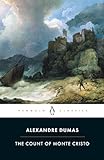
The greatest revenge novel ever written, at 1,200 pages. Edmond Dantès, wrongly imprisoned for years, emerges transformed with a fortune, new identities, and a plan to destroy the men who betrayed him. Dumas sustains the plot across its enormous length without losing momentum — a technical achievement as much as an artistic one. If you want to understand the roots of modern thriller fiction, start here.
The American Canon
12. To Kill a Mockingbird by Harper Lee
Published in 1960, Lee’s novel remains the most taught book in American high schools — which means many people read it too young to fully absorb it, and return to it as adults to find a richer, more complicated book than they remembered. Atticus Finch defending Tom Robinson in 1930s Alabama is one of literature’s great moral set-pieces, but the novel is also a precise account of how injustice survives within communities that consider themselves decent.
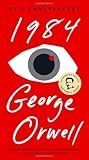
13. 1984 by George Orwell
Orwell’s dystopia has given us vocabulary — Big Brother, doublethink, Room 101, thoughtcrime — that now shapes how we discuss surveillance, propaganda, and authoritarian politics. The novel’s power comes from its specificity: Orwell understood, from direct experience, how totalitarian systems work, and 1984 is as much a diagnosis as a warning. It still reads as urgent.
14. Brave New World by Aldous Huxley
Where Orwell imagined a future of coercive surveillance and terror, Huxley imagined something more subtle: a world where people are kept docile through pleasure, conditioning, and the drug soma. Decades after its publication, Brave New World’s critique of consumer society, pharmacological contentment, and manufactured happiness reads as the more prescient dystopia.
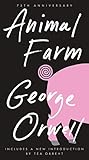
15. Animal Farm by George Orwell
Orwell’s allegorical novella of the Russian Revolution and Stalinist betrayal — in which farm animals overthrow their human master, only to find that pigs gradually become indistinguishable from what they replaced — is one of the most efficient works of political satire ever written. At 100 pages, it is also the most re-readable book on this list.
16. The Great Gatsby by F. Scott Fitzgerald
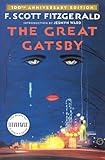
The novel that defines the American Dream and simultaneously dismantles it. Fitzgerald packs more into 180 pages than most writers manage in twice that length — the green light, the eyes of Doctor T.J. Eckleburg, the Valley of Ashes — and every image does work. The prose is among the most carefully crafted in the American tradition.
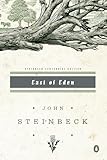
17. East of Eden by John Steinbeck
Steinbeck’s sprawling retelling of the Cain and Abel story, set across two California families over three generations, is his most ambitious work. The novel wrestles seriously with the question of whether human beings are capable of genuine moral choice — the Hebrew word timshel (thou mayest) becomes the novel’s central argument. It is an enormous book about enormous questions, told with Steinbeck’s characteristic warmth.
18. The Grapes of Wrath by John Steinbeck
The Joad family, displaced from their Oklahoma farm during the Dust Bowl, makes the exodus to California expecting opportunity and finding exploitation. The Grapes of Wrath is one of the most politically charged novels in American literature — Steinbeck was accused of being a communist, and the book was banned in several California counties. It is also one of the most compassionate.
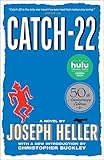
19. Catch-22 by Joseph Heller
Heller’s satirical novel about a World War II bombardier who desperately wants to be declared insane — so he can be grounded — but discovers that wanting to avoid combat proves you are sane enough to fly. Catch-22 gave the language its title phrase and remains the funniest serious novel in the American canon. It is also, underneath the absurdism, one of the more devastating indictments of institutional logic ever written.
Latin American and Post-Colonial Fiction
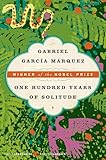
20. One Hundred Years of Solitude by Gabriel García Márquez
García Márquez’s masterpiece inaugurated magical realism as a mainstream literary mode and remains the defining Latin American novel. The Buendía family saga spans seven generations in the fictional town of Macondo, and the book’s circular, mythic structure — time repeating itself, history refusing to end — is both formally inventive and emotionally devastating.
The African-American Literary Tradition
21. Beloved by Toni Morrison
Morrison’s 1987 novel — about a woman who escapes slavery only to make an unthinkable choice — is the most important American novel of the last 50 years. The prose is unlike anything else in the language: fragmented, incantatory, refusing to let the reader remain comfortable. It won the Pulitzer Prize in 1988 and played a significant role in Morrison’s Nobel Prize in 1993.
The McCarthy–Vonnegut Arc
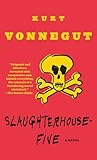
22. Slaughterhouse-Five by Kurt Vonnegut
Vonnegut’s semi-autobiographical novel about the firebombing of Dresden — which he survived as a prisoner of war — uses science fiction to process trauma in ways realism couldn’t. Billy Pilgrim’s time travel is not whimsy but necessity: some events, Vonnegut suggests, cannot be narrated sequentially. Slaughterhouse-Five is one of the most formally inventive antiwar novels ever written.
23. The Road by Cormac McCarthy
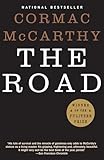
A father and son walk south through a dead America, trying to survive, trying to remember what it means to be human. The Road strips narrative to its absolute minimum — no quotation marks, minimal punctuation, stripped syntax — and the result is one of the most intense reading experiences in contemporary literature. McCarthy won the Pulitzer Prize for this in 2007.
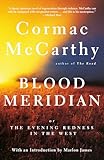
24. Blood Meridian by Cormac McCarthy
McCarthy’s earlier, more difficult novel reimagines the American West as an unrelenting landscape of violence. The Judge — one of the most terrifying characters in American fiction — delivers long philosophical speeches about war as the ultimate human activity. Not for every reader, but for those it reaches, nothing else quite matches it.
Hemingway
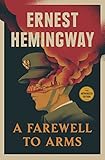
25. A Farewell to Arms by Ernest Hemingway
Hemingway’s novel of an American ambulance driver and a British nurse during World War I is the defining romantic tragedy of the twentieth century. The love story between Frederic Henry and Catherine Barkley unfolds against a background of retreat and chaos, and the ending remains one of the most discussed in American literature.
26. The Old Man and the Sea by Ernest Hemingway
Hemingway won the Pulitzer Prize for this slim novella in 1953, a year before the Nobel. An old Cuban fisherman’s epic three-day battle with a great marlin in the Gulf Stream becomes a meditation on perseverance, dignity in the face of defeat, and the human need to struggle against something larger than ourselves. The prose is Hemingway’s iceberg theory in its most perfected form.
27. The Sun Also Rises by Ernest Hemingway
Hemingway’s first novel defines the “Lost Generation” — American and British expatriates adrift in Paris and Pamplona after World War I. Jake Barnes’s unrequited love for the beautiful, damaged Brett Ashley is the novel’s emotional centre, but it’s Hemingway’s revolutionary prose style that makes the book lasting.
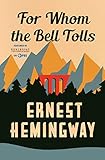
28. For Whom the Bell Tolls by Ernest Hemingway
Set during the Spanish Civil War, For Whom the Bell Tolls is Hemingway’s most politically engaged novel and arguably his most emotionally complex. Robert Jordan’s seventy-two hours with a partisan band behind enemy lines give the novel an urgency that hasn’t dissipated in eighty years.
The Essential Non-Fiction
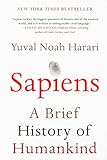
29. Sapiens: A Brief History of Humankind by Yuval Noah Harari
The only work of popular history on this list, but it belongs. Harari’s account of human evolution from obscure primate to global superorganism — via the cognitive revolution, the agricultural revolution, and the scientific revolution — is the kind of book that changes how you see everything else you read. Published in English in 2014, it has since sold over 25 million copies.
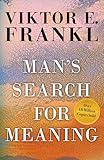
30. Man’s Search for Meaning by Viktor Frankl
Psychiatrist Viktor Frankl survived Auschwitz, Dachau, and three other Nazi concentration camps, and used his experience to develop logotherapy — a form of existential analysis based on the idea that humans are driven primarily by the desire for meaning rather than pleasure or power. At 165 pages, this is the shortest book on the list, and one of the most permanently useful.
How to Approach This List
The instinct to read all 30 books “in order” is worth resisting. Better to let your mood guide you: if you want to understand American literature, start with Hemingway, Fitzgerald, and Steinbeck. If you want Russian depth, Dostoevsky and Tolstoy. If you want contemporary moral weight, Morrison and McCarthy. If you want the foundations of Western literature, begin with Homer and Cervantes.
The only rule is to actually read, rather than accumulate titles. Five books from this list, read with full attention, will reward you more than all 30 skimmed.
More Essential Reading Lists
- Oprah’s Book Club: The Complete Reading Guide
- Reese Witherspoon’s Book Club: Every Essential Pick
- Best Books for Book Clubs: Reads That Spark Discussion
Affiliate disclosure: Links on this site are affiliate links. We earn a small commission at no extra cost to you. This does not influence our editorial recommendations.
Frequently Asked Questions
What is the greatest book ever written?
There is no single consensus, but the books that appear most consistently on lists of the greatest novels are Don Quixote by Miguel de Cervantes, War and Peace by Leo Tolstoy, and Middlemarch by George Eliot. Among twentieth-century novels, Ulysses by James Joyce, One Hundred Years of Solitude, and 1984 are most frequently cited.
What book should everyone read in their lifetime?
The books most universally recommended for every reader are To Kill a Mockingbird by Harper Lee, 1984 by George Orwell, and One Hundred Years of Solitude by Gabriel Garcia Marquez. These three books appear on nearly every essential reading list and address experiences that remain urgently relevant.
Which books appear on every great reading list?
The books that appear most consistently across every major reading list are 1984, To Kill a Mockingbird, The Great Gatsby, Pride and Prejudice, One Hundred Years of Solitude, Crime and Punishment, and The Odyssey. These are the books with the deepest overlap across literary, educational, and general reading recommendations.
What is the best classic novel for someone who does not normally read classics?
The best entry points into classic literature are The Count of Monte Cristo by Alexandre Dumas (fast-paced and plot-driven), Pride and Prejudice by Jane Austen (witty and accessible), and Crime and Punishment by Dostoevsky (psychologically gripping despite its reputation for difficulty). All three read more like modern novels than most people expect.