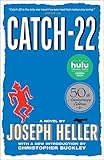
Editors Reads Verdict
The definitive anti-war satire and one of the most formally inventive novels of the twentieth century. Heller's non-linear structure mirrors the institutional madness it satirises.
What We Loved
- The Catch-22 paradox has entered the language as a genuinely useful concept
- The comedic genius never undercuts the novel's genuine horror at the waste of war
- The formal structure — deliberately non-linear and circular — is both irritating and exactly right
- Secondary characters (Major Major Major Major, Milo Minderbinder) are among fiction's most memorable
Minor Drawbacks
- The non-linear structure requires patient re-orientation
- The dark comedy can feel exhausting at novel length
- Some readers find the ending tonally jarring after 400 pages of satire
Key Takeaways
- → Catch-22: any system can justify any outcome through circular logic that prevents challenge
- → Bureaucratic insanity is not an aberration but the normal operating mode of large institutions
- → Sanity in an insane system looks like madness — the only sane response to war is to want to leave
- → Capitalism's logic (Milo Minderbinder) can accommodate any atrocity if there's profit in it
- → Individual survival is both the most reasonable and most selfish response to collective catastrophe
| Author | Joseph Heller |
|---|---|
| Publisher | Simon & Schuster |
| Pages | 453 |
| Published | November 10, 1961 |
| Language | English |
| Genre | Fiction, Satire, Classic |
| Difficulty | Intermediate |
| Best For | Readers of literary fiction with appetite for dark satire, formally inventive narrative, and one of the great anti-war novels. |
How Catch-22 Compares
Catch-22 at a glance against 3 similar books readers weigh alongside it.
| Book | Author | Rating | Best for |
|---|---|---|---|
| Catch-22 (this book) | Joseph Heller | ★ 4.5 | Readers of literary fiction with appetite for dark satire, formally inventive |
| Beloved | Toni Morrison | ★ 4.5 | Serious readers of literary fiction with the patience for challenging, |
| Slaughterhouse-Five | Kurt Vonnegut | ★ 4.5 | Literary fiction readers, antiwar literature enthusiasts, and anyone seeking |
| The Old Man and the Sea | Ernest Hemingway | ★ 4.5 | Readers of literary fiction seeking Hemingway's most concentrated work, and |
The Word That Became a Concept
Joseph Heller served as a bombardier in World War II, flew sixty bombing missions, and spent the next decade writing Catch-22 — a novel about what those missions actually looked like from inside. The title has since become one of the most used concepts in the English language: a situation in which contradictory rules make it impossible to escape a dilemma.
The original Catch-22 in the novel: a pilot can be grounded for being crazy; but to be grounded, he must request grounding; but requesting grounding demonstrates that he is sane enough to recognise the danger, which proves he is not crazy; therefore he cannot be grounded. It is a perfect logical trap, and Heller uses it to expose the logic of all bureaucratic institutions.
The Formal Genius
Catch-22 is told in a deliberately non-linear, looping structure that mirrors the institutional irrationality it satirises. The same events are described from multiple perspectives at different points in the narrative, revealing new information each time. The structure is initially disorienting; it eventually becomes the point — there is no coherent narrative of war because war is incoherent.
Yossarian, the bombardier protagonist, wants one thing with absolute clarity: to survive. This straightforward desire is constantly thwarted by the military bureaucracy’s competing imperatives: to win the war (which requires men to die), to look good in the press (which requires heroic narratives), and to expand the authority of individual officers (which requires more missions and more risk).
The Comedy and the Horror
What makes Catch-22 remarkable is that it sustains both comedy and genuine horror simultaneously. The scenes of Milo Minderbinder’s syndicate — which eventually sells bomber information to the Germans and contracts both German bombing raids and the American defence against them — are both hilarious and devastating.
The chapters concerning Snowden — the tail gunner who dies early in the novel and whose death is returned to, with more detail each time, until the full horror of it is revealed — are among the most affecting in any anti-war literature.
The Bureaucracy as Antagonist
The true villain of Catch-22 is not the enemy the airmen are sent to bomb but the institution that sends them, and Heller’s lasting contribution to literature is his portrait of bureaucratic logic as a self-perpetuating, life-consuming force. The officers who command Yossarian’s squadron — Colonel Cathcart endlessly raising the number of required missions to impress his superiors, the careerists and profiteers maneuvering for advancement — are far more dangerous to the men than the Germans, because their imperatives have nothing to do with survival or even with winning the war. Heller, who had worked in advertising, understood institutional language intimately, and the novel skewers the way bureaucracies generate rules that serve only their own perpetuation while crushing the individuals trapped inside them. The title’s central paradox is merely the sharpest instance of a pervasive condition: a system whose internal logic is airtight and whose human consequences are monstrous.
Milo Minderbinder and the Logic of Profit
If Colonel Cathcart represents military careerism, the mess officer Milo Minderbinder represents something Heller found even more chilling: the amoral logic of the market pursued to its absurd conclusion. Milo’s syndicate, which begins as a scheme to improve the men’s meals, metastasizes into a multinational enterprise that contracts with both sides of the war, at one point arranging for the Germans to bomb his own squadron because the deal is profitable. The satire is broad, but its target is precise — the way the profit motive, divorced from any other value, can justify any atrocity through the language of efficiency and shared enterprise (“everyone has a share”). Milo is one of postwar fiction’s great comic-horrific creations, and his syndicate is Heller’s argument that unchecked capitalism and unchecked militarism are versions of the same dehumanizing logic, each willing to sacrifice the individual to the system’s imperatives.
Snowden and the Novel’s Dark Heart
For all its manic comedy, Catch-22 is anchored by a single horrifying memory that Heller withholds and circles throughout the book: the death of the young gunner Snowden, returned to again and again, each pass revealing a little more, until the full, devastating image is finally disclosed near the end. This structural device is the key to the whole novel. The looping repetition that initially reads as comic disorientation is revealed as the circling of a traumatized mind unable to escape the thing it most needs to forget. When the secret of Snowden’s death is finally laid bare — the spilled viscera, the banal and unbearable lesson Yossarian draws from it — the comedy curdles entirely, and the reader understands that the absurdist machinery has been a defense against an unspeakable grief all along. It is one of the most powerful uses of structure in twentieth-century fiction.
A Word and a Worldview
Few novels have so thoroughly entered the language as to give it a permanent phrase, but “catch-22” is now used daily by people who have never read the book, a testament to how perfectly Heller captured a recurring feature of modern institutional life. The novel’s reputation has only grown since its initially mixed 1961 reception; it is now routinely listed among the essential American novels of its century and a foundational text of the absurdist, anti-authoritarian sensibility that ran through the 1960s and beyond. Its influence is visible in everything from Kurt Vonnegut to MASH* to contemporary satire of corporate and military doublespeak. The non-linear structure demands patience, and some readers find the relentless repetition exhausting, but those who give the book its due find a work whose formal daring and moral seriousness have not dated in the slightest.
Final Verdict
Catch-22 is one of the twenty most important English-language novels of the twentieth century. Its formal inventiveness and its penetrating critique of institutional logic have not dated.
Our rating: 4.5/5 — A masterpiece of satirical fiction. Give the non-linear structure the patience it demands and you’ll find something extraordinary.
Reading Guides
- Books Like Catch-22: 11 Novels That Use Dark Comedy to Tell Hard Truths
- Books Like 1984: 10 Dystopian Novels That Will Shake You to the Core
- Books Like The Hitchhiker
- Books Like The Road: 11 Novels of Survival, Love, and the End of the World
- Best Books of All Time: 30 Titles Every Reader Should Know (2026)
Frequently Asked Questions
What is "Catch-22" about?
Joseph Heller's darkly comic masterpiece follows bombardier Yossarian through the absurdist bureaucracy of World War II, inventing the most important logical paradox of modern language.
Who should read "Catch-22"?
Readers of literary fiction with appetite for dark satire, formally inventive narrative, and one of the great anti-war novels.
What are the key takeaways from "Catch-22"?
Catch-22: any system can justify any outcome through circular logic that prevents challenge Bureaucratic insanity is not an aberration but the normal operating mode of large institutions Sanity in an insane system looks like madness — the only sane response to war is to want to leave Capitalism's logic (Milo Minderbinder) can accommodate any atrocity if there's profit in it Individual survival is both the most reasonable and most selfish response to collective catastrophe
Is "Catch-22" worth reading?
The definitive anti-war satire and one of the most formally inventive novels of the twentieth century. Heller's non-linear structure mirrors the institutional madness it satirises.
Ready to Read Catch-22?
Check the current price on Amazon.
Check Price on Amazon (paid link)Prices and availability are subject to change. See Amazon for current price.
Review last updated: