Best Existentialist Novels: Books About Meaning, Freedom, and the Absurd
The best existentialist novels — from The Stranger to The Trial to Catch-22. Books that grapple with freedom, meaninglessness, and the human condition.
Existentialist fiction dramatizes the central preoccupation of existentialist philosophy: what does it mean to be a conscious being in a universe that offers no inherent meaning, and how should that being live? The novels in this tradition are among the most important of the twentieth century — Kafka’s bureaucratic nightmares, Camus’s studies in absurdism, Dostoevsky’s portraits of psychological extremity, and the great comic existentialism of Heller and Vonnegut all ask, with different tones and different conclusions, the same urgent questions. What follows are the novels that have engaged most seriously and most unforgettably with those questions.
The Stranger — Albert Camus (1942)
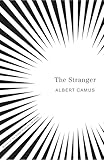
The most economical statement of Camus’s absurdism. Meursault, a French Algerian office worker, fails to weep at his mother’s funeral, shoots an Arab man on a beach without clear motive, and is condemned to death — but condemned, it emerges, less for the murder than for his refusal to perform the emotions that society requires. The novel’s first sentence (‘Mother died today. Or maybe yesterday — I can’t be sure’) establishes its register: flat, precise, without affect, recording the world as sensation without interpretation.
Camus’s argument is that Meursault is, in his odd way, the most honest man in the novel — the one who refuses to pretend to feelings he doesn’t have, to meanings he can’t find. Whether he is heroic or terrifying is the question the novel leaves open.
The Trial — Franz Kafka (1925)
The definitive novel of incomprehensible accusation and bureaucratic meaninglessness. Joseph K. is arrested one morning for an unspecified crime by representatives of an unspecified authority. He never learns what he is charged with; the Court exists in attics and backrooms, operates on principles no one can explain, and gradually absorbs every aspect of his life. The novel ends with K.’s execution — ‘like a dog,’ he says — for a crime he still does not know.
Kafka’s kafkaesque (the word entered the language from this novel) is the experience of being subject to systems of power that present themselves as rational and purposive but are in practice arbitrary and uncanny. It is the most important novel of the twentieth century for understanding how bureaucratic institutions actually feel from the inside.
The Metamorphosis — Franz Kafka (1915)
The most economical of Kafka’s fables: Gregor Samsa wakes one morning to find himself transformed into a monstrous insect. The novella proceeds with complete practicality — how does a giant insect get out of bed? how does his family react? — and uses this absurd premise to explore the experience of the person who cannot perform the social role assigned to him and is therefore first pitied, then resented, then abandoned. Gregor’s transformation is his pre-existing condition made visible: he has been supporting his family as a travelling salesman, trapped in a job he hates; the transformation makes the trap literal.
Twenty pages of the most precise and most disturbing prose in any language.
Catch-22 — Joseph Heller (1961)
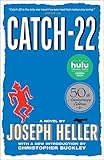
The great comic existentialist novel — set at an American airbase in Italy during World War Two, where bombardier Yossarian is surrounded by colleagues who have gone mad (or merely rational) and by an institution designed to destroy everyone who functions within it. Catch-22 is the rule that: if you’re insane, you can be grounded; but if you ask to be grounded because you’re crazy, you’re demonstrating sanity. Heller’s bureaucratic absurdism is the funniest version of Kafka’s nightmare, and the novel’s central insight — that institutions designed ostensibly to protect human life are actually organized to consume it — has not dated.
One of the essential American novels.
Slaughterhouse-Five — Kurt Vonnegut (1969)
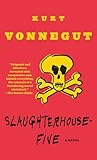
Vonnegut’s masterpiece — a time-travel novel about the firebombing of Dresden in 1945, narrated by Billy Pilgrim, who has ‘come unstuck in time’ and experiences his life out of sequence, including his future death and his abduction by aliens who show him that all moments exist simultaneously and that death is meaningless (‘So it goes’). The novel is Vonnegut’s response to his own experience of the Dresden firebombing as a prisoner of war — and his argument that the response to meaningless atrocity must be black comedy and radical acceptance, since outrage and grief are insufficient to the scale of what humans do to each other.
The Castle — Franz Kafka (unfinished, 1926)
The third of Kafka’s great novels — a land surveyor called K. arrives at a village to take up employment at the Castle, and finds that he can never reach the Castle, never speak to the officials who control every aspect of village life, never establish whether his appointment is genuine or a mistake. Unlike The Trial, The Castle is not about accusation and punishment but about the impossibility of legitimate belonging — K.’s status is never clear; he is neither fully inside nor fully outside the village’s social order; and every attempt to clarify his position creates more ambiguity. Kafka’s most sustained portrait of bureaucratic alienation.
Notes from Underground — Fyodor Dostoevsky (1864)
The foundational text of existentialist literature — predating the philosophical school by eighty years. The Underground Man, a retired civil servant in St. Petersburg, delivers a sustained monologue about consciousness, free will, and resentment: his conviction that rational self-interest cannot account for human behavior (we do things precisely because we are free to, regardless of whether they benefit us), and his inability to act cleanly because every action is undercut by self-consciousness. Sartre and Camus both acknowledged Dostoevsky as their predecessor; this novella is where existentialist psychology begins.
The Plague — Albert Camus (1947)
Camus’s second novel — and his most explicitly political. The city of Oran in Algeria is struck by bubonic plague and quarantined; the novel follows several characters — a doctor, a journalist, a priest, an exile — through the epidemic, and asks how people create meaning and community under conditions of apparently meaningless collective suffering. The plague is also an allegory of the Nazi occupation of France (which Camus experienced) — a demonstration of how ordinary people respond to catastrophe: with resignation, with solidarity, with self-interest, or with genuine heroism.
The Death of Ivan Ilyich — Leo Tolstoy (1886)
Tolstoy’s most concentrated novella — and the existentialist fable that preceded existentialism by half a century. Ivan Ilyich, a successful Russian judge, is struck by a fatal illness and must confront, for the first time, that he is going to die — and that he has lived his entire life according to other people’s expectations, never asking what he actually wanted or valued. The novella is Tolstoy’s most economical statement of his conviction that conventional success is not a substitute for authentic living, and its portrait of Ivan’s terror and eventual acceptance is the most honest account of dying in literary fiction.
Reading Existentialist Fiction
The existentialist novels share a willingness to follow their premises to their logical conclusions — to show what it actually feels like, from the inside, to be a conscious being confronting meaninglessness, bureaucratic power, or the fact of mortality. They are not comfortable books; they are among the most serious and most honest in the canon. Begin with The Stranger for the most accessible and most concise; with Catch-22 for the funniest; with The Trial for the most claustrophobically intense. All nine novels listed here are essential.
Frequently Asked Questions
What is existentialist fiction?
Existentialist fiction dramatizes the central concerns of existentialist philosophy: the experience of radical freedom and responsibility, the absence of inherent meaning in the universe, the individual's confrontation with absurdity (the gap between the human demand for meaning and the universe's silence), and the question of what authentic existence looks like. The most important existentialist novelists include Camus (who preferred 'absurdist' to 'existentialist'), Kafka (who never claimed the label but created the central existentialist literary landscape), and Dostoevsky (whom Sartre and Camus both claimed as a precursor). The mode shades into related forms — absurdist comedy (Catch-22, Slaughterhouse-Five) and literary horror (Kafka's bureaucratic nightmares).
What are the best existentialist novels?
The essential existentialist novels are: The Stranger (1942) by Albert Camus, the purest expression of absurdism in fiction; The Trial (1925) by Franz Kafka, the defining novel of alienation and bureaucratic meaninglessness; The Metamorphosis (1915) by Kafka, the most economical existentialist fable; Notes from Underground (1864) by Dostoevsky, the foundational text of modern existentialist psychology; and Catch-22 (1961) by Joseph Heller, the great comic existentialist novel. Slaughterhouse-Five, The Castle, The Plague, and The Death of Ivan Ilyich all belong in the same conversation.
Is Kafka existentialist?
Kafka is not straightforwardly existentialist — he was writing before existentialism as a philosophical school was fully formed, and he never identified his work with any philosophical programme. But his fiction dramatizes concerns central to existentialism: alienation, the experience of systems that are incomprehensible and yet demanding, the impossibility of knowing whether one is guilty or innocent, and the individual's isolation within bureaucratic structures that have no human face. Sartre, Camus, and Heidegger all engaged with Kafka, and he has become indispensable to the existentialist literary tradition even if he did not belong to it by intention.
What is the difference between existentialism and absurdism?
Existentialism and absurdism share a starting point — the recognition that the universe offers no inherent meaning — but diverge on the response. Sartre's existentialism argues that this freedom is the human condition and that we must create meaning through our choices and commitments; Camus's absurdism argues that we must acknowledge the gap between our demand for meaning and the universe's silence (the absurd) and live fully in the face of it, refusing both the leap to religious faith and the leap to despair. Camus was explicit that he was not an existentialist; Sartre was equally explicit that Camus's absurdism was close to but not identical with his own position.