Best Books About Redemption: Novels of Guilt, Forgiveness, and Second Chances
The best novels about redemption — from Crime and Punishment to Les Misérables to The Kite Runner. Books about guilt, atonement, and the possibility of starting over.

Redemption is one of literature’s oldest and most powerful subjects — the possibility that a life defined by failure, selfishness, or harm can be changed, that wrong can be made right (at least partially), and that a person can become someone other than who they have been. The greatest novels of redemption are not morality tales: they are honest about how hard transformation is, about how many people fail to achieve it, and about what it costs both the person seeking redemption and those they have wronged. What follows are the novels that have explored this theme with the most depth and the most honesty.
Crime and Punishment — Fyodor Dostoevsky (1866)
The most profound treatment of guilt and the possibility of redemption in fiction. Raskolnikov, a former student in St. Petersburg, murders a pawnbroker and her sister to test his theory that extraordinary men are not bound by ordinary moral law. The murder itself takes a quarter of the novel; what follows is a sustained, devastating portrait of guilt’s action on the mind — Raskolnikov’s inability to confess, his deteriorating mental state, his encounters with the detective Porfiry who seems to know everything, and his gradual recognition that confession is the only escape from the torment of concealment.
The redemption Dostoevsky offers is not easy or immediate: it requires Raskolnikov to accept that he is not, in fact, extraordinary — that he is a murderer who must be punished — and the novel ends with that acceptance rather than with its consequences. One of the greatest novels ever written.
Les Misérables — Victor Hugo (1862)
The great operatic novel of redemption — following Jean Valjean from his release after nineteen years in prison (for stealing a loaf of bread and breaking parole while fleeing) through his transformation by a bishop’s act of radical kindness, his decades of good works and disguises, and his final sacrifice of his freedom for the life of Cosette’s young love. Hugo’s France — the revolution of 1832, the sewers of Paris, the barricades — is rendered with the grandeur of an epic, and Valjean’s redemption, achieved through constant struggle against Javert and against himself, is the novel’s sustained argument that a human being can change.
One of the most beloved novels in the world, and one of the most morally serious.
The Kite Runner — Khaled Hosseini (2003)
The most emotionally direct redemption narrative in contemporary fiction. Amir, growing up in Kabul in the 1970s as the privileged son of a Pashtun merchant, witnesses the rape of his Hazara servant and best friend Hassan and fails to intervene — runs away instead, and then conspires to drive Hassan and his father from their home. He carries this failure into adulthood, emigration to America, a successful writing career, and a marriage. Twenty years later, he returns to Taliban-era Afghanistan to rescue Hassan’s orphaned son — an act that requires him to face not only the Taliban but his own history of cowardice and moral failure.
The novel is honest about the incompleteness of atonement: some things cannot be fully repaired. But the attempt, Hosseini insists, matters.
Atonement — Ian McEwan (2001)
McEwan’s most complex treatment of guilt and the impossibility of complete redemption. In 1935, thirteen-year-old Briony Tallis, fancying herself a novelist, misinterprets what she sees and bears false witness against Robbie Turner, destroying his life and his relationship with her sister Cecilia. The novel’s first section establishes what happened; its second and third sections follow the consequences through Dunkirk and wartime nursing; its fourth section reveals that the entire narrative has been Briony’s own, written over sixty years, and asks whether fiction can provide the atonement that life denied her.
McEwan’s answer is devastating and honest: Briony gives Cecilia and Robbie a happy ending in her novel that they did not have in life. It is the only atonement she can offer, and it is not enough.
Great Expectations — Charles Dickens (1861)
Dickens’s most psychologically sophisticated novel — and a study in the redemption of snobbishness and ingratitude. Pip, a blacksmith’s apprentice in the Kent marshes, is granted an anonymous fortune and uses it to become a gentleman in London — abandoning the people who genuinely love him (Joe the blacksmith, Biddy) in favour of those whose social status he covets. The revelation of his fortune’s true source — the convict Magwitch, whom Pip helped as a child — requires Pip to confront what he has become and who actually deserves his loyalty.
Dickens is clear that moral transformation is possible, but Pip must earn it by genuine change rather than mere circumstance.
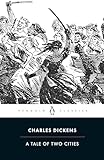
A Tale of Two Cities — Charles Dickens (1859)
The great Dickens novel of sacrificial redemption — centred on Sydney Carton, a brilliant, wasted English lawyer who drinks and self-loathes his way through the first half of the novel, certain that he will amount to nothing. His love for Lucie Manette, hopeless and never expressed, gives him the only attachment to value he has. When Charles Darnay is condemned to the guillotine in Paris, Carton substitutes himself and dies in his place.
The novel is about whether a single act of genuine sacrifice can redeem a life of waste — and Dickens answers yes, in prose of extraordinary controlled emotion.
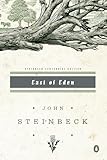
East of Eden — John Steinbeck (1952)
Steinbeck’s most ambitious novel — a retelling of the Cain and Abel story across two generations of California families, centred on the Hebrew word timshel (‘thou mayest’), which Steinbeck reads as God’s grant to humanity of the freedom to choose good over evil. Adam Trask and his twin sons Cal and Aron re-enact the primal fraternal conflict; the novel’s argument is that the choice to be good — or to seek redemption from having chosen badly — is always available, regardless of history or nature.
One of the great American novels, and one of the most philosophically explicit about the possibility of choosing who one becomes.
The Brothers Karamazov — Fyodor Dostoevsky (1880)
Dostoevsky’s final and greatest novel contains multiple interwoven redemption narratives — Dmitri’s in prison, Alyosha’s as a living argument for spiritual goodness, Ivan’s in his intellectual reckoning with suffering and doubt. The novel’s argument is that suffering, accepted rather than evaded, is the path to genuine moral transformation — but Dostoevsky never makes this easy or sentimental: the characters who choose redemption are also broken by what they have been through.
A Christmas Carol — Charles Dickens (1843)
The most beloved short redemption narrative in the English language — Ebenezer Scrooge’s single night of ghostly terror and revelation, which transforms him from a mean-spirited miser into a man of warmth and generosity. Dickens makes the transformation convincing precisely because Scrooge’s original state is not mere wickedness but something more specific: the deliberate suppression of feeling as a response to early loss and disappointment. The ghosts do not shame him into goodness; they show him what he sacrificed to become what he is.
Reading Books About Redemption
The great redemption novels share a scepticism about easy transformation: they know that the people who most need to change are often the ones most resistant to it, and that genuine redemption requires confronting what one has done rather than explaining it away. They are also, at their best, the most hopeful novels in literature — not because they promise happy endings, but because they insist on the possibility of becoming someone other than who one has been. Begin with Crime and Punishment for the most psychologically profound; with The Kite Runner for the most emotionally direct; with Les Misérables for the most expansive and operatic.
Frequently Asked Questions
What is the best novel about redemption?
Crime and Punishment (1866) is the most psychologically profound treatment of guilt and the possibility of redemption in fiction — the story of Raskolnikov, who murders a pawnbroker to test his theory of the superior man and is then destroyed by guilt he cannot suppress. Les Misérables is the most expansive and operatic story of redemption, following Jean Valjean across decades from bitterness to grace. The Kite Runner is the most emotionally direct contemporary treatment — a man who witnessed and failed to prevent a terrible act against his childhood friend spends twenty years seeking the courage to make it right.
What makes a redemption story in literature?
A redemption story in literature typically follows a character who has done something wrong — through moral failure, cowardice, selfishness, or deliberate harm — and who must then grapple with the consequences and seek some form of atonement or transformation. The best redemption narratives avoid easy resolution: Dostoevsky's Raskolnikov resists confession even as it is the only thing that would save him; McEwan's Briony in Atonement discovers that some wrongs cannot be fully repaired. Redemption in literature is less about a single moment of transformation than about the sustained, difficult work of confronting what one has done.
Is The Kite Runner a redemption story?
Yes — The Kite Runner is one of the most direct and emotionally accessible redemption narratives in contemporary fiction. Amir, the narrator, witnessed the rape of his Hazara servant and best friend Hassan as a child and failed to intervene out of cowardice and self-interest. His guilt and his inability to face what he did have shaped his entire adult life. The novel's second half follows Amir's return to Taliban-era Afghanistan to rescue Hassan's son Sohrab — an act of physical courage that attempts to undo, at least partially, the moral failure of his childhood. The novel is honest about the incompleteness of this redemption.
What is the theme of redemption in A Tale of Two Cities?
A Tale of Two Cities centres on the redemption of Sydney Carton — a brilliant but dissipated English lawyer who has wasted his gifts in alcohol and self-contempt, and who loves Lucie Manette without hope. When his French double, Charles Darnay, is condemned to the guillotine during the Reign of Terror, Carton substitutes himself, dying in Darnay's place. The novel's famous last line ('It is a far, far better thing that I do, than I have ever done; it is a far, far better rest that I go to, than I have ever known') is Dickens's statement that one act of genuine self-sacrifice can give a wasted life meaning retroactively.