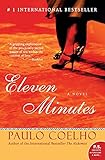
Editors Reads Verdict
Coelho's most explicit novel and arguably his most uneven. There are passages of genuine insight about the body and the spirit, but they are buried under long stretches of diary-entry philosophising. Best suited to readers who already love Coelho and want the full catalogue.
What We Loved
- Coelho's most emotionally raw and daring subject matter — a genuine departure from his usual territory
- The early Brazilian chapters have the warm, fable-like quality of his best work
- Some passages on sexuality and the sacred are genuinely thought-provoking
Minor Drawbacks
- Maria's diary entries dominate the second half and slow the narrative to a near-stop
- The philosophical reflections often feel repetitive rather than deepening
- The romance that resolves the story is rushed and less earned than in The Alchemist
Key Takeaways
- → The body and the spirit are not opposites — the sacred can be found in the most unlikely places
- → Love requires vulnerability, and vulnerability requires courage most people spend a lifetime avoiding
- → The gap between the life we imagine and the life we live is where most of us actually exist
| Author | Paulo Coelho |
|---|---|
| Publisher | HarperOne |
| Pages | 224 |
| Published | January 1, 2004 |
| Language | English |
| Genre | Literary Fiction, Spirituality, Romance |
| Difficulty | Beginner |
| Best For | Fans of Paulo Coelho who have already read The Alchemist and want to explore his more explicit, less allegorical work. Not an ideal first Coelho. |
Coelho’s Most Daring Novel
Eleven Minutes was published in Brazil in 2003 under the title Onze Minutos and translated into English the following year. It became an international bestseller, as most Coelho novels do — his readership by that point was enormous and loyal enough to follow him almost anywhere. Where he chose to go here was more sexually explicit territory than he had ever attempted, and the novel’s reception was accordingly mixed.
The title refers to a calculation Maria makes early in the story: that a single act of sex, stripped of all meaning, lasts eleven minutes. The book is an extended meditation on what fills the remaining hours — and whether something called love can redeem a life that has drifted far from where it began.
The Story
Maria grows up in a small Brazilian town dreaming of a love she reads about in novels. A brief romance in adolescence ends in disappointment. A chance encounter at eighteen leads her to Geneva, ostensibly to work as a samba dancer, but the job evaporates and she ends up working first as a waitress, then as a sex worker at a high-end club.
The setup has real narrative potential, and Coelho handles the early stages with the gentle fable-like warmth that distinguishes his best writing. Maria is not a victim — she is practical, curious, and philosophically inclined in the way all Coelho protagonists tend to be. She earns well, reads voraciously, keeps a journal, and sets herself a deadline: one year, enough savings, then home to Brazil to start a farm.
Where the Novel Struggles
The problem is that Eleven Minutes increasingly becomes that journal. Long passages of Maria’s diary entries interrupt the narrative, delivering Coelho’s reflections on sex, love, and the soul in a more direct and less dramatised form than he typically employs. In The Alchemist, the philosophy is embodied in characters and action; here, it is frequently handed to the reader as monologue.
When a young Brazilian painter named Ralf Hart enters the story, the novel gains momentum again. Their relationship — tentative, spiritually charged, sexually complicated — gives Coelho the human drama he needs to ground his ideas. But the resolution, when it comes, feels hurried, as if the novel is more comfortable philosophising than concluding.
Honest Assessment
Eleven Minutes is worth reading if you already love Coelho and are curious about his range. It is his most direct engagement with the body, desire, and the question of whether a woman’s sexuality can belong to herself rather than to the men or institutions that seek to define it. For 2004, that was a more radical subject for a mainstream literary novel than it might appear today.
But it is also one of his least disciplined books. The insights are real; the pacing is indulgent; the climax does not quite earn the journey. Readers coming to Coelho for the first time should start with The Alchemist. Those who have read it and want to understand the full arc of his work will find Eleven Minutes genuinely interesting — if somewhat frustrating.
Our rating: 3.9/5 — Ambitious subject matter, uneven execution. A worthwhile read for committed Coelho fans, but not where to begin.
The Cultural Context of Its Publication
When Eleven Minutes appeared in Brazil in 2003, Coelho was already one of the most widely read authors in the world — The Alchemist had been selling for fifteen years, translated into dozens of languages, its central message about the Personal Legend absorbed into global self-help culture. The decision to write a novel about a Brazilian woman who becomes a sex worker in Switzerland was a deliberate departure, and one that generated significant attention precisely because of who was making it.
Coelho has said in interviews that the novel arose from his desire to understand sexuality as a spiritual phenomenon — to examine why the most intimate physical act has been so systematically separated from the sacred in Western culture. This is an old question, addressed by writers from D. H. Lawrence to Anaïs Nin, and Coelho’s approach is characteristic: he is less interested in social analysis than in the individual spiritual journey that sexuality makes possible.
Maria’s Character in Detail
What distinguishes Maria from many literary heroines who occupy similar situations is her analytical clarity about her own circumstances. She is not presented as a victim of trafficking or economic desperation in the conventional sense — she makes choices, documents them in her journal, and thinks carefully about what she is doing and why. Her Brazilian practicality — she sets financial goals, tracks her savings, plans her return — sits in deliberate tension with the philosophical questions her situation raises.
This characterisation reflects Coelho’s consistent interest in protagonists who are both agents of their own stories and seekers of something larger than practical survival. Maria’s journal functions as the novel’s philosophical vehicle, but it also functions as a portrait of a specific kind of intelligence: the intelligence of someone who uses reflection as a survival tool.
The Ralf Hart Relationship
The romantic narrative that gives the novel its resolution centres on Ralf Hart, a Swiss painter of some distinction who encounters Maria at the club where she works and is drawn to her not as a client but as a subject. His ability to see what he calls her “personal light” — the individual quality of presence that her professional self has been trained to suppress — is the novel’s central romantic image.
The relationship between Ralf and Maria is the novel’s most conventionally Coelho-esque element: the wise male figure who sees the female protagonist more clearly than she sees herself. Critics who find this dynamic patronising have a point, and it is a limitation the novel shares with some of his earlier work. Readers who accept the dynamic as a vehicle for exploring questions about authentic self-presentation will find the relationship genuinely affecting.
Why It Belongs in the Coelho Catalogue
Eleven Minutes is a book that rewards readers who come to it with patience and who are willing to accept its philosophical ambitions on their own terms. Its flaws are real — the diary-heavy second half, the rushed resolution — but its central argument, that the erotic and the spiritual are aspects of the same human capacity for openness and vulnerability, is genuinely engaged with rather than merely gestured toward. As Coelho’s most ambitious formal experiment and his most controversial subject, it occupies a unique place in his work.
Frequently Asked Questions
What is "Eleven Minutes" about?
Maria, a young Brazilian woman, travels to Geneva dreaming of fame and fortune. Instead, she becomes a high-end prostitute, all while searching for — and philosophising about — the nature of love, desire, and the sacred in the profane.
Who should read "Eleven Minutes"?
Fans of Paulo Coelho who have already read The Alchemist and want to explore his more explicit, less allegorical work. Not an ideal first Coelho.
What are the key takeaways from "Eleven Minutes"?
The body and the spirit are not opposites — the sacred can be found in the most unlikely places Love requires vulnerability, and vulnerability requires courage most people spend a lifetime avoiding The gap between the life we imagine and the life we live is where most of us actually exist
Is "Eleven Minutes" worth reading?
Coelho's most explicit novel and arguably his most uneven. There are passages of genuine insight about the body and the spirit, but they are buried under long stretches of diary-entry philosophising. Best suited to readers who already love Coelho and want the full catalogue.
Ready to Read Eleven Minutes?
Check the current price on Amazon.
Check Price on Amazon (paid link)Prices and availability are subject to change. See Amazon for current price.
Review last updated: