Hermann Hesse Books in Order: Complete Bibliography & Best Starting Points
Hermann Hesse's complete bibliography in order — from Siddhartha and Steppenwolf to Demian and The Glass Bead Game. Best starting points and why he remains essential reading.
Hermann Hesse won the Nobel Prize in Literature in 1946, wrote his most important novels in the 1920s, and became the unlikely saint of the 1960s counterculture. His books — short, philosophical, and intensely concerned with the individual’s spiritual development outside institutional religion and bourgeois society — sold 30 million copies in the United States alone during the 1960s and 1970s.
He drew equally on European Romanticism, Jungian psychology, and the Indian and Chinese philosophical traditions he had studied since childhood, and the synthesis he achieved — a way of describing the search for individual authenticity that was neither conventionally religious nor dismissively secular — has proved lastingly useful to readers in exactly the condition of searching his protagonists inhabit.
Where to Start
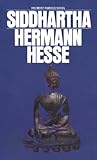
Siddhartha (1922)
The novel most accessible and most likely to be returned to. Siddhartha is a young Brahmin who leaves his comfortable life to seek enlightenment — he tries asceticism with the Samanas, encounters the historical Buddha (and finds that hearing another’s wisdom is insufficient), experiences the pleasures of the world with the courtesan Kamala, and eventually finds his peace as a ferryman on a river.
Hesse’s argument — that enlightenment cannot be taught or handed down but must be directly experienced — is the most compact statement of his essential theme. At under 130 pages, Siddhartha is the most efficient introduction to his world.
Demian (1919)
Published under a pseudonym initially, Demian tells the story of Emil Sinclair from childhood through young adulthood, and his relationship with the mysterious and older Max Demian, who introduces him to an alternative way of understanding morality (the Mark of Cain as a sign of strength rather than shame) and existence. The novel is the most explicitly Jungian of Hesse’s works — the shadow, the anima, individuation — and the most accessible for younger readers.
Published in Germany in 1919, it sold 100,000 copies in its first year: a generation of young Germans who had survived World War One and were trying to understand what their world had become found Hesse’s framework of individual spiritual development outside institutional structures exactly what they needed.
Complete Bibliography in Order
Novels
| Title | Year | Note |
|---|---|---|
| Peter Camenzind | 1904 | Debut; nature and artistic vocation |
| Beneath the Wheel | 1906 | School as spiritual destruction |
| Gertrud | 1910 | Music and love; minor |
| Rosshalde | 1914 | Marriage and artistic isolation |
| Knulp | 1915 | Wanderer; three linked stories |
| Demian | 1919 | Essential; Jungian; coming-of-age |
| Klingsor’s Last Summer | 1920 | Three novellas; post-WWI |
| Siddhartha | 1922 | Essential; Eastern philosophy |
| Steppenwolf | 1927 | Most experimental; modernist |
| Narcissus and Goldmund | 1930 | Medieval; spirit vs. flesh |
| Journey to the East | 1932 | Novella; spiritual quest |
| The Glass Bead Game | 1943 | Final novel; utopia; Nobel Prize work |
The Essential Three
Steppenwolf (1927)
Hesse’s most formally experimental and most distinctively modernist novel. Harry Haller — the “Steppenwolf,” a man who believes himself to be half-human and half-wolf, unable to live in civilised society — encounters a mysterious figure who leads him into the Magic Theatre, a hall of mirrors in which he confronts the multiple selves he has repressed or refused to acknowledge.
The novel is more demanding than Siddhartha — it is a formal experiment as well as a philosophical one — but it is the most accurate rendering of the experience of feeling fundamentally out of place in one’s society. The Magic Theatre sequences have an oneiric quality that influenced everything from psychedelic literature to cyberpunk.
Demian and Siddhartha are described above. Together with Steppenwolf, these three form the essential Hesse.
A Writer of the Spiritual Quest
Hermann Hesse was one of the great writers of the spiritual quest, a Nobel laureate whose fiction explores the search for meaning, self-knowledge, and spiritual fulfillment, and whose work has spoken with particular power to readers seeking their own paths of self-discovery. Hesse’s fiction is centrally concerned with the spiritual quest, with the search for meaning, authenticity, self-knowledge, and spiritual fulfillment, and his protagonists are often seekers, individuals on a journey toward self-discovery and spiritual awakening. His celebrated novels, such as his tale of a seeker’s journey toward enlightenment, explore the spiritual quest with a depth and an earnestness that have made Hesse a beloved guide for readers on their own paths of self-discovery. This focus on the spiritual quest is central to Hesse’s achievement and his enduring appeal, for his fiction explores the search for meaning, self-knowledge, and spiritual fulfillment with a depth and sincerity that have spoken with particular power to readers seeking their own paths. His Nobel Prize recognized a body of work devoted to the deepest questions of meaning, authenticity, and spiritual fulfillment. For readers, Hesse offers the spiritual quest, the search for meaning, self-knowledge, and spiritual fulfillment that his fiction explores with depth and sincerity. A writer of the spiritual quest, Hesse explored the search for meaning, self-knowledge, and spiritual fulfillment, and his fiction has spoken with particular power to readers seeking their own paths of self-discovery.
The Individual and the Path to Selfhood
A central concern of Hermann Hesse’s fiction is the journey of the individual toward authentic selfhood, the often difficult and solitary path of self-discovery, individuation, and the realization of one’s true self against the pressures of conformity and convention. Hesse’s fiction is preoccupied with the individual’s journey toward authentic selfhood, with the difficult and often solitary path of self-discovery and individuation, and with the struggle to realize one’s true and authentic self against the pressures of society, conformity, and convention. His protagonists are often individuals who must break from convention and society, who must undertake a difficult and solitary journey of self-discovery, in order to realize their authentic selves and find their own paths. This concern with the individual and the path to selfhood is central to Hesse’s fiction, for he explored the journey toward authentic selfhood, the difficult work of individuation and self-discovery, and the struggle to realize one’s true self against the pressures of conformity. His fiction speaks to the universal human task of becoming oneself, of realizing one’s authentic self and finding one’s own path, and it has resonated with readers undertaking their own journeys of self-discovery. For readers, Hesse offers a profound exploration of the individual and the path to selfhood, the journey of self-discovery and individuation toward authentic selfhood. The individual and the path to selfhood are a central concern of Hesse’s fiction, the journey toward authentic selfhood, the difficult path of self-discovery and individuation, and the struggle to realize one’s true self against the pressures of conformity and convention.
East and West, Body and Spirit
A distinctive dimension of Hermann Hesse’s fiction is its engagement with the wisdom of both East and West and its exploration of the tensions and the possible harmony between body and spirit, sense and soul, the worldly and the transcendent. Hesse was deeply influenced by Eastern thought and spirituality as well as by the Western tradition, and his fiction engages with the wisdom of both East and West, drawing on Eastern spiritual traditions in its exploration of the spiritual quest and the path to enlightenment. His fiction also explores the tensions and the possible reconciliation between body and spirit, between the sensual and worldly dimensions of life and the spiritual and transcendent, seeking a harmony or integration of these opposing aspects of human existence. This engagement with East and West, body and spirit, is a distinctive dimension of Hesse’s fiction, for he drew on the wisdom of both traditions and explored the tensions and the possible harmony between the sensual and the spiritual, the worldly and the transcendent. His fiction seeks an integration of these opposing aspects of human existence, a harmony of body and spirit, sense and soul, that is central to his vision of the spiritual quest. For readers, Hesse offers an engagement with East and West, body and spirit, the wisdom of both traditions and the exploration of the harmony between the sensual and the spiritual. East and West, body and spirit are a distinctive dimension of Hesse’s fiction, its engagement with the wisdom of both East and West and its exploration of the tensions and the possible harmony between body and spirit, sense and soul, the worldly and the transcendent.
Reading Order Recommendations
New to Hesse: Siddhartha → Demian → Steppenwolf. From most accessible to most demanding.
For spiritual readers: Siddhartha → Narcissus and Goldmund → The Glass Bead Game.
Complete Hesse: Demian → Siddhartha → Steppenwolf → Narcissus and Goldmund → The Glass Bead Game. This is the arc from early work to his final, most ambitious synthesis.
Frequently Asked Questions
What is the best Hermann Hesse book to start with?
Siddhartha is the universal starting point — at under 130 pages, it is the most compressed expression of Hesse's essential themes: the search for enlightenment, the inadequacy of any single path, the necessity of direct experience over received wisdom. It is also the most accessible. Steppenwolf is more ambitious and more difficult — the right choice for readers who want Hesse at his most formally experimental. Demian is the best for younger readers encountering Hesse for the first time.
Why was Hesse so popular in the 1960s counterculture?
Hesse's novels aligned precisely with 1960s counterculture concerns: the rejection of bourgeois materialism (Steppenwolf), the integration of Eastern philosophy with Western experience (Siddhartha), the primacy of individual spiritual development over social conformity (Demian), and the sense that conventional society was spiritually inadequate (all of his major works). He had actually written all these novels in the 1920s, but they spoke directly to a generation questioning the values they had inherited. The Timothy Leary endorsement helped.
Did Hesse win the Nobel Prize?
Yes — Hesse won the Nobel Prize in Literature in 1946 'for his inspired writings which, while growing in boldness and penetration, exemplify the classical humanitarian ideals and high qualities of style.' He was Swiss-German, had spent much of his career in Switzerland, and had been a pacifist during both world wars. The Nobel committee cited his ability to combine Western and Eastern philosophical traditions.
What is The Glass Bead Game about?
The Glass Bead Game (also published as Magister Ludi) is Hesse's final and most ambitious novel — a future utopia where an elite group of intellectuals plays an elaborate game combining all human arts and sciences into a formal synthesis. The protagonist, Joseph Knecht (whose name means 'servant'), rises to become Master of the Game and then renounces the position to work as a tutor. The novel is a meditation on the tension between intellectual achievement and lived engagement with the world.