Albert Camus Books in Order: Complete Bibliography & Best Starting Points
Albert Camus's complete bibliography in order — from The Stranger and The Plague to The Myth of Sisyphus. Best starting points and why his philosophy of the absurd still matters today.
Albert Camus is the philosopher of living without certainty. Where existentialists like Sartre argued that freedom is the fundamental human condition and that we must use it to create meaning, Camus argued that the search for meaning is confronted at every turn by the world’s silence — and that the honest response is neither despair nor false consolation but revolt: continuing to live, to engage, to resist, without expecting the cosmos to validate the effort.
He was born in Algeria in 1913, to a French working-class family. He died in a car accident in 1960 at forty-six, with an unfinished autobiographical novel (The First Man) in his jacket pocket. In between, he wrote three novels, two plays, two major philosophical essays, and enough journalism and fiction to fill 29 volumes of complete works. The essential Camus is a small fraction of this — but the fraction is among the most important writing of the twentieth century.
Where to Start
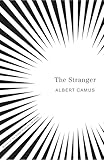
The Stranger (1942)
The novel that introduced Camus’s philosophy of the absurd to an international readership and remains his most widely read work. Meursault, a clerk in Algiers, shoots an Arab man on a beach for no clearly articulable reason — and then is tried and condemned not for the murder but, effectively, for failing to cry at his mother’s funeral. His flatness, his refusal to perform the emotions the court and society require, and his eventual confrontation with his death sentence in the novel’s final pages are the vehicle for Camus’s essential argument: the absurd condition is the honest condition, and the attempt to escape it through social performance or religious consolation is a form of bad faith.
Under 130 pages. The right starting point for any reader new to Camus.
The Plague (1947)
Camus’s most socially engaged and most widely beloved novel. Dr. Rieux, a physician in Oran when a plague epidemic strikes, chooses to fight the disease with whatever means are available, knowing he will not stop it and not knowing when it will end. Around him, a group of other men make similar choices — Father Paneloux, who begins by interpreting the plague as divine punishment and ends in a different position; Tarrou, who is constructing a private moral philosophy; Rambert, who wants to escape but stays.
The Plague is an allegory for the French Resistance, a realistic account of epidemic, and a meditation on how communities behave under catastrophe. Its argument — that fighting pointless evil is the definition of solidarity — is Camus’s most directly political statement. It has been read anew during subsequent epidemics with consistent recognition.
Complete Bibliography in Order
Fiction
| Title | Year | Note |
|---|---|---|
| A Happy Death | 1971† | First novel; unpublished in lifetime; minor |
| The Stranger | 1942 | Essential; absurdism as fiction |
| The Plague | 1947 | Essential; allegory and realism |
| The Fall | 1956 | Most complex novel; monologue form |
| Exile and the Kingdom | 1957 | Short stories; last fiction published in his lifetime |
| The First Man | 1994† | Unfinished autobiographical novel; found in crash |
†Posthumous
Philosophy
| Title | Year | Note |
|---|---|---|
| The Myth of Sisyphus | 1942 | Essential; absurdism explained |
| The Rebel | 1951 | Political philosophy; caused Sartre break |
Plays
| Title | Year | Note |
|---|---|---|
| Caligula | 1944 | Play; absurdist ruler |
| Cross Purpose | 1944 | Play |
The Philosopher of the Absurd
Albert Camus is one of the central figures of twentieth-century thought and literature, a writer whose profound engagement with the absurd, with the confrontation between humanity’s longing for meaning and a universe that offers none, has shaped modern philosophy and fiction alike. Camus developed and explored the philosophy of the absurd, the recognition that human beings hunger for meaning, purpose, and clarity in a universe that remains silent and indifferent, and that this confrontation defines the fundamental condition of human existence. His fiction and his philosophical essays alike grapple with the absurd and with the question of how to live in its face, of how to find a way to live with dignity, integrity, and even happiness in a universe that offers no inherent meaning. This engagement with the absurd is central to Camus’s achievement, for he confronted the deepest questions of meaning and existence with honesty and courage, refusing both false consolation and despair, and seeking a way to affirm life and human dignity in the face of the absurd. His Nobel Prize recognized a body of work of profound philosophical and literary significance, engaging the central questions of human existence with clarity, integrity, and moral seriousness. For readers, Camus offers a profound engagement with the absurd, the confrontation between humanity’s longing for meaning and an indifferent universe, and the question of how to live in its face. The philosopher of the absurd, Camus engaged the confrontation between humanity’s longing for meaning and a universe that offers none, shaping modern philosophy and fiction through his profound exploration of how to live with dignity in the face of the absurd.
Revolt, Integrity, and the Human
Beyond his diagnosis of the absurd, Camus is celebrated for his affirmation of revolt, integrity, and human solidarity, his insistence that even in a meaningless universe human beings can live with dignity, resist injustice, and affirm their shared humanity. Camus’s response to the absurd was not despair or nihilism but revolt, the defiant affirmation of life, dignity, and value in the face of a meaningless universe, and his work insists that human beings can and must live with integrity, resist injustice and suffering, and affirm their shared humanity. His exploration of revolt, in both his fiction and his philosophical essays, develops the idea that the recognition of the absurd need not lead to despair or moral abdication but can ground a defiant affirmation of life and a commitment to human dignity and solidarity. Camus’s vision is profoundly humane, for he insists, against the absurd, on the value of human life, the importance of moral integrity, and the necessity of solidarity in the face of suffering and injustice. This affirmation of revolt, integrity, and the human gives Camus’s work its moral power and its enduring appeal, for he offers, against the meaninglessness of the absurd, a vision of how to live with dignity, courage, and solidarity. His commitment to human dignity and his resistance to injustice, grounded in the recognition of the absurd, give his work its moral seriousness and its lasting significance. For readers, Camus offers a humane affirmation of revolt, integrity, and human solidarity, the insistence on living with dignity in the face of the absurd. Revolt, integrity, and the human are central to Camus’s vision, his affirmation that even in a meaningless universe human beings can live with dignity, resist injustice, and affirm their shared humanity.
Lucidity and Moral Seriousness
Albert Camus’s work is distinguished by its lucidity and its moral seriousness, the clarity of his thought and prose and the depth of his ethical concern, qualities that have made him one of the most admired and influential writers of his century. Camus wrote with a remarkable lucidity, a clarity of thought and expression that renders even the most profound philosophical questions accessible and compelling, and his work is marked throughout by this clear-eyed honesty and precision. He brought to his fiction and his essays a profound moral seriousness, a deep concern with the ethical questions of how to live, how to confront injustice and suffering, and how to maintain integrity in a difficult and often unjust world. This combination of lucidity and moral seriousness is central to Camus’s achievement and his enduring appeal, for he confronted the deepest questions of existence and ethics with a clarity and an integrity that have made his work both accessible and profound. His clear-eyed honesty about the human condition, combined with his deep ethical concern and his commitment to human dignity, gives his work its distinctive character and its lasting power. Camus refused both false consolation and cynical despair, confronting the difficult realities of existence with lucidity while maintaining a profound commitment to human dignity and moral integrity. For readers, Camus offers lucidity and moral seriousness, clear-eyed honesty about the human condition combined with a deep ethical concern and a commitment to human dignity. Lucidity and moral seriousness distinguish Camus’s work, the clarity of his thought and prose and the depth of his ethical concern, which have made him one of the most admired and influential writers of his century.
Reading Order Recommendations
New to Camus: The Stranger → The Plague → The Myth of Sisyphus. This moves from the fiction to the philosophical statement that explains it.
For philosophy first: The Myth of Sisyphus → The Stranger → The Plague. Understanding the argument before seeing it embodied.
Complete Camus: A Happy Death → The Stranger → The Myth of Sisyphus → The Plague → The Fall → The Rebel → The First Man. This traces his intellectual development from early work to the unfinished autobiography.
Frequently Asked Questions
What is the best Albert Camus book to start with?
The Stranger (L'Étranger) is universally the right starting point — at under 130 pages it is the most compressed expression of Camus's philosophy of the absurd, rendered through the most deliberately alienated narrator in French literature. Meursault's flatness, his refusal to perform the emotions the world requires of him, and his confrontation with death in the novel's final pages present absurdism as felt experience rather than abstract argument. The Plague is the longer, more socially engaged companion piece and the natural second read.
What is absurdism?
Absurdism is Camus's philosophical position: the absurd arises from the confrontation between the human desire for meaning, clarity, and purpose and the world's indifferent silence — its refusal to provide any. Camus argued that the honest response to the absurd is neither suicide (which he called 'philosophical suicide,' accepting death as a solution) nor religious faith (which he called 'philosophical leap,' accepting an external meaning that the evidence doesn't support), but revolt — continuing to live fully in the face of meaninglessness. The Myth of Sisyphus is the philosophical statement; The Stranger is the novel that embodies it.
Is Camus an existentialist?
Camus resisted the existentialist label — he had a famous public falling-out with Sartre in 1952 over political disagreements that had philosophical roots. Both Camus and Sartre addressed the absence of inherent meaning and the resulting human freedom; Sartre's existentialism emphasised the need to create meaning through engagement, while Camus's absurdism emphasised revolt against meaninglessness without the expectation of creating a substitute. Camus's political position — anti-Stalinist, critical of revolutionary violence — also separated him from the French left of his time, including Sartre.
Did Camus win the Nobel Prize?
Yes — Camus won the Nobel Prize in Literature in 1957 at forty-four, making him one of the youngest winners in the prize's history. The committee cited 'his important literary production, which with clear-sighted earnestness illuminates the problems of the human conscience in our times.' He died in a car accident in 1960, before completing his autobiographical novel The First Man.
What is The Plague about?
The Plague (La Peste) is set in Oran, a city in French Algeria, during a bubonic plague epidemic. It follows Dr. Rieux and a group of men who choose to fight the disease despite knowing they cannot prevent it and not knowing when it will end. The novel is both a realistic account of epidemic and an allegory — written in 1947, it was read immediately as an allegory for the Nazi occupation of France, and the choice between collaboration and resistance. Its theme of collective response to an indifferent catastrophe has made it newly relevant during subsequent epidemics.