Where to Start with Albert Camus: A Reading Guide
Where to start with Albert Camus — whether to begin with The Stranger, The Plague, or The Fall. A complete reading guide to Camus's novels and philosophy.
Albert Camus (1913–1960) is the most important French writer of the post-war generation — the novelist and philosopher who developed the philosophy of absurdism and demonstrated, in his fiction, what it looks like to live with the knowledge that the universe offers no meaning and human consciousness demands it. His three major novels — The Stranger, The Plague, The Fall — are among the most philosophically serious and most formally precise works in twentieth-century fiction. He won the Nobel Prize in Literature in 1957.
Where to Start
The Essential Entry Point: The Stranger (1942)
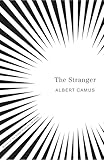
The essential first Camus — and one of the most perfectly constructed short novels in the twentieth century. Meursault’s narration (flat, concrete, precise) is itself the philosophical argument: a consciousness that attends to physical sensation and immediate perception without the mediation of conventional emotional response. The trial in the novel’s second half, in which Meursault is condemned less for the killing than for his failure to perform grief at his mother’s funeral, is Camus’s most direct demonstration of the absurdist insight: society punishes authenticity and rewards performance. The Matthew Ward translation (Vintage, 1989) is the best English version.
The Political Novel: The Plague (1947)
Camus’s most humanly generous novel and his most explicitly political. The response to the plague — Dr. Rieux’s steady commitment to medical care, Tarrou’s voluntary formation of sanitary teams, Rambert’s eventual decision to stay rather than escape — constitutes Camus’s account of solidarity as the only adequate human response to suffering. The novel was read at its publication as an allegory of the Nazi occupation (the plague as Nazism; the sealed city as occupied France; Rieux and Tarrou as the Resistance); it remains just as relevant as an account of how communities respond to any collective catastrophe. Richer and more humanly varied than The Stranger; the best second Camus.
The Philosophical Novel: The Fall (1956)
Camus’s most complex and most ironic novel — a monologue delivered in an Amsterdam bar by Jean-Baptiste Clamence, a former Parisian lawyer who has abandoned his successful practice after a moment of failure (he failed to save a drowning woman) and whose confession to the unnamed listener is both genuinely confessional and an elaborate manipulation. The novel is Camus’s most direct engagement with the question of hypocrisy — the gap between self-image and actual behaviour — and his most Dostoevskian work. Best approached after The Stranger and The Plague, when the contrast to Meursault’s sincerity becomes part of the novel’s argument.
The First Man (1994)
Camus’s unfinished novel — published posthumously from the manuscript found in the wreck of the car in which he died — and his most autobiographical. Jacques Cormery returns to Algeria to find his father’s grave and to reconstruct, from memory and research, the life of the man who died before he knew him. The novel is an account of growing up in poverty in colonial Algeria — the Belcourt neighbourhood of Algiers, the grandmother, the silence of the mother — and is Camus’s most emotionally direct work: he is not performing philosophy here but remembering a childhood. The most human and most tender of his books.
Why The Stranger Is the Ideal First Book
For a reader new to Albert Camus, The Stranger is the ideal first book because it is his most famous novel, one of the most perfectly constructed short novels of the twentieth century, and the fullest expression of his distinctive gifts, the spare, precise prose, the philosophical depth, and the exploration of the absurd. The Stranger follows Meursault, an emotionally detached man whose flat, concrete narration and indifference lead him to a senseless killing and its aftermath, in a novel that embodies Camus’s philosophy of the absurd. As an entry point it is ideal, for it is his best-known work and a perfect example of his spare, philosophical fiction. It welcomes the newcomer with its gripping, unsettling story, its precise prose, and its philosophical resonance, drawing the reader into his distinctive vision. It is among his major works and the one that best represents his gifts, so the new reader encounters Camus at his most characteristic. For the newcomer, then, The Stranger is the natural and ideal starting point.
What to Expect as a New Reader
As a new reader, you can expect The Stranger to be a spare, precise, and philosophically resonant short novel. You can expect a detached narrator, for the novel follows Meursault, an emotionally detached man whose flat, concrete narration is itself part of the philosophical argument. You can expect spare, precise prose, for Camus writes with remarkable economy and clarity. You can expect the philosophy of the absurd, for the novel embodies Camus’s idea of the absurd, the confrontation between the human search for meaning and an indifferent universe. You can expect a stark, unsettling story, for Meursault’s indifference leads to a senseless killing and his trial. You can expect philosophical depth beneath a deceptively simple surface. You can expect a short, gripping, and resonant novel. Expect, in short, a spare, precise, and philosophically resonant short novel, a perfect introduction to Camus’s gifts.
Going Deeper After Your First Book
Once The Stranger has introduced you to Camus’s gifts, the reader who wishes to go deeper can explore his other novels and his philosophical essays, which develop his exploration of the absurd, rebellion, and the human condition. His great novel of a city stricken by plague is a powerful exploration of suffering, solidarity, and resistance, while his philosophical essays, above all his meditation on the absurd and the question of meaning, lay out the ideas that underpin his fiction. Reading these after The Stranger deepens your appreciation of Camus’s distinctive gifts, the spare prose, the philosophical depth, and the engagement with the absurd and the human condition. His characteristic concerns run through his work. Building your reading journey through Camus is a matter of following him from The Stranger into his other novels and his philosophical essays. The reader who begins here and continues will encounter one of the most important and accessible philosophical writers of the twentieth century, and a Nobel laureate.
Reading Camus
Camus’s prose is among the cleanest and most precise in French literature — a deliberate contrast to the baroque complexity of Proust or Sartre’s dense philosophical style. The simplicity is not naivety but craft: each sentence does exactly what it needs to do, and nothing more. The best preparation for reading him is to read The Stranger without trying to extract its philosophical argument, and to notice how the prose itself — the way Meursault experiences the world — is the argument. The meaning is in the style, not above it.
Frequently Asked Questions
Where should I start with Albert Camus?
The Stranger (1942) is the essential starting point — a short, immediately accessible novel in which the Algerian Meursault kills an Arab on a beach in a moment of abstraction and is condemned to death less for the killing than for his refusal to perform the emotional responses that society expects. It is Camus's most concentrated statement of the absurdist position: the world does not offer meaning; human consciousness demands it; the result is the absurd. The Plague is the best second Camus; The Fall for readers who want his most complex moral investigation.
What is The Stranger about?
The Stranger (1942) follows Meursault, a French Algerian office worker, through the death of his mother (at which he feels no grief), an affair with a woman (whom he does not love in the conventional sense), the killing of an Arab on a beach (for reasons that Meursault himself cannot clearly articulate), and his trial and condemnation to death (in which the prosecution focuses on his emotional indifference at his mother's funeral as evidence of the moral depravity that produced the killing). The novel's argument is that society punishes not the act but the failure to perform the appropriate emotions — and that Meursault's honesty about his indifference is more authentic than the performances demanded of him.
What is The Plague about?
The Plague (1947) is set in Oran, Algeria, during a bubonic plague epidemic, and follows the doctor Rieux and a group of other characters — the journalist Rambert who wants to escape to his wife in Paris, the clerk Grand who is writing a novel, the criminal Cottard who thrives under the plague's equalisation of social hierarchy, the saint-like Tarrou — as they respond to the disaster differently. The novel is both a realistic account of collective suffering and a political allegory of the Nazi occupation of France. Camus's argument: the only adequate response to suffering is solidarity and resistance, even when resistance is futile.
What is Camus's absurdism?
Camus's absurdism is not a pessimistic philosophy but a diagnosis of the human condition and a proposed response to it. The 'absurd' is the confrontation between the human need for meaning and clarity and the universe's silence — its refusal to offer either. Camus's argument, developed in The Myth of Sisyphus (1942, his philosophical essay), is that the correct response to the absurd is neither suicide nor the 'philosophical suicide' of adopting a religious or ideological system that pretends the silence isn't there, but rather the maintenance of the revolt: the continued assertion of human value in the face of indifference. 'One must imagine Sisyphus happy' is his conclusion.