Gustave Flaubert Books in Order: Complete Bibliography & Best Starting Points
Gustave Flaubert's complete bibliography in order — from Madame Bovary and Sentimental Education to Three Tales and Salammbô. Best starting points for new readers.
Gustave Flaubert is the most important novelist in the French tradition and the founder of literary realism — the writer who established the modern novel’s demands for stylistic precision, psychological accuracy, and the suppression of the author’s own opinions in favour of the objective rendering of experience. He wrote very slowly, revised obsessively, read his prose aloud to test its sound, and produced only five complete novels, each of which changed what the novel could do.
Born in Rouen in 1821 to a surgeon’s family, he spent most of his life in Normandy, writing and corresponding with a large circle of friends that included George Sand, Ivan Turgenev, and Guy de Maupassant (whom he mentored). He died in 1880.
Where to Start
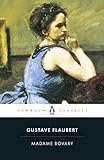
Madame Bovary (1857)
The masterpiece and the essential starting point — widely considered one of the two or three finest novels in any language. Emma Bovary, a provincial doctor’s wife whose imagination has been formed by Romantic fiction, finds the reality of bourgeois provincial life catastrophically inadequate. Flaubert’s prose renders her consciousness with a precision that makes her romantic fantasies comprehensible and their inadequacy visible — the distance between what Emma believes and what Flaubert shows is the space in which the novel’s moral argument lives. The technique of free indirect discourse — shifting between narrator and character perspective without signalling the transition — was Flaubert’s invention and is now the standard tool of the literary novel.
Three Tales
Three Tales (1877)
Flaubert’s finest shorter work — three stories that demonstrate his range. “A Simple Heart” follows Félicité, a servant woman in Normandy, through decades of ordinary life to a faith that is simple, sincere, and deeply moving: the most compassionate thing Flaubert wrote. “The Legend of Saint Julian the Hospitaller” is a medieval tale of violence and redemption. “Herodias” is a reimagining of the beheading of John the Baptist. The collection shows that Flaubert could achieve his effects at very short range.
The Later Novels
Sentimental Education (1869)
Flaubert’s most ambitious and most personal novel — Frédéric Moreau, a young man from the provinces in Paris during the 1848 revolution, pining for Madame Arnoux while the world changes around him and he remains essentially passive. Flaubert’s portrait of a generation that had great ideals and failed to live up to them — distracted by romantic obsession, weakened by class comfort, never quite able to act — is one of the most devastating in European literature. Less immediately gripping than Madame Bovary, but rewarding readers who return to it.
Salammbô (1862)
Flaubert’s historical novel set in ancient Carthage — a violent, lush spectacle of mercenary wars, religious ecstasy, and the destruction of a civilisation. Very different from his other work: more sensational, more committed to historical research (Flaubert spent years preparing it), less interested in psychological realism. The best demonstration of what Flaubert could do when he abandoned the restraint of his realist work.
The Apostle of Style
Gustave Flaubert was one of the supreme stylists in the history of the novel, a writer whose devotion to the perfection of prose, to finding the exact word and the perfect sentence, set a new standard for the artistry of fiction and influenced the development of the modern novel. Flaubert was famously devoted to style, to the painstaking pursuit of the perfect expression, the exact word, and the flawless sentence, and his dedication to the artistry of prose was legendary and exacting. He labored over his sentences with extraordinary care, seeking the precise word and the perfect rhythm, and his commitment to stylistic perfection established a new standard for the craft of the novel and influenced generations of writers. This devotion to style is central to Flaubert’s achievement, for his pursuit of the perfect expression elevated the artistry of fiction and established the novel as a form capable of the highest stylistic perfection. His exacting craftsmanship and his pursuit of the exact word made him a model for subsequent writers and a founder of the modern conception of the novel as a work of conscious art. For readers, Flaubert offers the supreme artistry of style, the pursuit of the perfect expression and the flawless sentence that set a new standard for the novel. The apostle of style, Flaubert devoted himself to the perfection of prose, to finding the exact word and the perfect sentence, setting a new standard for the artistry of fiction and influencing the development of the modern novel.
Realism and Irony
A central achievement of Gustave Flaubert’s fiction is its combination of unflinching realism and penetrating irony, his clear-eyed representation of bourgeois life and his ironic exposure of its illusions, mediocrities, and self-deceptions. Flaubert brought to his fiction an unflinching realism, a clear-eyed and detailed representation of the realities of bourgeois life, refusing sentimentality and idealization in favor of an honest depiction of his world. This realism is combined with a penetrating irony, a detached and often mordant exposure of the illusions, mediocrities, and self-deceptions of his characters and their world, and his celebrated Madame Bovary, in particular, anatomizes the romantic illusions and the bourgeois mediocrity of its world with a devastating irony. This combination of realism and irony is central to Flaubert’s achievement, for he represented bourgeois life with unflinching honesty while exposing its illusions and self-deceptions with a penetrating irony. His clear-eyed realism and his mordant irony give his fiction its critical power and its enduring insight into the illusions and mediocrities of bourgeois existence. For readers, Flaubert offers realism and irony, the unflinching representation of bourgeois life and the penetrating exposure of its illusions and self-deceptions. Realism and irony are a central achievement of Flaubert’s fiction, his clear-eyed representation of bourgeois life combined with his penetrating ironic exposure of its illusions, mediocrities, and self-deceptions.
The Novel as a Work of Art
Gustave Flaubert is often regarded as the writer who established the novel as a serious and conscious work of art, whose example transformed the novel from popular entertainment into a form demanding the highest artistry and seriousness. Flaubert’s devotion to style, his exacting craftsmanship, and his conception of the novel as a work demanding the most serious artistic dedication transformed the status and the ambition of the form. Before Flaubert, the novel was often regarded as a form of popular entertainment, but his example established it as a serious work of art, demanding the same dedication, craftsmanship, and artistic seriousness as poetry, and his influence on the subsequent development of the novel was profound. This conception of the novel as a work of art is central to Flaubert’s significance, for he elevated the form to the status of high art, demanding the most exacting craftsmanship and artistic seriousness, and his example influenced the development of the modern novel and the conception of fiction as a conscious art. His dedication to the artistry of the novel established a new standard and a new ambition for the form. For readers, Flaubert offers the novel as a work of art, the form elevated to the highest artistry and seriousness through his exacting craftsmanship and his artistic dedication. The novel as a work of art is central to Flaubert’s significance, for he established the novel as a serious and conscious work of art, transforming it from popular entertainment into a form demanding the highest artistry and seriousness, and influencing the development of the modern novel.
Reading Order Recommendations
New to Flaubert: Madame Bovary → Three Tales → Sentimental Education.
Historical fiction: Madame Bovary → Salammbô → Three Tales.
Complete Flaubert: Madame Bovary → Sentimental Education → Three Tales → Salammbô → Bouvard and Pécuchet.
Frequently Asked Questions
What is the best Flaubert novel to start with?
Madame Bovary (1857) is the essential starting point and is generally considered one of the two or three greatest novels in any language — it is the founding document of literary realism and the most carefully constructed prose fiction in French literature. For readers who have read Madame Bovary and want more, Three Tales (1877) is the best follow-up: three shorter works that demonstrate Flaubert's range, culminating in 'A Simple Heart,' the story of a servant woman's faith, which is one of the most moving pieces of prose in French.
What is Madame Bovary about?
Madame Bovary (1857) follows Emma Bovary, the wife of a provincial French doctor, whose romantic fantasies (formed by the novels she has read) are destroyed by the reality of bourgeois provincial life. She takes lovers, runs up debts, and eventually poisons herself. Flaubert's achievement is not the story but the style — the way the prose renders Emma's consciousness with absolute precision, making her fantasies comprehensible and their inadequacy visible simultaneously. The famous technique of free indirect discourse — moving between narrator and character perspective without signalling the transition — was Flaubert's invention and is now standard literary practice.
What is Sentimental Education about?
Sentimental Education (1869) follows Frédéric Moreau, a young man from the provinces who comes to Paris and falls in love with an older married woman, Madame Arnoux, while the 1848 revolution unfolds around him. The novel is Flaubert's most personal (based partly on his own experience) and his most political — a comprehensive portrait of a generation that had great ideals and squandered them through weakness, distraction, and bad faith. It is less immediately engaging than Madame Bovary but generally considered its equal or superior by critics who have lived with it longer.
Why was Madame Bovary put on trial?
Madame Bovary was published serially in the Revue de Paris in 1856 and immediately prosecuted for obscenity and offences against religion. The charges centred on Flaubert's sympathetic treatment of adultery and on a scene in which Emma receives the last rites while delirious and is said to press her lips to a crucifix in a way the prosecution found sexual. Flaubert and his publisher were acquitted. The trial made the novel a cause célèbre and significantly boosted its readership. Flaubert's response was characteristic: he removed three passages the magazine had already cut without his consent, and published the complete text in book form.