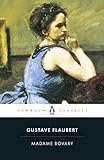
Editors Reads Verdict
Flaubert's scandalous 1857 novel invented literary realism as we know it — a prose of ruthless precision that refuses sentimentality while rendering sentiment with devastating accuracy. Emma Bovary's tragic delusions are not merely personal failures but an indictment of the culture that manufactured them.
What We Loved
- Flaubert's prose style is the most technically precise in the realist tradition
- The free indirect discourse creates an irony so fine it is often impossible to locate
- Emma's self-destruction is genuinely tragic, not merely pathetic
- The novel's critique of romantic fiction anticipates postmodernism
Minor Drawbacks
- The deliberately unsympathetic narrative distance can feel cold to readers who want to love Emma
- The husband Charles is so passive as to be almost a non-character by design
- Some of the provincial social detail requires historical context to fully appreciate
Key Takeaways
- → Romantic fiction shapes and distorts desire — Emma's dissatisfaction is partly a literary inheritance
- → The gap between imagination and reality is the source of all Emma's suffering
- → Bourgeois society offers women comfort or disgrace, never fulfilment
- → Flaubert's famous 'le mot juste' is a moral as well as aesthetic commitment — imprecision is dishonesty
- → The accumulation of small debts — financial and emotional — inevitably reaches a moment of reckoning
| Author | Gustave Flaubert |
|---|---|
| Publisher | Penguin Classics |
| Pages | 368 |
| Published | October 1, 1856 |
| Language | English |
| Genre | Fiction, Classic Literature, Realism |
| Difficulty | Intermediate |
| Best For | Readers who appreciate prose craftsmanship and psychological precision — and those interested in how literary realism emerged as a response to the distortions of romantic fiction. |
How Madame Bovary Compares
Madame Bovary at a glance against 3 similar books readers weigh alongside it.
| Book | Author | Rating | Best for |
|---|---|---|---|
| Madame Bovary (this book) | Gustave Flaubert | ★ 4.6 | Readers who appreciate prose craftsmanship and psychological precision — and |
| Anna Karenina | Leo Tolstoy | ★ 4.9 | Classic Fiction |
| Middlemarch | George Eliot | ★ 4.8 | Readers who want the novel form at its most intellectually and emotionally |
| The Awakening | Kate Chopin | ★ 4.4 | Readers interested in feminist literary history and the specific constraints of |
The Novel That Invented Literary Realism
Flaubert spent five years writing Madame Bovary, often producing no more than a page in a week, searching for the exact word — le mot juste — that would render experience with absolute precision. When the novel was published in serial form in 1856 (and as a book in 1857, following an obscenity prosecution that Flaubert won), it was immediately recognised as something new: a prose fiction that had achieved the density and precision of poetry without sacrificing narrative.
The story is brutally simple: Emma Rouault, raised on romantic novels in a provincial convent school, marries the earnest, limited country doctor Charles Bovary and finds that life fails to deliver the passion she has been promised. Two affairs, extravagant spending on the luxuries that stand in for love, and a gradually mounting debt lead to catastrophe.
The Romantic Education
What Flaubert understood — and what makes the novel more than a cautionary tale — is that Emma’s desires are not simply her personal failings but the product of a cultural system that manufactured those desires. The romantic novels she consumed as a girl were not harmless entertainments; they were instructions for how to feel, what to want, and what life should be. Emma is their victim before she is her own.
This critique of romantic fiction gives Madame Bovary a self-referential quality: it is a novel about the damage that novels do, written with a novelistic precision that does not itself do that damage. Flaubert refuses the consolations he is critiquing.
Flaubert’s Free Indirect Discourse
The novel’s technical achievement is its deployment of free indirect discourse so seamlessly integrated that readers are consistently uncertain whether they are inside Emma’s consciousness or observing it from outside. This ambiguity is the source of the novel’s irony — we feel Emma’s emotions at full intensity while simultaneously recognising their distortion. We pity her and judge her simultaneously, often without knowing we are doing both.
The agricultural fair scene — in which Rodolphe seduces Emma with romantic clichés while the prize announcements drone outside (“For manure…”) — is the technique’s masterpiece: two registers of bathos, one ironically undermining the other.
Emma’s Tragedy
Flaubert’s defence at his obscenity trial — “Madame Bovary, c’est moi” — is both self-protection and genuine revelation. Emma’s dissatisfaction with the gap between imagination and reality is not merely feminine or provincial; it is the universal condition of a consciousness large enough to imagine more than the world provides. She is tragic rather than merely pathetic because her desires, however distorted, are real.
Our rating: 4.6/5 — The most technically perfect of the great realist novels, and a devastating portrait of desire mis-shaped by culture.
The Inheritance of a Method
It is difficult, more than a century and a half later, to recover how genuinely new Madame Bovary felt in 1857. The obscenity prosecution that Flaubert won — the trial that made the book notorious before it could be read — now seems almost beside the point; what mattered was the method. By spending five years in pursuit of le mot juste, sometimes producing a single page in a week, Flaubert had achieved a prose that combined the density of poetry with the forward motion of narrative. Every novelist who came after him inherited the possibility he opened: that fiction could be at once ruthlessly precise and emotionally complete, that a writer could refuse sentimentality while rendering sentiment with devastating accuracy.
The famous defense at his trial — “Madame Bovary, c’est moi” — is both self-protection and genuine revelation. Emma’s dissatisfaction with the gap between imagination and reality is not merely feminine or provincial; it is the universal condition of a consciousness large enough to imagine more than the world can provide. She is tragic rather than merely pathetic because her desires, however distorted by the romantic novels that shaped them, are real desires. Flaubert understood this about her, and he made readers understand it too, even as he refused them the comfort of simply loving or simply condemning her.
What to Expect Going In
A reader approaching Madame Bovary for the first time should know what kind of book it is, because its method can be mistaken for coldness. The deliberately unsympathetic narrative distance — the way Flaubert holds Emma at arm’s length even while taking us inside her consciousness — can feel chilly to readers who want a heroine to embrace. Charles Bovary is so passive as to be almost a non-character, and this too is by design: he is the blank, decent, limited man against whom Emma’s frustrated romanticism breaks. Some of the provincial social detail, the politics of the pharmacist Homais and the texture of small-town Normandy, rewards a little historical context. None of these are flaws so much as features of the novel’s uncompromising honesty, and a reader who understands them in advance is far better placed to appreciate what Flaubert is doing.
The Persisting Achievement
What persists is the technical and moral achievement of the free indirect discourse — the seamless integration that leaves us perpetually uncertain whether we are inside Emma’s consciousness or observing it from without. This is the source of the novel’s celebrated irony: we feel her emotions at full intensity while simultaneously recognizing their distortion, pitying and judging her in the same instant, often without realizing we are doing both. The agricultural fair scene, in which Rodolphe seduces Emma with romantic clichés while the livestock prizes are announced outside, remains the technique’s masterpiece — two registers of bathos undermining each other with surgical precision. More than a cautionary tale about adultery, the novel is a study of how culture manufactures desire and then punishes those who act on it. That double vision, held with such control, is why Madame Bovary remains the most technically perfect of the great realist novels and a permanent indictment of the gap between what we are taught to want and what life can give.
Frequently Asked Questions
What is "Madame Bovary" about?
Emma Bovary, a romantic idealist trapped in a provincial marriage, pursues passion and luxury through two affairs — until her delusions destroy her.
Who should read "Madame Bovary"?
Readers who appreciate prose craftsmanship and psychological precision — and those interested in how literary realism emerged as a response to the distortions of romantic fiction.
What are the key takeaways from "Madame Bovary"?
Romantic fiction shapes and distorts desire — Emma's dissatisfaction is partly a literary inheritance The gap between imagination and reality is the source of all Emma's suffering Bourgeois society offers women comfort or disgrace, never fulfilment Flaubert's famous 'le mot juste' is a moral as well as aesthetic commitment — imprecision is dishonesty The accumulation of small debts — financial and emotional — inevitably reaches a moment of reckoning
Is "Madame Bovary" worth reading?
Flaubert's scandalous 1857 novel invented literary realism as we know it — a prose of ruthless precision that refuses sentimentality while rendering sentiment with devastating accuracy. Emma Bovary's tragic delusions are not merely personal failures but an indictment of the culture that manufactured them.
Ready to Read Madame Bovary?
Check the current price on Amazon.
Check Price on Amazon (paid link)Prices and availability are subject to change. See Amazon for current price.
Review last updated: