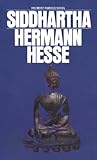
Hermann Hesse was a German-Swiss novelist and Nobel laureate whose short novel Siddhartha remains one of the most widely read works on spiritual seeking and the nature of self-knowledge.
Hermann Hesse published Siddhartha in 1922, drawing on his study of Indian philosophy and the years of personal crisis he had navigated in the aftermath of the First World War. The novel follows a young Brahmin named Siddhartha — not the historical Buddha, but a contemporary who encounters him — through a lifetime of seeking: asceticism, sensuality, commerce, and finally a kind of wisdom reached not through doctrine but through patient observation of the river near where he settles in old age.
The novel is short and its prose (in most English translations) is luminous and measured. Hesse is not interested in doctrine — Siddhartha explicitly rejects the Buddha’s teachings as insufficient for his particular path, arguing that wisdom must be personally discovered rather than transmitted — and this makes the book unusually open as spiritual literature. Its central claim, that the self must be thoroughly experienced before it can be relinquished, is developed with real philosophical care across the narrative’s arc.
Siddhartha is sometimes dismissed as a text primarily for young people encountering questions of meaning for the first time, and it is true that the novel offers more illumination at eighteen than it might at forty. But this is not a strict limitation: the book’s engagement with the problem of desire and the nature of time rewards re-reading, and Hesse’s lightness of touch — the novel never becomes didactic despite its explicitly philosophical subject — is genuinely accomplished. It has earned its place in world literature.
A Seeker’s Novelist
Hermann Hesse was a German-Swiss writer and Nobel laureate whose introspective, spiritually searching novels have spoken to generations of readers seeking meaning, self-knowledge, and authenticity. Awarded the Nobel Prize in Literature, Hesse explored the individual’s quest for spiritual fulfilment, the tension between the life of the spirit and the demands of the world, and the search for harmony between opposing forces within the self. His accessible yet profound fiction, drawing on both Western and Eastern philosophy, found an especially devoted audience among young readers and seekers, and his major works remain widely read touchstones of the literature of self-discovery.
Siddhartha
Hesse’s best-known and most beloved novel, Siddhartha, is a luminous and deceptively simple tale of spiritual awakening set in ancient India at the time of the Buddha. Following its protagonist’s lifelong journey through asceticism, sensuality, wealth, and finally wisdom, the novel explores the search for enlightenment and the discovery that truth must be found through direct experience rather than doctrine. Its serene beauty, its accessible wisdom, and its synthesis of Eastern and Western spiritual ideas have made it a perennial favourite and an enduring introduction to the literature of the inner quest.
The Divided Self
A central preoccupation of Hesse’s fiction is the divided nature of the self and the search for wholeness. His characters are often torn between conflicting impulses, between spirit and flesh, reason and passion, the individual and society, and his novels trace their struggle to reconcile these opposing forces and to achieve inner integration. Steppenwolf, his intense exploration of a man divided between his cultured human self and a wild, alienated “wolf” nature, exemplifies this concern, and the theme of the quest for psychological and spiritual unity runs throughout his work.
East Meets West
Hesse was deeply influenced by Eastern philosophy and spirituality, including Buddhism, Hinduism, and Taoism, which he combined with Western psychology and his own Romantic sensibility. His engagement with Indian and Chinese thought, evident throughout his fiction, brought these traditions to many Western readers and shaped his vision of spiritual seeking and the unity of opposites. This synthesis of Eastern and Western wisdom, pursued with genuine seriousness, gives his work its distinctive character and contributed to his great popularity among readers drawn to spiritual exploration and alternative philosophies.
A Countercultural Icon
Hesse’s work found an enormous and devoted audience among the young, particularly during the countercultural movements of the 1960s, when his themes of individual rebellion, spiritual searching, and resistance to conformity resonated powerfully. Novels such as Demian, Steppenwolf, and Siddhartha became touchstones for readers questioning conventional society and seeking authenticity and self-realisation. This connection with youthful idealism and the search for meaning has helped keep his work continuously in print and beloved, even as it has sometimes led critics to associate him with a particular phase of life.
The Glass Bead Game
Hesse’s final and most ambitious novel, The Glass Bead Game (also known as Magister Ludi), for which he was particularly honoured by the Nobel committee, is a complex and visionary work set in a future intellectual utopia devoted to a sophisticated game synthesising all human knowledge and art. A meditation on the life of the mind, the relationship between contemplation and action, and the responsibilities of the intellectual, the novel represents the culmination of his thought and his most sustained engagement with the great questions that animated his career.
Hermann Hesse’s Reputation Endures
Hermann Hesse’s influence on twentieth-century literature and on countless individual readers is profound, and his explorations of self-discovery and spiritual seeking continue to speak to those in search of meaning. For newcomers, Siddhartha is the essential and most accessible starting point, with Demian and Steppenwolf offering further entry into his exploration of the divided self. For readers seeking introspective, spiritually searching fiction concerned with authenticity, self-knowledge, and the quest for inner harmony, Hesse remains one of the most rewarding and beloved authors of the modern age.
Reading Guides