Where to Start with Hermann Hesse: A Reading Guide
Where to start with Hermann Hesse — whether to begin with Siddhartha, Steppenwolf, or The Glass Bead Game. A complete reading guide to Hesse's novels.
Hermann Hesse (1877–1962) is the German-Swiss novelist whose work — focused obsessively on the individual’s search for self-knowledge, authenticity, and spiritual meaning — became, in the 1960s, the most widely read serious literature in the English-speaking world outside university. His novels draw on Jungian psychology, Eastern philosophy (particularly Buddhism and Taoism), Nietzsche, and his own spiritual crises; they address the conflict between individuality and conformity, between the life of the spirit and the life of the senses, and between Western rationalism and Eastern contemplative traditions. He received the Nobel Prize in Literature in 1946.
Where to Start: Siddhartha (1922)
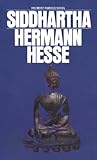
The essential Hesse — and one of the most widely read spiritual novels in any language. Siddhartha, a young Brahmin of great promise, leaves home to seek enlightenment through asceticism, then meets the Buddha himself but refuses his path (wisdom, Hesse insists, cannot be taught — it must be lived), then plunges into the sensual world as a merchant and lover, then arrives at a river where an old ferryman shows him the unity of all experience in the water’s eternal flowing.
The novel is short, calm, and aphoristic — a world away from the Romantic turbulence of Steppenwolf — and its central insight (that all of life is valid, that wisdom includes the world rather than renouncing it) is expressed with great clarity and beauty. It was written after Hesse’s study of Indian philosophy and his own breakdown, and it has the serenity of a book whose author has arrived somewhere.
Steppenwolf (1927)
Hesse’s most modern and most disturbing novel — a portrait of the intellectual in crisis that is simultaneously a Jungian psychological fable and a nightmare of Weimar Germany. Harry Haller, fifty years old and suicidal, believes himself to be divided between the bourgeois man who values order, culture, and comfort and the wild ‘steppenwolf’ who scorns all of it. Hermine, a dancer, and her circle show him that this dualism is a trap — that the self is not two but multiple, and that jazz, sensuality, and the anarchic Magic Theatre are paths to freedom rather than degradation.
The Magic Theatre sequence is hallucinatory and vertiginous; the novel’s form (frame narrative, found manuscript, interpolated treatise) is its own argument that fixed forms of identity are unstable. Hesse’s most intellectually complex novel for readers who want the full chaos of his vision.
The Glass Bead Game (1943)
Hesse’s masterwork — the novel that earned him the Nobel Prize and that he regarded as his life’s culminating statement. In the future utopian province of Castalia, an intellectual elite has withdrawn from the world to master the Glass Bead Game: an elaborate synthesis of music, mathematics, history, and philosophy. Joseph Knecht rises from student to Magister Ludi — Master of the Game — only to question whether the beautiful intellectual world of Castalia, cut off from ordinary human suffering, is truly as valuable as its inhabitants believe.
The novel is long, unhurried, and deeply serious — a meditation on the tension between perfect intellectual cultivation and engagement with life. Its conclusion, in which Knecht renounces Castalia for the world outside, is Hesse’s most complex statement about what wisdom requires.
Demian (1919)
Hesse’s breakthrough novel — published under a pseudonym during the First World War and immediately read as an uncanny expression of the crisis in European civilization. Emil Sinclair, a schoolboy from a comfortable home, encounters Max Demian, a mysterious older boy who introduces him to a reading of the story of Cain and Abel in which Cain’s mark is not shame but distinction — the mark of those who think for themselves. The novel follows Sinclair’s adolescent spiritual development under Demian’s influence and that of the enigmatic Frau Eva.
A shorter, more urgent book than Hesse’s later work — excellent for readers who want to understand why his contemporaries found him so electrifying.
Narcissus and Goldmund (1930)
Hesse’s most beautiful sustained narrative — a medieval tale of two men who represent the two poles of his recurring theme: Narcissus, an ascetic monk-scholar who disciplines his mind; and Goldmund, a wandering artist who lives through sensation, love, and creativity. The novel traces Goldmund’s life from the monastery through years of wandering, love affairs, encounters with plague and death, and eventual artistic achievement, and the two friends’ reunion in old age.
The novel is more conventional in form than Steppenwolf and more accessible than The Glass Bead Game — a story in the classic sense, told with great warmth. Its argument (that the world of instinct and art and the world of thought and discipline are not opposed but complementary) is Hesse’s most gently expressed.
Why Siddhartha Is the Ideal First Book
For a reader new to Hermann Hesse, the Nobel Prize-winning German-Swiss novelist, Siddhartha is the ideal first book because it is among his most beloved and accessible works and a perfect expression of his distinctive gifts, the lyrical prose, the spiritual depth, and the engagement with the search for meaning and self-knowledge. Siddhartha follows a young man’s lifelong spiritual quest for enlightenment and meaning in ancient India, in a lyrical, contemplative, and deeply influential short novel. As an entry point it is ideal, for it is among his most accessible and beloved works and a perfect introduction to his spiritual, searching fiction. It welcomes the newcomer with its lyrical prose, its spiritual depth, and its searching vision, drawing the reader into his distinctive vision. It is among his most famous works and a fine representation of his gifts, so the new reader encounters Hesse at his most beloved. For the newcomer, then, Siddhartha is the natural and ideal starting point.
What to Expect as a New Reader
As a new reader, you can expect Siddhartha to be a lyrical, contemplative, and spiritually searching short novel. You can expect lyrical prose, for Hesse writes with beauty, simplicity, and a meditative quality. You can expect spiritual depth, for the novel is a profound exploration of the search for enlightenment and meaning. You can expect a spiritual quest, for the novel follows a young man’s lifelong search for self-knowledge and wisdom in ancient India. You can expect engagement with Eastern spirituality and philosophy, which Hesse explores with sympathy and depth. You can expect themes of seeking, experience, and the path to inner peace. You can expect a short, accessible, and resonant novel that has inspired generations of seekers. Expect, in short, a lyrical, contemplative, and spiritually searching short novel, a perfect introduction to Hesse’s gifts.
Going Deeper After Your First Book
Once Siddhartha has introduced you to Hesse’s gifts, the reader who wishes to go deeper can explore his other novels, which continue his lyrical prose, his spiritual depth, and his engagement with the search for meaning, identity, and self-knowledge. His acclaimed works explore the divided self and the search for wholeness, the tension between the spiritual and the worldly, and the journey toward individuation, including his intense novel of a man at war with himself and his ambitious late masterpiece of an intellectual order, each marked by his searching, spiritual vision. Reading these after Siddhartha deepens your appreciation of Hesse’s distinctive gifts, the lyrical prose, the spiritual depth, and the engagement with the search for meaning and self-knowledge. His characteristic concerns run through his work. Building your reading journey through Hesse is a matter of following his fiction from Siddhartha into his other novels. The reader who begins here and continues will encounter one of the most spiritually searching novelists of the twentieth century, and a Nobel laureate.
Reading Hermann Hesse
Hesse’s novels are united by a single obsession: the individual’s need to find and become himself, at whatever cost to social acceptance or institutional loyalty. His prose is clear and warm — no opacity, no stylistic difficulty — and his philosophical content is embedded in narrative rather than in argument. Begin with Siddhartha for the most serene and most compressed vision; move to Steppenwolf for the most modern and psychological; attempt The Glass Bead Game when you want his fullest and most ambitious statement. All five novels listed here reward reading and rereading at different stages of life.
Frequently Asked Questions
Where should I start with Hermann Hesse?
Siddhartha (1922) is both the most widely read and the best starting point — a short, luminous novel about a young Indian Brahmin who leaves his privileged life to seek enlightenment, refusing the teachings of the Buddha himself to find his own path, which eventually leads him to a river and an old ferryman. It is Hesse's most distilled statement of his central themes (the individual spiritual journey, the tension between worldly experience and transcendence) and his most accessible novel. Steppenwolf is the best alternative for readers who want Hesse's most psychologically modern work; The Glass Bead Game for his most intellectually ambitious.
What is Siddhartha about?
Siddhartha (1922) follows Siddhartha, a young Brahmin in ancient India, through his spiritual journey from privileged birth through asceticism, rejection of the Buddha's teachings, immersion in the sensual world as a wealthy merchant and lover, and eventual arrival at wisdom beside a river, where the ferryman Vasudeva teaches him that all of life is contained in the river's ceaseless flow. The novel is not a retelling of the Buddha's life but Hesse's meditation on Eastern philosophy, especially the idea that wisdom cannot be transmitted by teaching — it must be lived and discovered. Written after Hesse's own breakdown and his study of Indian thought, it is his most serene and most lasting book.
What is Steppenwolf about?
Steppenwolf (1927) is narrated through the journal of Harry Haller, a middle-aged intellectual who believes himself to be two beings at war: the cultivated bourgeois man and the wild 'steppenwolf' (wolf of the steppes). The novel traces his encounter with a woman named Hermine and her circle, who introduce him to jazz, dance, drugs, and the 'Magic Theatre' — a hallucinatory space in which the dualisms that torture him are shown to be arbitrary. Hesse's most modern and most psychologically chaotic novel, it is also his most European in its engagement with Nietzsche, the crisis of German culture, and the pain of the intellectual who finds himself alienated from both bourgeois comfort and genuine animal vitality.
What is The Glass Bead Game about?
The Glass Bead Game (1943) — also published as Magister Ludi — is Hesse's final and most ambitious novel, winner of the Nobel Prize. Set in a future utopian province called Castalia, where an intellectual elite dedicates itself to the 'Glass Bead Game' (an elaborate synthesis of all human knowledge and art), it follows Joseph Knecht through his rise to become Master of the Game and his eventual renunciation of Castalia for the world outside. The novel is Hesse's meditation on the tension between the life of the mind and engagement with ordinary human reality — whether perfect intellectual cultivation justifies withdrawal from life. It is long, demanding, and deeply serious.