High-powered lawyer Julian Mantle suffers a massive heart attack in the middle of a courtroom and, shaken to his core, sells everything — including his beloved Ferrari — to study with the Sages of Sivana in the Himalayas. He returns transformed and shares seven virtues for a more purposeful, joyful, and fulfilling life.
Three brothers — the sensualist Dmitri, the rationalist Ivan, and the saintly Alyosha — are bound together by the murder of their corrupt father. Dostoevsky's final and greatest novel asks the hardest question: if God does not exist, is everything permitted?
The private philosophical notebook of the Roman Emperor Marcus Aurelius — written for himself, never intended for publication — containing his Stoic practice across twelve books of thought.
Dorian Gray has his portrait painted and makes a Faustian bargain: the portrait will age while he remains young and beautiful. Wilde's only novel is simultaneously a gothic horror story, a philosophical fable about hedonism and conscience, and a scandalous document of fin-de-siecle aestheticism.
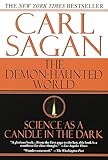
Carl Sagan's passionate defense of scientific thinking and critical reasoning, arguing that the tools of skepticism are the only reliable protection against superstition, pseudoscience, and those who would exploit human credulity.
The first book in Ryan Holiday's Stoic Virtues series explores what courage looks like across history and philosophy. Using stories of figures who chose courage over comfort — Churchill, Florence Nightingale, Frederick Douglass — Holiday makes the ancient Stoic case for acting despite fear rather than waiting for it to pass.
The second Stoic Virtues book focuses on temperance — the ability to govern the self, to choose the harder right over the easier wrong. Holiday examines Queen Elizabeth II, Lou Gehrig, and Antoninus Pius to argue that self-discipline is not deprivation but the highest form of freedom.
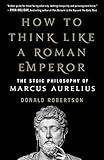
Cognitive behavioral therapist Donald Robertson weaves together Marcus Aurelius's biography with the Stoic philosophy he practiced, showing how ancient techniques map onto modern psychological methods.
Haidt examines ten great ideas about happiness drawn from ancient philosophy and religion, testing each against modern psychology research to determine what the ancients got right, what they got wrong, and what the science adds.
On the world of Arbre, scholars called avout live cloistered in mathic communities called concents, their contact with the outside world restricted to once every year, decade, century, or millennium — until an alien object enters orbit and changes everything.
A brief, luminous 1903 essay arguing that the mind is the garden of human life — that thought determines character, achievement, health, and circumstances.
Ryan Holiday and Stephen Hanselman profile twenty-six Stoic philosophers — from Zeno of Citium to Marcus Aurelius — examining how each lived, and how each often fell short of the principles they taught. The book treats the Stoics as flawed human beings rather than marble icons, which makes their philosophy more honest and more usable.
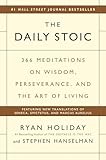
366 days of Stoic philosophy — a meditation for each day of the year, drawn from Marcus Aurelius, Epictetus, and Seneca, with commentary by Ryan Holiday and Stephen Hanselman.
Prince Lev Myshkin returns to Russia after years of Swiss treatment for epilepsy — gentle, sincere, and incapable of the social calculus that governs everyone around him. Dostoevsky's attempt to portray a truly good man, and what happens when such a man meets the world.
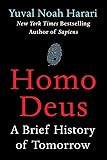
A sweeping vision of humanity's future as Homo sapiens pursues the ancient goals of immortality, bliss, and divinity — and what we risk losing in the process.
The third volume in Ryan Holiday's Stoic Virtues series examines justice — the most outward-facing of the classical virtues, governing how we treat others, fulfil our obligations, and act ethically under pressure. It is the most philosophically demanding book in the trilogy and the most difficult virtue to practice.
The ancient Chinese military treatise attributed to Sun Tzu, comprising thirteen chapters on military strategy that have been applied to business, law, sports, and competitive endeavors for 2,500 years.
Magic is draining out of Earthsea. Wizards are forgetting their spells. Ged and the young prince Arren must sail to the farthest reaches of the world to find the source of the wound in the world — and the entity responsible for it. The concluding volume of the original Earthsea trilogy is Le Guin's meditation on death, courage, and the limits of power.
Drawing on Stoic philosophy and historical examples, Ryan Holiday argues that the obstacles we face are not impediments to success but the very material from which it is made.
Tenar is taken from her family as a young child to become the High Priestess of the Tombs of Atuan — a buried labyrinth serving nameless, ancient powers. Her world is enclosed, complete, and entirely certain. Then Ged the wizard breaks in, and Tenar must decide whether to kill him or help him — and what that choice means for everything she has been.
Four characters navigate love, fidelity, and the weight of existence against the backdrop of the 1968 Soviet invasion of Prague, in Kundera's most celebrated philosophical novel.
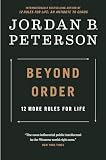
The follow-up to 12 Rules for Life, offering twelve new principles focused on navigating the dangers of too much order — rigid thinking, bureaucratic tyranny, and the stagnation of the over-controlled life.
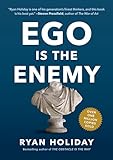
Ryan Holiday examines how ego — the sense of entitlement and inflated self-image — undermines people at every stage of life, from aspiration through success to failure.