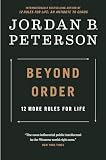
Editors Reads Verdict
A more introspective and philosophically mature companion to its predecessor, Beyond Order is Peterson at his most considered — exploring how excessive security and conformity can be just as destructive as chaos, with deeply personal reflections threaded throughout.
What We Loved
- More personal and vulnerable than 12 Rules, giving the philosophical arguments deeper emotional grounding
- The chapters on art, beauty, and meaning are among Peterson's best writing
- Addresses a genuinely underexplored problem — the pathologies of too much order rather than too much chaos
Minor Drawbacks
- Looser and more discursive than its predecessor, some chapters lose their thread
- Dense mythological and religious analysis may alienate readers seeking practical guidance
Key Takeaways
- → Excessive order and rigid conformity carry their own dangers — stagnation, tyranny, and the suppression of the genuine self
- → Beauty and art are not luxuries but guides toward what is genuinely worth doing
- → Meaning is found at the border between order and chaos — not in the comfort of either extreme
| Author | Jordan B. Peterson |
|---|---|
| Publisher | Portfolio |
| Pages | 432 |
| Published | March 2, 2021 |
| Language | English |
| Genre | Psychology, Self-Help, Philosophy |
How Beyond Order Compares
Beyond Order at a glance against 3 similar books readers weigh alongside it.
| Book | Author | Rating | Best for |
|---|---|---|---|
| Beyond Order (this book) | Jordan B. Peterson | ★ 4.2 | Psychology |
| 12 Rules for Life | Jordan B. Peterson | ★ 4.5 | Anyone seeking a philosophically grounded framework for living responsibly and |
| Man's Search for Meaning | Viktor E. Frankl | ★ 4.8 | Anyone confronting meaninglessness, loss, suffering, or existential questions |
| The Subtle Art of Not Giving a F*ck | Mark Manson | ★ 4.4 | Anyone exhausted by relentless optimism culture who wants a blunter, more |
The Other Half of the Equation
12 Rules for Life was a book about chaos — about the disorder that results when people fail to take responsibility, establish structure, or commit to meaning. Beyond Order is its necessary counterpart: a book about the dangers of too much order. Where its predecessor warned against the abyss of formlessness, this volume warns against the equally perilous trap of excessive rigidity — the deadening conformity of the person who has structured their life so tightly that nothing new can enter.
This is a more philosophically ambitious argument than it might appear. Most self-help literature treats order as unambiguously good — the antidote to dysfunction and suffering. Peterson’s willingness to interrogate the pathologies of order itself, and to suggest that growth requires the deliberate embrace of productive instability, makes Beyond Order a more nuanced and mature work than its predecessor.
Art, Beauty, and the Sacred
Some of Beyond Order’s most striking passages concern aesthetics — the role of art, architecture, and beauty in human life. Peterson argues, drawing on Jungian and religious traditions, that aesthetic experience is not a luxury but a form of moral and spiritual perception: beauty is the visible form of what is genuinely worth pursuing. Rule XI — “Do not allow yourself to become resentful, deceitful, or arrogant” — and Rule XII’s reflections on gratitude culminate in a vision of life that is less about discipline than about grace.
The chapters that explore how societies preserve and transmit value through artistic traditions are unusual in self-help literature and represent Peterson thinking at full stretch, integrating psychology, religious history, and cultural theory into a coherent argument about what makes life worth living.
More Personal, More Uneven
Beyond Order was written in the shadow of Peterson’s highly publicised health crisis, and the book carries a different emotional register from its predecessor — more vulnerable, more hard-won, more explicitly aware of suffering as a permanent feature of life rather than a temporary obstacle to overcome. This personal dimension enriches the philosophical arguments considerably.
The unevenness of the book is real. Some chapters develop their central argument with precision and force; others wander through associative theological and mythological territory that rewards patience but may frustrate readers seeking the practical directness of 12 Rules. Read as a philosophical companion volume rather than a self-help manual, Beyond Order reveals itself as the more ambitious and in some ways more honest of the two books.
A Book Written Through Crisis
It is difficult to read Beyond Order without the context of its making. Between the global phenomenon of 12 Rules for Life and this sequel, Jordan Peterson endured a severe health ordeal — a dependency on prescription medication, a punishing withdrawal, and a period of genuine physical danger that interrupted the book’s completion and nearly ended his public life. He has been candid that several chapters were drafted in conditions of real suffering, and that experience permeates the text. The result is a less triumphant, more chastened voice than the one that delivered the brisk imperatives of his first book. Where 12 Rules could sound like a confident clinician dispensing structure to the chaotic, Beyond Order often sounds like a man who has been forced to relearn his own lessons from the inside, and the philosophy of meaning found at the border of order and chaos lands with greater weight for having been tested against his own collapse.
The Pairing With 12 Rules for Life
Peterson conceived the two books as deliberate complements, and the symmetry is structural as well as thematic. 12 Rules for Life warned against the dangers of insufficient order — the dissolution, aimlessness, and resentment that follow when a person fails to take responsibility or impose form on their life. Beyond Order takes up the opposite peril: the rigidity, stagnation, and quiet tyranny of a life or a society that has become too controlled, too closed to the renewing force of the unknown. Read together, the twenty-four rules sketch Peterson’s core conviction that a flourishing life is lived not at either extreme but along the dynamic boundary between security and exploration. Readers can profitably begin with either volume, but those who have read the first will find this one in continuous conversation with it.
Who Should Read It
This book is best suited to readers already sympathetic to Peterson’s blend of clinical psychology, Jungian mythology, and religious interpretation, and to those who valued 12 Rules for Life and want the more searching, more vulnerable continuation of its project. Readers seeking quick, actionable self-help will find it slower and more digressive than they expect; its rewards are reflective rather than instructional, and several chapters demand patience with extended mythological and biblical analysis. Approached as philosophy and memoir as much as advice — and especially with awareness of the personal crisis behind it — Beyond Order is the more emotionally resonant of Peterson’s two rule books.
A note on the reading experience itself: this is not a book to race through, and the chapters reward being taken one at a time, with space to sit between them. Peterson’s method is to circle a rule from multiple directions — clinical case histories from his years as a practicing psychologist, readings of Genesis and of fairy tales, asides on Dostoevsky and Solzhenitsyn — before arriving at the practical point. Readers who try to extract the actionable kernel and skip the surrounding material will find the rules thinner than they are; the substance lies in the accumulation. Those who give the digressions their due will find that the book’s argument about meaning, suffering, and the courageous embrace of the unknown lands with a cumulative force that no summary of its twelve rules can convey.
Our rating: 4.2/5 — A philosophically mature and personally candid companion to 12 Rules for Life, strongest in its chapters on art, meaning, and the costs of excessive conformity.
Frequently Asked Questions
What is "Beyond Order" about?
The follow-up to 12 Rules for Life, offering twelve new principles focused on navigating the dangers of too much order — rigid thinking, bureaucratic tyranny, and the stagnation of the over-controlled life.
What are the key takeaways from "Beyond Order"?
Excessive order and rigid conformity carry their own dangers — stagnation, tyranny, and the suppression of the genuine self Beauty and art are not luxuries but guides toward what is genuinely worth doing Meaning is found at the border between order and chaos — not in the comfort of either extreme
Is "Beyond Order" worth reading?
A more introspective and philosophically mature companion to its predecessor, Beyond Order is Peterson at his most considered — exploring how excessive security and conformity can be just as destructive as chaos, with deeply personal reflections threaded throughout.
Ready to Read Beyond Order?
Check the current price on Amazon.
Check Price on Amazon (paid link)Prices and availability are subject to change. See Amazon for current price.
Review last updated: