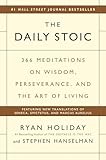
Editors Reads Verdict
The most accessible daily practice format for Stoic philosophy, combining original primary source translations with clear contemporary commentary — ideal for readers who want to build a philosophical practice rather than simply read a philosophy book.
What We Loved
- The daily format is genuinely suited to Stoic practice — it mirrors how Marcus himself wrote
- Fresh translations of Aurelius, Epictetus, and Seneca make the primary sources accessible
- Short entries make consistent engagement achievable even for busy readers
- Organized thematically by month provides intellectual coherence alongside the daily structure
Minor Drawbacks
- Readers who want sustained philosophical argument will find the format fragmentary
- The brevity of individual entries limits depth of engagement with any single idea
- Holiday's commentary is sometimes thinner than the primary source quotations it accompanies
Key Takeaways
- → Daily philosophical practice is more valuable than occasional deep engagement
- → The Stoics wrote for practical application, not academic appreciation
- → Each day presents new opportunities to practice the same core principles
- → Virtue is not a destination but a daily discipline
- → Ancient wisdom addresses contemporary problems with more relevance than we expect
| Author | Ryan Holiday |
|---|---|
| Publisher | Portfolio/Penguin |
| Pages | 416 |
| Published | October 18, 2016 |
| Language | English |
| Genre | Philosophy, Self-Help, Stoicism |
| Difficulty | Beginner |
| Best For | Readers who want to build a daily Stoic practice, or who want an accessible introduction to the primary Stoic sources in manageable daily portions. |
How The Daily Stoic Compares
The Daily Stoic at a glance against 3 similar books readers weigh alongside it.
| Book | Author | Rating | Best for |
|---|---|---|---|
| The Daily Stoic (this book) | Ryan Holiday | ★ 4.4 | Readers who want to build a daily Stoic practice, or who want an accessible |
| Letters from a Stoic | Seneca | ★ 4.6 | Readers who want to engage directly with Stoic primary sources in accessible |
| Meditations | Marcus Aurelius | ★ 4.8 | Anyone seeking practical philosophical guidance for living with integrity under |
| The Obstacle Is the Way | Ryan Holiday | ★ 4.3 | Readers who want an accessible introduction to Stoic philosophy through a |
Philosophy as Daily Practice
The great insight behind The Daily Stoic is that Stoicism was never meant to be read once as a philosophy text and then filed. Marcus Aurelius’s Meditations were written daily, as practice. Seneca’s letters were composed as ongoing correspondence — sustained philosophical engagement rather than systematic treatise. The Daily Stoic returns these texts to their intended format: a daily encounter with the same ideas, in different contexts and moods, across a full year.
Each of the 366 entries consists of a primary source quotation — drawn from Marcus Aurelius’s Meditations, Epictetus’s Discourses, Seneca’s Letters and Essays, and occasionally other Stoic sources — accompanied by a brief commentary by Holiday and co-author Stephen Hanselman explaining the quotation’s relevance and application.
The Primary Source Translations
One of the book’s underappreciated contributions is its translations. Holiday and Hanselman worked with scholars to produce translations that are more direct and contemporary than the Victorian versions that most readers encounter, and occasionally more accurate than popular alternatives. Readers who come to The Daily Stoic and want more of the primary sources will find the translations pointed them in useful directions.
The three major sources — Aurelius, Epictetus, Seneca — represent the three social positions from which Stoic philosophy was practiced: the emperor (Aurelius), the slave-turned-teacher (Epictetus), and the wealthy statesman (Seneca). Together they demonstrate that the philosophy’s core principles apply regardless of external circumstances.
The Monthly Structure
The twelve months are organized thematically — Clarity, Passions and Emotions, Awareness, Unbiased Thought, Right Action, and so on. This gives the book intellectual structure that the purely daily format would otherwise lack, and allows re-readers in subsequent years to approach the same entries with new attention.
Using the Book
Most readers use The Daily Stoic exactly as designed: one entry per morning, ideally before engaging with news or email. The short format makes this achievable; the repeated return to the same core principles makes it meaningful across a sustained practice.
Our rating: 4.4/5 — The ideal format for Stoic philosophy: daily, practical, drawn from the original sources, and structured to build a practice rather than merely deliver information.
A Year of Ancient Wisdom
Ryan Holiday and Stephen Hanselman’s The Daily Stoic has become one of the most popular gateways into Stoic philosophy, and its appeal lies in its simple, sustainable structure. The book offers a short meditation for every day of the year, each built around a passage from one of the great Stoics — Marcus Aurelius, Seneca, or Epictetus — followed by a brief, accessible commentary that draws out its practical meaning for modern life. Organised around monthly themes such as clarity, mindfulness, duty, and acceptance, it turns an ancient philosophy into a daily practice that readers can integrate into ordinary routines.
Practical Philosophy for Modern Life
The book’s success reflects the broader revival of Stoicism as a practical guide to living well under pressure. Holiday presents the philosophy not as an academic subject but as a toolkit for resilience, focus, and emotional control, emphasising the Stoic distinction between what we can and cannot control. The daily format makes the wisdom digestible and habitual rather than overwhelming, and many readers return to it year after year. Serious students of philosophy may find the treatment simplified, and the self-help framing occasionally smooths over the harder edges of the original texts, but as an accessible, motivating introduction that sends many readers on to the primary sources, The Daily Stoic succeeds admirably. It is best used as intended — a page a day, read slowly and applied — rather than consumed all at once.
Reading Guides
Co-Author Stephen Hanselman
The Daily Stoic is co-authored with Stephen Hanselman, a literary agent and independent scholar who has been Holiday’s research and publishing partner across several projects. Hanselman’s contribution to the book is primarily in the translation and selection of primary source material: he worked with classical scholars to produce translations of Marcus Aurelius, Epictetus, and Seneca that are more direct and contemporary in diction than the Victorian versions most readers encounter, and that prioritize philosophical clarity over literary elegance.
The collaboration matters because it addresses one of the persistent criticisms of Holiday’s previous Stoic work: that his engagement with the primary texts was sometimes at one remove, filtered through secondary literature rather than direct scholarly engagement. The Daily Stoic is, in this respect, his most academically grounded project — it required genuine work with the source languages and a careful selection process across a very large body of text.
The Three Stoic Voices
One of the book’s most significant structural decisions is the inclusion of three major sources representing three very different social positions. Marcus Aurelius was the Roman Emperor from 161 to 180 CE — the most powerful person in the Western world during his rule. He wrote his Meditations as private practice, never intending them for publication; they are notes to himself about how to be better, written late at night after days managing an empire at war. Epictetus was born a slave in Hierapolis, in what is now Turkey, and was owned by a freedman who had himself been a slave in Nero’s household. He later became a teacher whose school attracted students from across the empire, including Marcus Aurelius himself. Seneca was a wealthy Roman statesman and playwright who served as an advisor to the Emperor Nero. His Letters to Lucilius are written to a younger friend and are the most personal and humanly accessible of the Stoic primary texts.
The point of including all three is philosophical: Stoicism claims to be applicable regardless of external circumstances. The emperor and the slave, the wealthy advisor and the exiled philosopher, all practiced the same principles. This claim is tested rather than assumed when the same philosophical framework is examined across these radically different lives.
Why Daily Practice Matters
The case for the daily-meditation format is not just convenience but pedagogical. The Stoics were explicit that philosophy is not an intellectual exercise but a practical discipline — it requires daily application, regular return to the same principles in new circumstances, and the kind of patient repetition that produces internalized disposition rather than theoretical knowledge. Marcus Aurelius wrote the Meditations over years, returning to the same themes repeatedly as his circumstances and challenges changed. The daily format of The Daily Stoic mirrors this: the same core principles appear across the year in different formulations, which is not repetition for its own sake but the structure of a genuine practice.
Readers who treat the book as a one-time read miss its primary purpose. The book is designed to be read across a year, then read again the following year, when the reader’s circumstances will be different and the same passages will land differently.
Frequently Asked Questions
What is "The Daily Stoic" about?
366 days of Stoic philosophy — a meditation for each day of the year, drawn from Marcus Aurelius, Epictetus, and Seneca, with commentary by Ryan Holiday and Stephen Hanselman.
Who should read "The Daily Stoic"?
Readers who want to build a daily Stoic practice, or who want an accessible introduction to the primary Stoic sources in manageable daily portions.
What are the key takeaways from "The Daily Stoic"?
Daily philosophical practice is more valuable than occasional deep engagement The Stoics wrote for practical application, not academic appreciation Each day presents new opportunities to practice the same core principles Virtue is not a destination but a daily discipline Ancient wisdom addresses contemporary problems with more relevance than we expect
Is "The Daily Stoic" worth reading?
The most accessible daily practice format for Stoic philosophy, combining original primary source translations with clear contemporary commentary — ideal for readers who want to build a philosophical practice rather than simply read a philosophy book.
Ready to Read The Daily Stoic?
Check the current price on Amazon.
Check Price on Amazon (paid link)Prices and availability are subject to change. See Amazon for current price.
Review last updated: