Meditations vs Letters from a Stoic: Which First?
Two canonical Stoic texts, two radically different forms. Marcus Aurelius wrote for himself. Seneca wrote for us. Here is how they differ, and which to read first.
By Elena Marsh

The two most important primary texts in the Stoic tradition were written within roughly a century of each other, by men who both understood power at the highest levels — and they are almost nothing alike.
Meditations by Marcus Aurelius is a private journal. He never intended it to be published. He wrote it in Greek — not his native Latin — possibly as a deliberate act of self-concealment, possibly because Greek was the language of philosophy. The entries are raw, repetitive, and sometimes barely coherent. Marcus addresses himself throughout, sometimes harshly: You have wasted enough time, he writes. Stop allowing your mind to be a slave, to be jerked about by selfish impulses, to kick against fate and the present. He is not performing. He is working.
Letters from a Stoic by Seneca is something altogether more polished. The Epistulae Morales ad Lucilium — the Moral Letters to Lucilius — are 124 letters addressed to a younger friend and student, Lucilius Junior, who was procurator of Sicily. Whether Lucilius was a real correspondent or a literary device is debated; what is not debated is that Seneca was writing for an audience beyond the immediate recipient. The letters are crafted. They argue. They cite examples, make jokes, develop metaphors, and loop back to their central points with a rhetorician’s sense of structure. They were intended to be read.
This formal difference is not a superficial matter of presentation. It is the deepest difference between the two books, and it shapes everything else about how each one works.
Quick Comparison
| Meditations | Letters from a Stoic | |
|---|---|---|
| Author | Marcus Aurelius | Seneca (Lucius Annaeus Seneca) |
| Date | ~161–180 CE | ~62–65 CE |
| Form | Private journal, never intended for publication | Letters to a real (or literary) correspondent |
| Language | Greek | Latin |
| Length | ~200 pages | 124 letters; ~500 pages (complete) |
| Tone | Austere, self-directed, repetitive | Expansive, rhetorical, argumentative |
| Central themes | Self-discipline, impermanence, the inner life | Time, friendship, retirement, the examined life |
| Best translation | Gregory Hays (Modern Library, 2002) | Robin Campbell (Penguin Classics) |
Marcus Aurelius: The Emperor’s Private War
Marcus Aurelius became Roman Emperor in 161 CE and remained so until his death in 180 CE — nineteen years of unrelenting pressure. He spent much of his reign on military campaigns on the Danube frontier, commanding armies against Germanic tribes in conditions he found exhausting and uncongenial. He was, by all accounts, a genuinely philosophical man who had not particularly sought power and spent his life trying to exercise it well under the weight of Stoic obligations he took seriously.
Meditations was written during these years — probably kept in a series of notebooks that he carried on campaign. Nobody knows exactly when each entry was written. Nobody knows in what order they were intended to be read, if any order was intended at all. The text as we have it is organized into twelve books, but scholars are fairly certain this organization was imposed after the fact. The original title, if there was one, is lost. The title Meditations was supplied by editors centuries later.
What this means for the reader is that you are encountering something structurally unlike almost anything else in the philosophical canon. There is no continuous argument. There is no progression from beginning to end. There are twelve books, each comprising numbered entries that range from a sentence to several paragraphs, returning again and again to the same Stoic preoccupations — the impermanence of all things, the absurdity of fame, the need to focus on what is within one’s control, the practice of dying before you die — without resolving them. Marcus never resolves them because he is not writing to solve a problem. He is writing to keep from forgetting what he knows and to practice what he believes.
The emotional texture of the book is unlike anything in modern philosophy. Marcus is sometimes severe with himself to the point of cruelty: You are not yet perfect, nor have you lived free from great faults, but still you can die, he writes. He returns obsessively to the fact of his own death, not with dread but with something more like insistence — a repeated effort to make himself feel, not just know, that everything he is and has will be gone. He lists the dead: Alexander the Great, Caesar, Pompey, Augustus — all of them gone, their empires gone, their names soon to be forgotten. The sun that was Hadrian’s court is now dust. What then is Marcus Aurelius?
This is not morbidity. It is practice. The Stoic melete thanatou — the meditation on death — was a philosophical exercise designed to produce a particular psychological effect: the evacuation of false urgency, the perception of what actually matters when you subtract the things that will not last. Marcus was working on himself.
The limitation for the modern reader is real. Because Marcus never explains his premises, Meditations is harder to enter cold than almost any Stoic text. When he refers to logos or the hegemonikon or the universal nature, he is not pausing to define terms. He knows what he means. The reader who comes in without some background in Stoic philosophy may find themselves following the emotional register without quite tracking the philosophical architecture beneath it.
Seneca: The Statesman’s Letters
Seneca’s biography is the most interesting and most troubling of the Roman Stoics. He was born in Cordoba around 4 BCE, was educated in Rome, became a renowned orator and rhetorician, was exiled to Corsica by the Emperor Claudius for eight years, was recalled by Nero’s mother Agrippina to serve as tutor to the young prince who would become emperor, and then spent nearly a decade as one of the most powerful men in the Roman Empire — Nero’s chief minister. He was also immensely wealthy by any measure.
He was, in other words, a Stoic who spent most of his adult life in the position that Stoic philosophy most consistently warns against: entangled with power, complicit with a tyrant, unable or unwilling to practice the withdrawal and simplicity he preached. The Letters were written in the last years of his life, 62–65 CE, after he had attempted to retire from Nero’s court and been refused. They are, in part, the work of a man who knows he is in danger, trying to think clearly about what matters before the end.
He was right to be afraid. Nero ordered his death in 65 CE, accusing him of involvement in the Pisonian conspiracy. Seneca died by forced suicide, in a scene his friend Tacitus recorded in the Annals with a dignity that Seneca himself might have approved.
Letters from a Stoic begins with what is one of the most arresting opening sentences in ancient philosophy: Ita fac, mi Lucili: vindica te tibi. “Do this, my Lucilius: claim yourself for yourself.” The first letter is about time — about how we lose hours and days to other people’s priorities without noticing, and how the most precious thing we own is not money or position but the remaining time of our life. It is a Stoic argument made with the urgency of a man who has recently watched several decades evaporate in other people’s service.
This immediacy is what makes the Letters accessible in a way Meditations is not. Seneca is talking to someone. Each letter has a subject, a context, an occasion. Letter 1 is about time; Letter 5 is about whether a philosopher should visibly stand out from the crowd (his answer is no — the Stoic should be distinguished by his behaviour, not his costume); Letter 7 is about the corruption of gladiatorial games and the danger of spending too much time in crowds; Letter 12 is about old age, written when Seneca visited a house he had not seen for many years and found everything decrepit, including himself. The particularity grounds the philosophy in a way Marcus’s more abstract entries often do not.
Seneca is also a better writer than Marcus, if writing quality is assessed by conventional literary standards. He was a professional rhetorician, a playwright, an essayist. His prose has rhythm, wit, and rhetorical variety. He can be abrupt, lapidary, Montaigne-like in his capacity to pivot from a general observation to a personal anecdote to a concluding maxim within a single paragraph. He quotes Epicurus — his philosophical rival — frequently and generously, in a spirit of genuine philosophical openness that Marcus rarely matches.
The weakness of the Letters is the weakness of the form: 124 letters is a lot, and the quality is uneven. Some letters feel more like philosophical commonplaces than genuine argument; some are denser and more original than others. Robin Campbell’s Penguin Classics selection of 40 letters is actually a better starting point than the complete text for most readers — it picks the strongest material and allows the book to read more like a coherent collection.
The Philosophical Differences
Both men are orthodox Stoics in their core commitments. The logos — the rational principle governing the universe — the dichotomy of control between what is up to us and what is not, the indifference of external things, the discipline of desire: these are shared premises, not matters of debate between them.
But the emphasis differs, and the difference is significant.
Marcus is preoccupied with self-discipline and the management of the inner life. His constant subject is the hegemonikon — the ruling faculty, the rational self — and its tendency to be distracted, to be controlled by passion, to forget what it knows and needs to remember. He writes for a man whose outer life is almost entirely out of his control — who cannot choose his circumstances but can always choose his response to them. The exercises in Meditations are practical: how to begin each day, how to think about difficult people, how to face the moment of death. It is a manual for psychological survival under extreme conditions.
Seneca is preoccupied with time and its use. His first and most insistent argument is that we do not have little time — we have enough time, but we waste most of it. We fritter it on things that do not matter, give it away to people who did not deserve it, and then die feeling that life was too short. The Letters return to this theme constantly, with a variety and invention that prevents it from becoming repetitive. His De Brevitate Vitae — the essay On the Shortness of Life — makes the argument most fully.
Seneca is also more preoccupied with friendship, retirement, and what it means to live well in proximity to power rather than inside it. Marcus does not have the option of retirement. Seneca does, at least in theory, and the Letters are partly a meditation on what retirement ought to mean — not idleness, but the focused use of time for the things that matter.
Thematic Differences in Depth
On death: Both men return to death repeatedly, but with different emotional registers. Marcus’s meditations on death are exercises in equanimity — he is trying to make himself indifferent to something he knows he fears. Seneca’s letters about death are more consolatory in tone, more concerned with helping Lucilius prepare well than with his own preparation. Letter 77, where Seneca discusses whether a long life is better than a short one, is one of the most lucid arguments in ancient literature for quality over quantity.
On self-discipline: Marcus is harsher on himself than Seneca is on anyone. His self-criticism is the sharpest thing in the book. Seneca is more generous — he acknowledges his own failures explicitly and without excessive self-flagellation, in a way that modern readers often find more approachable.
On external goods: Marcus largely brackets the question of wealth and comfort — as Emperor, the question was somewhat beside the point. Seneca, as a very wealthy man, wrestles with it more directly and, critics have argued, less convincingly. His argument that wealth is an indifferent that he happens to possess is easier to make from inside a villa than from outside one. This tension gives the Letters a human complexity that Marcus’s more remote position does not produce.
Translation Recommendations
For Meditations, Gregory Hays’s 2002 Modern Library translation is the right starting point for nearly everyone. It is accurate, modern, and makes Marcus’s Greek feel immediate without domesticating it into something blandly motivational. Robin Hard’s Oxford World’s Classics version is more literal and worth reading alongside Hays once you know the text.
For Letters from a Stoic, Robin Campbell’s Penguin Classics selection of 40 letters remains the most readable entry point. For the complete letters, Margaret Graver and A. A. Long’s 2015 University of Chicago translation is the most current scholarly work in English, accurate and well-annotated. For those who want all 124 letters in a single readable paperback, Elaine Fantham’s selections are also worth considering.
Which to Read First
Read Letters from a Stoic first if you are new to Stoicism or to ancient philosophy generally. Seneca teaches as he writes. He introduces ideas, explains them, argues for them, and connects them to practical situations. By the time you have read 15 or 20 of his letters, you understand the Stoic framework well enough to bring it to Meditations as a set of tools rather than a set of puzzles.
Read Meditations first if you are already familiar with the basics of Stoic thought, or if you are drawn specifically to the idea of encountering a great mind working in private. The rawness of Marcus’s journal is its particular power, and if you come to it equipped to read it, it is one of the most intimate and moving philosophical texts in the Western tradition.
Read them in both directions. Many readers who start with Letters find that Meditations becomes significantly richer once they can hear Seneca’s voice behind Marcus’s terseness — the shared tradition that Marcus is practicing and Seneca is explaining. And readers who start with Meditations often find Letters a relief: all the ideas Marcus compresses into a sentence, Seneca takes three paragraphs to unfold.
They are companion texts, not rivals. The tradition needs both.
What to Read Next
The Obstacle Is the Way by Ryan Holiday is the most successful modern repackaging of the Stoic framework — accessible, practical, and genuinely useful for readers who want to apply what they have encountered in Marcus and Seneca to careers, adversity, and daily life. It is explicitly grounded in Meditations and draws on many of the same examples.
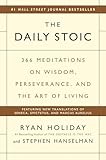
The Daily Stoic by Ryan Holiday and Stephen Hanselman is a useful complement to both primary texts — 366 daily passages drawn from Stoic sources, with brief commentary. It functions less as a reading experience than as a practice companion, best used alongside rather than instead of the originals.
Frequently Asked Questions
Should I read Meditations or Letters from a Stoic first?
Most readers find Letters from a Stoic more accessible as a first Stoic text. Seneca writes in complete, fully developed arguments addressed to a real correspondent, which gives each letter a clear context and direction. Meditations is more demanding because it has no such scaffolding — it is a private notebook, and Marcus writes only to himself, assuming all the Stoic premises rather than explaining them. Start with Seneca if you want to understand Stoic ideas clearly before encountering Marcus’s raw practice of them. Start with Meditations if you are already drawn to the idea of a great ruler wrestling with his own shortcomings in private.
Are Meditations and Letters from a Stoic part of the same philosophical tradition?
Yes. Both Marcus Aurelius and Seneca were Stoics, working from the same foundational tradition established by Zeno of Citium and developed by Chrysippus and Epictetus. The core Stoic ideas — the dichotomy of control, the impermanence of all things, the discipline of desire and action — appear in both books. The difference is in emphasis and temperament: Marcus is more austere and self-directed, Seneca more expansive and rhetorically generous. They disagree on the details of philosophical style but not on the essentials.
Which translation of Meditations is best?
Gregory Hays’s 2002 Modern Library translation is the best starting point for most readers. It is accurate, readable, and strips away the Victorian formality that makes older translations feel stiff. Robin Hard’s Oxford World’s Classics translation is more literal and useful for readers who want to get closer to Marcus’s Greek. Martin Hammond’s Penguin Classics version sits between the two. Avoid the older George Long translation if accessibility matters to you — it was ground-breaking in its time but reads very differently from the way Marcus wrote.
Which translation of Letters from a Stoic is best?
Robin Campbell’s Penguin Classics translation remains the most readable selection available in English and is the best starting point. It covers 40 of Seneca’s letters with excellent introductory notes. Margaret Graver and A. A. Long’s 2015 University of Chicago translation of the complete letters is more literal and has strong philological notes, making it valuable for readers who want precision. Richard Mott Gummere’s Loeb Classical Library edition provides facing Latin text for those who want it.
Is there a significant philosophical difference between Marcus Aurelius and Seneca?
Both are orthodox Stoics in their core commitments, but there are real temperamental and thematic differences. Marcus is preoccupied above all with self-discipline and the discipline of desire — he is writing to manage himself in an enormously demanding role. Seneca is more preoccupied with time, friendship, and what a well-used life looks like from its end. Seneca also writes more explicitly about retirement and withdrawal from public life — an option Marcus did not have. Seneca is more ambivalent about wealth and public engagement, in ways his biography explains: he was immensely wealthy and could not always practice what he preached.
Affiliate disclosure: Links on this site are affiliate links. We earn a small commission at no extra cost to you. This does not influence our editorial recommendations.
Frequently Asked Questions
Should I read Meditations or Letters from a Stoic first?
Most readers find Letters from a Stoic more accessible as a first Stoic text. Seneca writes in complete, fully developed arguments addressed to a real correspondent, which gives each letter a clear context and direction. Meditations is more demanding because it has no such scaffolding — it is a private notebook, and Marcus writes only to himself, assuming all the Stoic premises rather than explaining them. Start with Seneca if you want to understand Stoic ideas clearly before encountering Marcus's raw practice of them. Start with Meditations if you are already drawn to the idea of a great ruler wrestling with his own shortcomings in private.
Are Meditations and Letters from a Stoic part of the same philosophical tradition?
Yes. Both Marcus Aurelius and Seneca were Stoics, working from the same foundational tradition established by Zeno of Citium and developed by Epictetus and Chrysippus. The core Stoic ideas — the dichotomy of control, the impermanence of all things, the discipline of desire and action — appear in both books. The difference is in emphasis and temperament: Marcus is more austere and self-directed, Seneca more expansive and rhetorically generous. They disagree on the details of philosophical style but not on the essentials.
Which translation of Meditations is best?
Gregory Hays's 2002 Modern Library translation is the best starting point for most readers. It is accurate, readable, and strips away the Victorian formality that makes older translations feel stiff. Robin Hard's Oxford World's Classics translation is more literal and useful for readers who want to get closer to Marcus's Greek. Martin Hammond's Penguin Classics version sits between the two. Avoid the older George Long translation if accessibility matters to you — it was ground-breaking in its time but reads very differently from the way Marcus wrote.
Which translation of Letters from a Stoic is best?
Robin Campbell's Penguin Classics translation remains the most readable complete selection available in English and is the best starting point. It covers 124 of Seneca's letters with excellent introductory notes. Richard Mott Gummere's three-volume Loeb Classical Library edition is the scholarly standard if you want all 124 letters with facing Latin text. Margaret Graver and A. A. Long's recent University of Chicago translation of all the Letters (2015) is more literal and has strong philological notes, making it valuable for readers who want precision over elegance.
Is there a significant philosophical difference between Marcus Aurelius and Seneca?
Both are orthodox Stoics in their core commitments, but there are real temperamental and thematic differences. Marcus is preoccupied above all with self-discipline and the discipline of desire — he is writing to manage himself in an enormously demanding role. Seneca is more preoccupied with time, friendship, and what a well-used life looks like from its end. Seneca also writes more explicitly about retirement and withdrawal from public life — an option Marcus did not have. Seneca is more ambivalent about wealth and public engagement, in ways his biography explains: he was immensely wealthy and could not always practice what he preached.