Where to Start with Donald Robertson: A Reading Guide
Where to start with Donald Robertson — how to approach How to Think Like a Roman Emperor, the best practical introduction to Stoicism and its connections to modern cognitive behavioral therapy. A complete reading guide.
By Elena Marsh
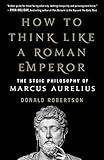
Donald Robertson (born 1972) is a Scottish-Canadian cognitive behavioral therapist, trainer, and author who has spent his career connecting ancient Stoic philosophy to modern CBT practice. He has a background in both academic philosophy and clinical therapy, and his work focuses on the ways that Stoic psychological techniques — developed in the first and second centuries CE — anticipate and parallel the evidence-based interventions of twentieth-century cognitive therapy. How to Think Like a Roman Emperor (2019) was published by St. Martin’s Press and became the most widely read introduction to practical Stoicism after Ryan Holiday’s work.
Where to Start: How to Think Like a Roman Emperor (2019)
The essential Donald Robertson — and the best practical introduction to Stoicism in print. How to Think Like a Roman Emperor opens with Marcus Aurelius on the Danube frontier in the 170s CE, governing the largest empire in the world while being treated for chronic chest pain that his physicians cannot cure, conducting a defensive war against the Marcomanni that has already lasted years, and writing daily philosophical exercises in his private journal. The man had every material advantage available to a Roman and no comfortable circumstances whatsoever.
This opening is Robertson’s central move: by showing Marcus at work, under genuine difficulty, applying the Stoic practices he is explaining, he grounds the philosophy in something other than abstract advice. The question is not “what did the Stoics believe?” but “how did Marcus actually use these techniques, in the specific conditions of his life, and what did they allow him to do?”
The CBT connections are the book’s distinctive contribution to Stoic literature. Robertson is a cognitive behavioral therapist, and his clinical training allows him to identify precisely where Stoic practice overlaps with CBT technique — and where it goes further. The Stoic distinction between judgments and events (not “the thing happened” but “I judged the thing bad”) maps directly onto cognitive reappraisal in CBT. The Stoic practice of identifying what is and is not within one’s control maps onto the CBT distinction between modifiable and unmodifiable circumstances. The Stoic negative visualisation practice — imagining loss before it occurs — has CBT parallels in graduated exposure.
Negative visualisation is the technique the book treats with most care. The Stoics practised contemplating loss before it occurred: thinking clearly about the death of loved ones, the end of friendships, the loss of health, the ruin of reputation. This sounds morbid and is, when done correctly, the opposite: by confronting the reality that everything valued is temporary, the practice produces genuine appreciation of what currently exists rather than the taken-for-granted relationship that treats temporary goods as permanent. Marcus’s private notes return to this practice repeatedly. Robertson explains both the technique and why it works, drawing on both ancient texts and modern psychological research.
The “view from above” meditation is one of Stoic practice’s most striking techniques: the practitioner imagines themselves rising above their situation — first to the rooftop, then the city, then the earth, then the cosmos — and views their own circumstances from increasing distance. The immediate problem that seemed overwhelming from inside it becomes, from sufficiently far above, a small event in a large world. This is not dismissal of difficulty but a change of scale that makes appropriate response more available.
What is up to us — the Stoic fundamental distinction between what lies within our control (our own judgments, desires, and actions) and what does not (outcomes, other people’s behaviour, external events) — is the framework’s foundation. Robertson explains it not as resigned acceptance of things that go wrong but as a strategic reorientation of effort: spending psychological resources on what is controllable rather than what is not.
Why How to Think Like a Roman Emperor Is the Ideal First Book
For a reader new to Donald Robertson, How to Think Like a Roman Emperor is the ideal first book because it is among his most popular works and a fine expression of his distinctive contribution, the bringing together of Stoic philosophy and modern psychology in an accessible, practical form. How to Think Like a Roman Emperor explores the Stoic philosophy of Marcus Aurelius through the story of his life, drawing practical lessons for resilience and well-being and connecting Stoicism to modern cognitive psychology. As an entry point it is ideal, for it is one of his best-known books and a clear example of his accessible, practical approach to Stoicism. It welcomes the newcomer with its engaging blend of biography, philosophy, and psychology, drawing the reader into the practical wisdom of Stoicism. It is among his major works and a fine representation of his approach, so the new reader encounters Robertson’s contribution directly. For the newcomer interested in Stoicism, then, How to Think Like a Roman Emperor is an excellent starting point.
What to Expect as a New Reader
As a new reader, you can expect How to Think Like a Roman Emperor to be an engaging, practical, and accessible blend of biography, philosophy, and psychology. You can expect a biographical frame, for the book explores Stoicism through the life and example of the Roman emperor Marcus Aurelius. You can expect Stoic philosophy, for the book presents the core ideas of Stoicism and their application to life. You can expect a connection to modern psychology, for Robertson, a psychotherapist, links Stoic practices to modern cognitive psychology and therapy. You can expect practical lessons, for the book offers Stoic techniques for resilience, emotional regulation, and well-being. You can expect an accessible, engaging style. You can expect a practical, life-applicable approach to ancient philosophy. Expect, in short, an engaging, practical, and accessible blend of biography, philosophy, and psychology, a fine introduction to Robertson’s approach.
Going Deeper After Your First Book
Once How to Think Like a Roman Emperor has introduced you to Robertson’s approach, the reader who wishes to go deeper can explore his other books and the wider literature of Stoicism, both ancient and modern. His other works offer practical guides to Stoic philosophy and its application, connecting it to psychology and everyday life, while the ancient Stoic writers themselves, especially the meditations of Marcus Aurelius that inspired his book, offer the primary sources of the philosophy. The broad and growing field of modern writing on practical Stoicism offers many further perspectives the reader is well prepared to explore. Reading more widely deepens your engagement with Robertson’s distinctive contribution, the bringing together of Stoicism and psychology. His characteristic approach runs through his work, and the reader who has valued How to Think Like a Roman Emperor will find it across it. Building your reading journey from How to Think Like a Roman Emperor is a matter of following its approach into his other books and the wider Stoic literature. The reader who begins here will have a practical, psychologically grounded foundation in Stoicism.
Reading Donald Robertson
How to Think Like a Roman Emperor is Robertson’s essential and most widely read book. It stands alone and requires no prior knowledge of Stoicism or CBT.
For the full Donald Robertson bibliography, reviews, and biography, visit the Donald Robertson author page on Editors Reads.
Affiliate disclosure: Links to Amazon on this page are affiliate links. We earn a small commission at no extra cost to you.
Frequently Asked Questions
Where should I start with Donald Robertson?
How to Think Like a Roman Emperor: The Stoic Philosophy of Marcus Aurelius (2019) is Robertson's essential book — the best practical introduction to Stoicism available, combining the biography of Marcus Aurelius with deep analysis of the Stoic philosophical practices he used, and connecting them explicitly to their modern parallels in cognitive behavioral therapy. Robertson is both a CBT therapist and a Stoic scholar, and this dual expertise makes the book uniquely useful.
What is How to Think Like a Roman Emperor about?
How to Think Like a Roman Emperor uses the life of Marcus Aurelius — the Roman Emperor who governed the largest empire in history while writing the Meditations, his private Stoic philosophical journal — as a biographical frame for explaining the Stoic philosophical system and its practical techniques. Robertson covers the Stoic distinction between what is 'up to us' and what is not, negative visualisation, the view from above, the Stoic reserve clause, and the relationship between Stoic practice and CBT. The practical exercises throughout are derived from actual ancient Stoic training.
Should I read Marcus Aurelius's Meditations before or after this book?
Either order works, but Robertson's book first is often more accessible. The Meditations is not a structured philosophical text — it is a private journal of someone practicing and reminding himself of his practice, and without context about Stoic philosophy and Marcus's life, some of its richness is less accessible. Robertson's book provides that context, and readers who return to the Meditations after it tend to find it more immediately useful.
What should I read after How to Think Like a Roman Emperor?
After How to Think Like a Roman Emperor, Marcus Aurelius's Meditations directly is the obvious next step — Robertson has given you the framework to read it with full understanding. Ryan Holiday and Stephen Hanselman's The Daily Stoic provides 366 short meditations on Stoic ideas, useful as a daily companion. Epictetus's Enchiridion (a short handbook of Stoic teaching) is the other foundational Stoic text, under 50 pages and immediately practical.