Best Books on Stoicism: Essential Reading List
The best books on Stoicism — from Meditations by Marcus Aurelius to The Daily Stoic and A Guide to the Good Life. Ancient wisdom and modern applications of Stoic philosophy.
By Elena Marsh

Stoicism is the ancient philosophy most directly applicable to contemporary life — not because it makes life comfortable, but because it provides a framework for maintaining equanimity under any circumstances. The Stoic core insight — that we control our judgements, choices, and responses, and nothing else — is both simple and extraordinarily difficult to practise, and the texts below are the record of people who tried.
The ancient texts (Marcus Aurelius, Epictetus, Seneca) are primary sources: people working through the philosophy in real conditions, under real pressure. The modern guides are useful bridges into the ancient material.
The Essential Ancient Texts
Meditations — Marcus Aurelius (written c. 161-180 CE)
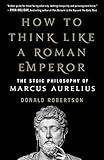
The most widely read of the ancient Stoic texts, and the most personal. Marcus Aurelius was Roman Emperor from 161 to 180 CE and wrote these private notes to himself during his campaigns on the northern frontier — not as philosophy for public consumption, but as reminders of what he was trying to become. The result is a text of unusual intimacy: a powerful man’s attempt to hold himself to account, to remember what matters, to resist the specific corruptions of power.
Themes that recur throughout: the brevity of life (all the great and powerful of the past are equally forgotten), the importance of concentrating on the present moment, the uselessness of anger, the obligation to act for the common good. The philosophy is not abstract — it is urgently practical, the notebook of someone trying to be better today than he was yesterday.
The Discourses of Epictetus (written c. 108 CE)
Epictetus was a former slave who became the most influential Stoic teacher of the Roman period. His Discourses — recorded by his student Arrian — are more systematic than Marcus Aurelius’s private notes and more demanding: Epictetus is a harder teacher. The Enchiridion (The Handbook), a summary of his key principles compiled from the Discourses, is the shortest introduction to Stoic practice: fifty-three short paragraphs that cover the essential Stoic distinctions and their practical applications.
The central distinction — between what is ‘up to us’ (our judgements, desires, choices) and what is not (everything external, including health, wealth, and reputation) — is the foundation of all Stoic practice.
Letters from a Stoic — Seneca (written c. 65 CE)
Lucius Annaeus Seneca was a Roman senator and playwright who served as advisor to the Emperor Nero — a position that eventually ended in his forced suicide. His Letters to Lucilius are moral essays in epistolary form, covering topics from the nature of friendship to the management of time to the relationship between philosophy and death. Seneca’s prose is more rhetorical and more playful than Marcus Aurelius’s; his letters are among the most readable texts in the Stoic tradition.
Modern Stoicism
The Daily Stoic by Ryan Holiday and Stephen Hanselman is the most widely read modern introduction to Stoicism — a 365-day guide that pairs daily passages from the ancient texts with Holiday’s commentary. Useful for readers who want structured guidance through the primary texts.
A Guide to the Good Life by William Irvine is the most systematic academic introduction to Stoic practice for general readers — a philosopher explains the Stoic techniques and argues for their relevance to contemporary life.
The Dichotomy of Control
If Stoicism can be reduced to a single foundational idea — and the ancient texts on this list return to it again and again — it is the dichotomy of control, the recognition that some things are within our power and others are not, and that nearly all human suffering arises from confusing the two. Epictetus states it most starkly at the opening of the Enchiridion: within our power are our own judgments, desires, and choices; outside it are our bodies, our reputations, our possessions, the actions of others, and ultimately everything external. The Stoic discipline consists in withdrawing our emotional investment from what we cannot control and concentrating it entirely on what we can — our own character and responses. This is simultaneously the simplest and the most difficult idea in practical philosophy. It is simple to state and immediately intuitive: of course we cannot control the weather, the economy, other people’s opinions, or the ultimate outcome of our efforts. Yet we spend enormous quantities of anxiety, anger, and grief on exactly these things, and the Stoic project of genuinely internalizing the dichotomy — of becoming truly indifferent to what lies beyond our control while taking full responsibility for what lies within it — is the work of a lifetime. The reason the ancient texts read as so urgently practical is that their authors were not theorizing about this distinction but struggling to live it under real pressure: Marcus amid the burdens of empire, Epictetus from the experience of slavery, Seneca under the shadow of a murderous emperor. Their writings are the record of people trying, and often failing, to master the one discipline that promises freedom.
Why an Ancient Philosophy Speaks to the Present
The remarkable revival of Stoicism in recent years — visible in the popularity of modern guides like The Daily Stoic and in the philosophy’s adoption by everyone from athletes to entrepreneurs to those navigating ordinary anxiety — testifies to its unusual fit with contemporary needs. Several features explain why a school of thought from the Greco-Roman world feels so applicable to modern life. First, Stoicism is fundamentally practical rather than abstract; unlike much academic philosophy, it was always meant to be lived, offering concrete techniques for managing emotion, adversity, and desire rather than merely arguments to be contemplated. Second, its psychological insights anticipate modern science with striking precision: the Stoic understanding that our distress comes not from events themselves but from our judgments about them is the explicit foundation of cognitive behavioral therapy, the most empirically validated form of modern psychotherapy, whose founders openly acknowledged the debt. Third, Stoicism is non-dogmatic and largely secular in its practical applications, requiring no particular religious belief, which makes it accessible to a contemporary audience often wary of faith-based frameworks while still hungry for guidance on how to live. And fourth, its emphasis on resilience, equanimity, and focusing on what one can control speaks directly to an age of pervasive anxiety, information overload, and a sense of powerlessness before vast forces. The Stoics developed their philosophy as a tool for maintaining inner stability amid chaos, uncertainty, and the constant possibility of loss — precisely the conditions many people feel they face today, which is why their two-thousand-year-old counsel reads as startlingly current.
Ancient Sources or Modern Guides?
A practical question facing anyone drawn to Stoicism is whether to begin with the ancient primary texts or with the contemporary introductions, and the answer depends on temperament and goal. The ancient sources — Marcus Aurelius, Epictetus, and Seneca — offer something the modern guides cannot: the direct, unmediated voice of people actually wrestling with the philosophy under real pressure, and a depth and beauty that account for their survival across two millennia. Meditations in particular rewards readers willing to meet it on its own terms, and the Enchiridion is short enough to be read in an hour and returned to for a lifetime. The risk of starting with the ancients is that their cultural distance, their occasional obscurity, and the demanding nature of teachers like Epictetus can discourage the newcomer. The modern guides — Ryan Holiday’s accessible daily-meditation format, William Irvine’s systematic philosophical introduction — serve as effective bridges, translating the ancient ideas into contemporary language, organizing them into usable form, and demonstrating their application to modern dilemmas. The ideal approach for most readers is to use both in tandem: let a modern guide provide the framework and the motivation, then read the ancient texts directly to encounter the philosophy in its original power and to verify the modern interpretations against the sources. What matters most, as every Stoic from Epictetus onward insisted, is that the philosophy not remain merely a subject of reading and admiration but be put into practice — for Stoicism is finally not a set of doctrines to be known but a discipline to be lived, and its books are valuable only insofar as they change how one meets the actual conditions of a life.
Reading Order
Ancient texts first: Meditations → Enchiridion (Epictetus) → Letters from a Stoic (Seneca).
Modern introduction first: The Daily Stoic → Meditations → Discourses of Epictetus.
For depth: Meditations → Letters from a Stoic → Discourses → A Guide to the Good Life.
Frequently Asked Questions
What is the best book on Stoicism for beginners?
Meditations by Marcus Aurelius is the most widely read and the best entry point — it is a private notebook in which a Roman emperor recorded his attempts to apply Stoic philosophy to the daily difficulties of ruling an empire and managing his own character. It reads as a series of short reflections rather than a systematic treatise, which makes it accessible to readers without philosophical background. The Daily Stoic by Ryan Holiday (not an ancient text but a modern guide with daily passages from Stoic sources) is useful for readers who want structured guidance into the philosophy. Epictetus's Enchiridion (The Handbook) is the shortest and most practical of the classical texts.
What is Stoicism?
Stoicism is an ancient Greek and Roman philosophy founded in Athens around 300 BCE by Zeno of Citium. Its central claim is that human wellbeing depends not on external circumstances (wealth, health, reputation) but on virtue — specifically on the quality of our judgements, choices, and responses to what happens to us. We cannot control what happens to us, but we can control how we respond. This distinction — between what is 'up to us' (our thoughts, desires, values) and what is not (everything external) — is the practical centre of Stoic practice and the reason it has attracted renewed interest in contemporary culture.
What did Marcus Aurelius write?
Meditations — known in its original Greek as Ta eis heauton ('things to oneself') — is a series of personal notes that Marcus Aurelius wrote to himself, not intended for publication. They were written during his military campaigns on the northern frontier, and they record his attempts to practise Stoic philosophy under the specific pressures of imperial power: to remain modest when surrounded by flattery, to maintain perspective when confronted with violence, to remember his own mortality when tempted by vanity. The text survives in a single manuscript tradition and was first printed in 1559.
Is Stoicism still relevant today?
Stoicism has experienced a major revival in the early twenty-first century, partly through writers like Ryan Holiday (The Obstacle Is the Way, The Daily Stoic) and partly through its adoption by athletes, executives, and military figures. The Stoic framework — distinguish between what you control and what you don't, focus your energy accordingly — is directly applicable to modern life in ways that many ancient philosophies are not. Cognitive Behavioural Therapy (CBT), the most evidence-supported form of psychotherapy, draws explicitly on Stoic ideas, particularly Epictetus's observation that it is not things that disturb us but our judgements about things.