Where to Start with Ryan Holiday: A Reading Guide
Where to start with Ryan Holiday — whether to begin with The Obstacle Is the Way, Ego Is the Enemy, or Stillness Is the Key. A complete reading guide to Stoic self-help.
By Lena Fischer

Ryan Holiday (born 1987) is the American author, former media strategist, and bookstore owner who — beginning with The Obstacle Is the Way (2014) — popularised Stoic philosophy for a twenty-first-century business and self-improvement readership. His books translate the Stoic wisdom of Marcus Aurelius, Seneca, and Epictetus into practical frameworks for managing adversity, suppressing ego, and maintaining inner equilibrium — and have sold over four million copies worldwide. He is the most influential populariser of classical philosophy in contemporary non-fiction and runs the daily Stoicism newsletter with several hundred thousand subscribers.
Where to Start: The Obstacle Is the Way (2014)
The essential Holiday — and the book that demonstrated a substantial appetite for Stoic philosophy packaged as practical wisdom. The argument is drawn from Marcus Aurelius: the impediment to action advances action; the obstacle becomes the way. What blocks you forward is also the path forward — if you approach it correctly.
Holiday builds the argument through three components (perception, action, will) and illustrates each with historical examples: Thomas Edison after the fire that destroyed his laboratory, Amelia Earhart accepting diminished conditions in order to get airborne, Ulysses Grant’s relentless forward motion through the Civil War. The examples are well chosen and the argument is clear. Holiday writes with directness and energy; the book is short, fast to read, and practically oriented. It became required reading in Silicon Valley and the NFL, and its endorsement by teams and coaches has made it one of the defining business books of the 2010s.
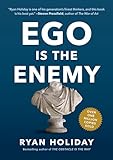
Ego Is the Enemy (2016)
The second book of the informal Stoic trilogy — and, for many readers, the one that applies most directly to the specific damage that success can do. The argument: ego — the need for self-aggrandisement, the defensive conviction of one’s own specialness — is the obstacle that ambition creates. Holiday draws on historical figures who maintained extraordinary capability precisely by resisting the temptations that early success provides. The cases range from Howard Hughes (how ego destroys) to Katharine Graham (how the suppression of ego enables genuine achievement).
Stillness Is the Key (2019)
The third book of the trilogy — and the one that departs most from conventional productivity framing toward something more contemplative. The argument: stillness — the capacity to be present, to resist distraction, to maintain inner quiet — is not a luxury but a prerequisite for great work. Holiday draws on John F. Kennedy during the Cuban Missile Crisis, Tiger Woods’s mental practice, and various Stoic and Buddhist sources to argue that external achievement is impossible without internal equilibrium.
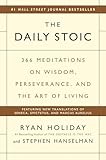
The Daily Stoic (2016)
A companion volume rather than a narrative book: 366 daily meditations drawn from Marcus Aurelius, Seneca, Epictetus, and other Stoic thinkers, with Holiday’s brief commentary on each. Designed to be read one entry per day. The best introduction to the primary Stoic texts for readers who want direct exposure to the philosophers alongside Holiday’s interpretation.
Why The Obstacle Is the Way Is the Ideal First Book
For a reader new to Ryan Holiday, The Obstacle Is the Way is the ideal first book because it is his breakout work, the book that helped spark the modern revival of Stoicism, and the fullest expression of his distinctive gift, the translation of ancient Stoic philosophy into practical, accessible guidance for contemporary life. The Obstacle Is the Way argues, drawing on Stoic thought and historical examples, that the obstacles we face can be transformed into opportunities through perception, action, and will. As an entry point it is ideal, for it is his best-known book and a clear, energizing introduction to his practical Stoicism. It welcomes the newcomer with its punchy chapters, its memorable historical stories, and its actionable philosophy, drawing the reader into the Stoic ideas he has done so much to popularize. It is among his most famous works and a fine representation of his gifts, so the new reader encounters Holiday at his most characteristic. For the newcomer, then, The Obstacle Is the Way is the natural and ideal starting point.
What to Expect as a New Reader
As a new reader, you can expect The Obstacle Is the Way to be a practical, accessible, and energizing application of Stoic philosophy to modern life. You can expect a central argument, that the obstacles we face can be turned into advantages through how we perceive them, how we act, and the will we bring to them. You can expect Stoic wisdom, for Holiday draws on the ancient Stoics and their ideas about control, perception, and virtue. You can expect memorable examples, for the book illustrates its lessons with vivid stories of historical figures who turned adversity into triumph. You can expect a punchy, accessible style, organized into short, practical chapters. You can expect actionable guidance rather than abstract theory. You can expect a motivating and clarifying read. Expect, in short, a practical, accessible, and energizing application of Stoic philosophy to modern life, a fine introduction to Holiday’s work.
Going Deeper After Your First Book
Once The Obstacle Is the Way has introduced you to Holiday’s practical Stoicism, the reader who wishes to go deeper can explore his other books, which continue his accessible application of Stoic philosophy to life, work, and character. Ego Is the Enemy examines how ego undermines us and how humility serves us, while Stillness Is the Key explores the Stoic and broader wisdom of calm and focus, and The Daily Stoic offers a year of short daily meditations drawn from the Stoics. His later books on the cardinal virtues continue the project. Reading these after The Obstacle Is the Way deepens your engagement with Holiday’s distinctive gift, the translation of Stoic philosophy into practical modern guidance. His characteristic approach runs through his work, and the reader who has valued The Obstacle Is the Way will find it across his books. Building your reading journey through Holiday is a matter of following his practical Stoicism into his other works. The reader who begins here and continues will find the leading popularizer of modern Stoicism, and a gateway to the ancient Stoics themselves.
Reading Ryan Holiday
Holiday’s books are best read as a practical philosophy for navigating adversity, ambition, and distraction — a modern translation of Stoic wisdom into the specific challenges of contemporary professional and personal life. Begin with The Obstacle Is the Way for the most immediately applicable argument; read the trilogy in sequence for the full three-part framework. Read The Daily Stoic alongside any of the trilogy books for direct exposure to the Stoic source material.
Frequently Asked Questions
Where should I start with Ryan Holiday?
The Obstacle Is the Way (2014) is the essential starting point — the book that made Holiday a publishing phenomenon and the clearest single-volume statement of his argument: that the same impediment that blocks your path provides the means to move forward. Drawing on Marcus Aurelius, Seneca, Epictetus, and historical figures from Thomas Edison to Amelia Earhart, Holiday translates Stoic philosophy into a framework for responding to adversity. It is the most direct, most practically useful, and most widely read of his books. Ego Is the Enemy is the best second book; Stillness Is the Key completes the informal trilogy.
What is Ryan Holiday's Stoic trilogy?
The Obstacle Is the Way (2014), Ego Is the Enemy (2016), and Stillness Is the Key (2019) form an informal trilogy built on Stoic philosophy. The Obstacle focuses on action — how to turn adversity into fuel. Ego focuses on self — how unchecked ego destroys the capacity for success and relationships. Stillness focuses on inner peace — how the ability to be still, despite the pressure to perform and react, is itself the prerequisite for great work. Together they apply three Stoic virtues (action, humility, contemplation) to the practical problem of living and working well in a modern world.
Do Ryan Holiday's books need to be read in order?
The Stoic trilogy (The Obstacle Is the Way, Ego Is the Enemy, Stillness Is the Key) forms a coherent argument across three books, but each is fully standalone — they can be read in any order or independently. The Daily Stoic is a separate companion volume offering 366 daily meditations drawn from Stoic texts, designed to be read one entry per day alongside any other Holiday book. Lives of the Stoics and Discipline Is Destiny are part of a separate series on the virtues. Perennial Seller is a business book about making work that lasts, aimed at creative professionals.
Is Ryan Holiday's stoicism philosophically rigorous?
Holiday is a populariser rather than a philosopher. He reads the primary Stoic texts (Marcus Aurelius's Meditations, Seneca's Letters, Epictetus's Enchiridion) carefully and accurately, and his translations of their ideas into contemporary practical language are generally faithful to the philosophical content. He draws on historical examples (Lincoln, Churchill, Grant, Theodore Roosevelt) to illustrate Stoic principles in action. Academic philosophers sometimes critique his simplifications; practical readers generally find his approach illuminating and usable. He is best understood as a gateway to Stoicism — his books are often the reason readers then go on to read Marcus Aurelius directly.