Sapiens vs Homo Deus: Which to Read First?
One tells the story of where humanity came from; the other speculates about where we're going. How Harari's two big books compare — and why the reading order matters here.
By Elena Marsh
Yuval Noah Harari’s two best-known books, Sapiens and Homo Deus, are often bought together and just as often read in the wrong order. They form a deliberate pair — one looking backward, one looking forward — and unlike most “which should I read first” questions, this one has a clear answer.
Sapiens: the story of how we got here
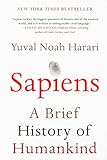
Sapiens is a sweeping history of humankind, from the emergence of Homo sapiens to the present day. Its central, much-discussed argument is that our species came to dominate the planet through a unique ability: cooperating flexibly in huge numbers by believing in shared fictions — money, religions, nations, human rights. Harari moves briskly across the cognitive, agricultural, and scientific revolutions, repeatedly reframing things you thought you understood. It is provocative, accessible, and genuinely mind-expanding, which is why it became a global phenomenon.
Homo Deus: the story of where we might go
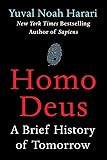
Homo Deus picks up where Sapiens leaves off and turns to the future. Having conquered famine, plague, and war (relatively speaking), what will humanity pursue next? Harari speculates about a future shaped by data, artificial intelligence, and biotechnology — one in which humanity might upgrade itself into something new, or be displaced by the very systems it builds. It is bolder and more speculative than Sapiens, and that is both its appeal and the source of the criticism it attracts.
Why order matters here
Most of these comparisons end with “read in any order.” This one does not. Homo Deus is explicitly built on the framework Sapiens establishes — especially the idea that shared fictions power human cooperation. Read the future-book first and you are getting the conclusions without the argument. Read Sapiens first, let it rewire how you see human history, and then let Homo Deus extend that lens toward what comes next.
Which is the better book?
If you read only one, read Sapiens. It is the more grounded, more acclaimed, and more broadly rewarding of the two — the better single introduction to Harari’s thinking. Come to Homo Deus as the speculative follow-up, read with a healthy mix of fascination and skepticism, since its forecasts are arguments to wrestle with rather than predictions to trust.
How to read Harari well
It is worth saying how to approach both books, because Harari’s great strength is also his risk. He is a brilliant synthesiser and a gifted simplifier — he makes enormous spans of history and speculation feel graspable in a single confident sweep. That confidence is exhilarating, but it can paper over genuine scholarly debate, and critics have noted places where the broad brush flattens complexity.
The healthy way to read him is as a provocateur rather than an oracle: let the big reframings change how you see things, but hold the sweeping claims lightly and check the ones that matter to you. This is doubly true for Homo Deus, whose subject — the future — is unknowable by definition. Read for the stimulating questions it raises about data, AI, and what humanity might become, not for predictions to bank on.
Read next
For more sweeping accounts of the human story, Jared Diamond’s Guns, Germs, and Steel is the natural companion, while Daniel Lieberman’s The Story of the Human Body brings an evolutionary lens to our health. For the psychology behind the “shared fictions” Harari describes, see Thinking, Fast and Slow.
Affiliate disclosure: Links on this page are affiliate links. We earn a small commission at no extra cost to you.
Frequently Asked Questions
Should I read Sapiens or Homo Deus first?
Read Sapiens first. This is one of the rare cases where order genuinely matters: Sapiens lays out Harari's framework for understanding humanity — the cognitive, agricultural, and scientific revolutions, and the power of shared fictions — and Homo Deus builds directly on that foundation to speculate about the future. Reading Homo Deus first means encountering conclusions before the argument that supports them. Start with the history, then move to the forecast.
What is the difference between Sapiens and Homo Deus?
Sapiens is a history: it explains how Homo sapiens went from an unremarkable animal to the dominant force on the planet. Homo Deus is a speculative future history: it asks what humanity will do with its power next, exploring how data, artificial intelligence, and biotechnology might reshape or even replace humanity as we know it. Sapiens looks back; Homo Deus looks forward.
Which is better, Sapiens or Homo Deus?
Sapiens is the more acclaimed and the more grounded of the two — its sweep and its provocative reframing of familiar history made it a global phenomenon. Homo Deus is more speculative and, accordingly, more divisive: brilliant and stimulating to some readers, overreaching to others. Most readers consider Sapiens the stronger book, and the better introduction to how Harari thinks.
Do I need to read Sapiens to understand Homo Deus?
You do not strictly need to, but it helps a great deal. Homo Deus assumes familiarity with the ideas Sapiens develops — especially the notion that large-scale human cooperation rests on shared fictions like money, nations, and religion. Reading Sapiens first makes Homo Deus far richer and its leaps easier to follow.