Yuval Noah Harari Books in Order: Complete Reading Guide
All Yuval Noah Harari books in order — Sapiens, Homo Deus, 21 Lessons for the 21st Century, and Nexus. Reading guide for the bestselling historian of humanity.
Yuval Noah Harari is an Israeli historian whose four books of popular non-fiction have been read by tens of millions of people worldwide. Starting with Sapiens, he has produced what amounts to a sustained examination of the human story from prehistory to the potential end of humanity as we know it.
Yuval Noah Harari Books in Publication Order
| # | Title | Year |
|---|---|---|
| 1 | Sapiens | 2011 |
| 2 | Homo Deus | 2015 |
| 3 | 21 Lessons for the 21st Century | 2018 |
| 4 | Nexus | 2024 |
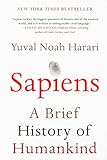
1. Sapiens — 2011 Hebrew / 2014 English
Start here. A brief history of humankind — from the cognitive revolution of 70,000 years ago through the agricultural revolution, the rise of empires, the scientific revolution, and into the present. One of the most widely read popular history books of its decade.
➡ Full review → | Buy on Amazon →
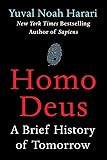
2. Homo Deus — 2015 Hebrew / 2016 English
Where Sapiens looked back, Homo Deus looks forward — at the technologies (AI, bioengineering) that may transform the human condition, and the ideologies (dataism, transhumanism) that may replace humanism. Darker and more speculative than Sapiens.
➡ Full review → | Buy on Amazon →
3. 21 Lessons for the 21st Century — 2018
Twenty-one essays on the present moment — technology, politics, religion, meaning, and how to think about a world changing faster than our institutions can adapt. More discursive than the previous two books; better read as individual essays than straight through.
➡ Full review → | Buy on Amazon →
4. Nexus — 2024
A history of information networks — from cave paintings to AI — examining how information, power, and human organisation have co-evolved. His most focused work since Sapiens.
The Sweep of Big History
Yuval Noah Harari achieved his extraordinary global success by offering readers something that few writers attempt and fewer accomplish: a coherent, sweeping account of the entire human story, from the emergence of our species to the possible futures that await it. Harari is a practitioner of what is sometimes called “big history,” the ambitious attempt to tell the story of humanity on the largest possible scale, synthesizing vast ranges of knowledge from biology, anthropology, economics, history, and beyond into a single grand narrative. This sweeping scope is the defining feature of his work and the source of much of its appeal, for Harari offers readers the rare experience of a coherent account of the whole human story, a framework within which the vast and scattered facts of human history acquire meaning and pattern. His great gift is synthesis and narrative, the ability to draw together enormous ranges of knowledge into a clear, compelling, and accessible story, rendering the grand sweep of human history comprehensible and engaging for the general reader. This is no small achievement, for the synthesis of such vast material into a coherent and readable narrative demands both broad knowledge and exceptional skill, and Harari’s success in providing this sweeping account of the human story accounts for the extraordinary global reach of his work. The sweep of big history, the coherent account of the whole human story on the largest possible scale, is the defining feature of Harari’s work and the foundation of his appeal, offering readers a grand narrative within which the human past, present, and future acquire meaning and pattern, and rendering the vast story of humanity comprehensible and engaging.
Past, Present, and Future
Harari’s major books form a coherent trilogy of perspective, each turning the lens of big history onto a different dimension of the human story: the past, the future, and the present. Sapiens, his breakthrough work, looks to the past, telling the sweeping story of how Homo sapiens came to dominate the planet, tracing the great revolutions of human history and the development of the species from its origins to the present day. Homo Deus turns to the future, extrapolating from present trends to consider the possible futures of humanity, the transformations that technology and other forces may bring, and the prospects and dangers that await the species. 21 Lessons for the 21st Century addresses the present, turning Harari’s big-history perspective onto the immediate challenges and questions facing humanity now, from technology to politics to meaning. Together these books offer a coherent trilogy of perspective, examining the human story across past, present, and future, and providing readers with a comprehensive framework for understanding humanity’s trajectory. This structure gives a clear logic to Harari’s body of work and a natural path through it: Sapiens is the essential starting point and the foundation, the sweeping account of the human past that establishes Harari’s perspective and method; Homo Deus follows naturally, extending the perspective into the future; and 21 Lessons applies it to the present. His more recent Nexus extends his inquiry further, into the history and future of information networks. The trilogy of past, present, and future provides the coherent structure of Harari’s work and the natural path through it, beginning with the foundational Sapiens.
Influence and Its Critics
Few contemporary writers have achieved Harari’s combination of massive popular success and serious intellectual influence, and his work has shaped how millions of readers think about the human story, even as it has attracted significant criticism from specialists. Harari’s books have sold in enormous numbers, been translated into dozens of languages, and influenced not only general readers but business leaders, policymakers, and public figures, making him one of the most widely read and influential intellectuals of his time. This influence reflects the genuine appeal and value of his work, the compelling sweep of his narrative, the accessibility of his synthesis, and the provocative questions he raises about humanity’s past, present, and future. Yet his very strengths have also drawn criticism, particularly from specialists who fault the sweeping generalizations and bold simplifications that his big-history approach requires. The synthesis of such vast material into a clear and compelling narrative necessarily involves simplification and generalization, and critics have argued that Harari sometimes oversimplifies complex matters, makes claims that specialists would contest, and sacrifices nuance for the sake of a clear and engaging story. The thoughtful reader holds both the appeal and the criticisms in view, appreciating the genuine value of Harari’s sweeping perspective and provocative questions while approaching his bold generalizations with appropriate critical awareness. This balanced understanding allows the reader to benefit from the real strengths of Harari’s work, its compelling synthesis and its provocative engagement with the largest questions about humanity, while remaining appropriately critical of the simplifications that his ambitious approach entails. Influence and its critics together define the reception of Harari’s work, which has shaped how millions think while attracting serious scholarly debate.
Reading Order Recommendation
Sapiens → Homo Deus → 21 Lessons reads as a coherent trilogy: past, future, present. Nexus can follow in any position.
Affiliate disclosure: Links to Amazon on this page are affiliate links. We earn a small commission at no extra cost to you.
Frequently Asked Questions
What Yuval Noah Harari book should I read first?
Start with Sapiens — it is his best book and the one that established his reputation. It covers the full sweep of human history in a single accessible volume. The subsequent books build on it and can be read in order or independently.
Do Harari's books need to be read in order?
No, though the trilogy (Sapiens, Homo Deus, 21 Lessons) works best read in order — Sapiens covers the past, Homo Deus the future, and 21 Lessons the present. Nexus (2024) stands largely independently.
Is Sapiens accurate?
Harari writes accessibly about subjects that specialists have argued he oversimplifies. Academic historians and anthropologists have critiqued specific claims in Sapiens. His books work best as sweeping frameworks for thinking about large questions rather than as precise scholarship.