Sapiens vs Guns, Germs, and Steel: Which First?
Two defining works of popular history, one core question: why did some civilisations come to dominate others? A close, opinionated comparison of Sapiens and Guns, Germs, and Steel.
By Oliver Kane
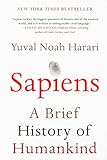
Few questions in intellectual life are more unsettling than the one both of these books are trying to answer: why did some human societies come to dominate others? Why did Europeans colonise the Americas and Africa rather than the reverse? Why did agriculture, writing, and industrialisation emerge where they did and not elsewhere? And what does the answer tell us about what we are — about whether history reflects something essential about different groups of people, or something contingent about the environments they happened to inhabit?
Sapiens: A Brief History of Humankind by Yuval Noah Harari and Guns, Germs, and Steel: The Fates of Human Societies by Jared Diamond are the two most widely read attempts to answer this question for a popular audience. Harari covers 70,000 years of human history in under 500 pages; Diamond focuses more narrowly on the environmental and geographical factors that determined why Eurasian civilisations came to dominate global history. Both books have sold millions of copies, reshaped public understanding of the past, and attracted serious criticism from professional historians. Both deserve your time.
They are, however, very different books — in scope, method, intellectual ambition, and the risks each author is willing to take. Understanding those differences is the key to getting the most from both.
Quick Comparison
| Sapiens | Guns, Germs, and Steel | |
|---|---|---|
| Author | Yuval Noah Harari | Jared Diamond |
| Year | 2011 (English) | 1997 |
| Scope | 70,000 years of human history | ~13,000 BCE to the modern era |
| Central Thesis | Shared fictions enable large-scale cooperation | Geography and environment drove civilisational divergence |
| Approach | Narrative macro-history, speculative | Evidence-based argument, multidisciplinary |
| Prose Style | Fluent, provocative, essayistic | Dense, methodical, journalistic |
| Best for | Grand perspective and big ideas | Sustained, testable historical argument |
Sapiens: What Makes It Work
Sapiens opens with a claim that is modest in form and staggering in implication: humans are not the most powerful animals on Earth because we are the strongest, the fastest, or even the cleverest in any conventional sense. We are powerful because we are the only species capable of cooperating flexibly in very large numbers — and we do this not through instinct, as ants do, but through shared belief in things that do not physically exist: nations, money, gods, human rights, corporations. Harari calls these shared fictions “imagined realities,” and his argument is that the ability to create and sustain them is the decisive cognitive leap that separated Homo sapiens from every other species in the genus Homo and from every other animal that has ever lived.
This is the Cognitive Revolution, which Harari dates to roughly 70,000 years ago, and it is the foundation on which everything in the book rests. The Agricultural Revolution, the rise of empires and religions, the Scientific Revolution, capitalism — all of these are successive elaborations on the same basic trick: getting large numbers of people to believe in the same thing, coordinate their behaviour around it, and sustain the belief even when it is clearly convenient rather than obviously true.
What Harari does with this framework is genuinely exciting. His treatment of money as the most successful imagined reality in human history — the belief system that has transcended every cultural and religious difference to become genuinely universal — is one of the most clarifying passages in the book. His account of the Agricultural Revolution as, in some respects, a catastrophe for human wellbeing — allowing more people to live worse lives — overturns the assumption of progress with evidence from skeletal records and anthropological fieldwork. His discussion of happiness in the final section, which asks whether all the achievements of human history have actually made Homo sapiens happier, is the most philosophically honest ending a popular history book has attempted.
The book’s great strength is also its greatest risk. Harari writes with a confidence that can tip into overreach. His speculative passages are frequently brilliant, but they are sometimes presented with more certainty than the evidence warrants. Historians of specific periods have flagged errors and oversimplifications — his treatment of ancient agricultural societies, his account of pre-agricultural happiness, his characterisation of the Scientific Revolution. These are real problems, and readers who go on to study any particular period Harari covers will find the picture considerably more complicated.
None of this makes Sapiens a less valuable book. It makes it a specific kind of book: one whose primary value is not as a reliable account of historical events but as a framework for asking the right questions about why human history went the way it did. Harari’s questions are the right ones. His answers are a beginning, not a conclusion.
Guns, Germs, and Steel: What Makes It Work
Guns, Germs, and Steel begins with a question that a New Guinean politician named Yali asked Jared Diamond in 1972: “Why is it that you white people developed so much cargo and brought it to New Guinea, but we black people had little cargo of our own?” Yali’s question is what historians call the problem of the Great Divergence — the fact that by 1500 CE, the world’s societies differed dramatically in their technological and political development, and that the societies that happened to be most technologically advanced then went on to colonise or destroy most of the others.
Diamond’s answer is geographic determinism: the differences between human societies are not explained by differences in intelligence, culture, or racial characteristics. They are explained by differences in the environments those societies inhabited. Specifically, Eurasia had geographical and ecological advantages that other regions did not: a large landmass oriented east-west (sharing climate zones and allowing the lateral spread of crops and animals), a disproportionate number of domesticable plant and animal species, and geographical features that encouraged contact and competition between societies rather than isolation.
The argument is built methodically across thirteen chapters that cover the domestication of plants and animals, the development of germs as a weapon of conquest, the relationship between food surplus and social stratification, the development of writing, and the role of technology in military conquest. Each chapter marshals evidence from archaeology, linguistics, ecology, and biology. The result is the most sustained and evidence-based popular-history argument about global inequality written in the twentieth century.
Diamond’s treatment of animal domestication is among the most illuminating passages in the book. Of the world’s 148 large terrestrial herbivores and omnivores, only 14 have ever been domesticated — and 13 of those 14 are native to Eurasia or North Africa. This was not because other societies failed to try: indigenous peoples in the Americas, Africa, and Australia attempted to domesticate local animals and, with a few exceptions like the llama and alpaca, found that those animals simply could not be domesticated. The reasons are biological and ecological, not cultural, and Diamond explains them with the precision of a natural historian.
The book is genuinely demanding. Diamond’s prose is dense and methodical, and the chapters on food production and plant genetics require patience. But the density is earned: Guns, Germs, and Steel is attempting something more ambitious than a persuasive narrative. It is attempting a causal argument about global history that is, at least in principle, testable. Diamond explicitly invites the reader to look for counterexamples and to think of cases where his model fails. That intellectual honesty is relatively rare in popular history.
Scholarly Rigour and Controversy
Neither book is without serious critics, and the nature of those criticisms reveals something important about what each is doing.
Diamond’s critics are primarily anthropologists, historians, and political scientists. The most substantive objections are: that geographic determinism oversimplifies the role of contingency and human agency in history; that Diamond pays insufficient attention to internal social structures and institutions (a criticism developed most forcefully in Why Nations Fail); and that his model, while powerful in explaining the broad divergence between continents, struggles with the significant developmental differences within Eurasia. Why did China, which had geographical advantages comparable to or greater than Europe, not industrialise first? Diamond’s answer — institutional factors, the specific political structure of Chinese bureaucracy — implicitly concedes that geography is not the whole story.
These are legitimate critiques. The productive response is not to dismiss Diamond’s framework but to understand its limits: it explains the large-scale, continental-level divergences in human development with genuine power, and it decisively refutes the racist and culturally determinist explanations that were its primary competition. Where it underperforms is at the level of finer-grained historical analysis.
Harari’s critics are numerous and come from every direction. Professional historians object to his casual treatment of evidence, his speculative passages presented as fact, and his tendency to build enormous argumentative structures on narrow empirical foundations. Scientists have objected to some of his characterisations of evolutionary biology. Philosophers have noted that his treatment of “imagined realities” elides important distinctions. His critics on the left object to his fatalism; his critics on the right object to his implied politics.
What this convergent criticism actually reveals is that Sapiens is operating in a different register than traditional history. Harari is not a historian making an evidenced argument in the academic sense; he is a synthesist making a philosophical argument using history as his material. Judged as history, the book has real weaknesses. Judged as an attempt to give a general reader the most useful framework for thinking about human history available in one volume, it is close to unmatched.
Prose and Accessibility
The two books read very differently, and this matters when deciding where to start.
Sapiens is written for a reader who has never encountered these ideas before. Harari’s prose is fluent and clean, his examples are vivid, and his chapter structure is built for forward momentum. The book moves quickly. A determined reader can finish it in a long weekend, and the reading experience is closer to that of a stimulating essay collection than a conventional history. Each chapter offers a payoff — a reframing, a counterintuitive claim, a perspective shift — that keeps the energy up.
Guns, Germs, and Steel makes greater demands. Diamond’s prose is workmanlike rather than elegant; he is a scientist and ornithologist writing history, and his priorities are argument and evidence rather than narrative pleasure. Some chapters — particularly those on food production and animal domestication — are dense with detail and require the reader to hold complex taxonomic and ecological information in mind while following an argument. This is not a failing. The detail is the argument. But readers who come to Diamond expecting Harari’s pace will need to adjust.
The payoff for the additional effort is a different kind of satisfaction. Where Harari offers cognitive vertigo — the sense that everything you thought you knew about human history is wrong and you need to rebuild your mental model from scratch — Diamond offers the specific pleasure of a sustained argument that comes together. By the final chapters, the pieces assembled across the preceding 400 pages lock into a coherent picture, and the feeling of intellectual closure is genuinely rewarding.
What Each Book Gets Right — and Wrong
What Sapiens gets right: The cognitive revolution framework is genuinely illuminating. The argument about shared fictions as the basis for large-scale human cooperation is one of the more useful ideas in popular intellectual life. The treatment of money as an imagined reality with universal reach is the clearest explanation of how financial systems work at a conceptual level. The honesty about the Agricultural Revolution’s costs for human wellbeing corrects a reflexive progressivism that most popular history shares. The happiness question at the end is the right question to end on.
What Sapiens gets wrong: The confidence. Harari writes about contested and uncertain historical questions with a fluency that can mislead general readers into thinking the picture is clearer than it is. The pre-agricultural period is significantly more complex and varied than he suggests. His treatment of empire and religion as primarily instruments of control oversimplifies the ways in which those institutions also provided genuine meaning, stability, and cohesion to populations who embraced them. His account of the future, which is where Homo Deus picks up the thread, is brilliant as speculation but sometimes presented as near-certainty.
What Guns, Germs, and Steel gets right: The core thesis is correct and important: the differences between human societies are not explained by innate differences between human populations. They are explained by geography, ecology, and the contingencies of which plant and animal species happened to be available for domestication in which parts of the world. This argument was not merely interesting when Diamond made it in 1997; it was necessary. The book provided the most rigorous popular refutation of scientific racism that had been written, and it remains a foundational text for that reason alone.
What Guns, Germs, and Steel gets wrong: The model is too clean. Real history is messier, more contingent, and more shaped by institutions, individuals, and accidents than Diamond’s geographic determinism allows. He underweights the role of political institutions, trade networks, and ideological systems in determining developmental trajectories. His explanations of within-Eurasian divergence — why Europe rather than China — are the weakest part of the book and the point at which the model’s limitations become most visible.
Who Should Read Each Book
Read Sapiens if you want to understand human history as a whole — to step back far enough to see the shape of the entire project, from the cognitive revolution to the present day. Read it if you want to be productively unsettled, to have your assumptions about progress, happiness, and meaning challenged by someone willing to follow the argument wherever it leads. Read it if you are new to this territory and want the most stimulating possible entry point.
Read Guns, Germs, and Steel if you want to understand why the world’s societies developed at different rates — if the Great Divergence question is the one you most want answered. Read it if you prefer a sustained causal argument to a panoramic narrative. Read it if you are interested in the intersection of natural history, ecology, and human history. Read it if you want a book that will teach you specific things about plant domestication, animal biology, and the epidemiology of conquest that no other popular history covers in comparable depth.
The honest answer is that both books belong on the same shelf, and the readers who get the most from each are usually the ones who read both.
The Harari Trilogy and Beyond
If Sapiens captures your attention, the natural continuation is Homo Deus: A Brief History of Tomorrow and 21 Lessons for the 21st Century. Homo Deus extends Harari’s macro-history into the future, asking what happens to humanity when the existential challenges that defined the past — disease, famine, war — are substantially solved, and new ones — artificial intelligence, biotechnology, the obsolescence of human labour — take their place. 21 Lessons for the 21st Century pulls back from the grand sweep to address more immediate questions: how do we navigate the political, technological, and existential challenges of the present moment?
For the most important scholarly counterweight to both books, The Dawn of Everything by David Graeber and David Wengrow — published in 2021 and genuinely one of the most significant works of popular anthropology written in the past two decades — dismantles the assumption that human societies followed a single developmental trajectory from hunter-gatherer bands to agricultural states to modern bureaucracies. The picture that emerges is considerably more varied, more experimental, and more interesting than either Harari or Diamond suggest. It is the essential next read after both.
Frequently Asked Questions
Is Sapiens better than Guns, Germs, and Steel?
They are better at different things. Sapiens is the more provocative and intellectually daring book — Harari ranges across 70,000 years with a willingness to speculate that makes the reading experience exhilarating even when it makes historians nervous. Guns, Germs, and Steel is the more rigorously argued book — Diamond builds a single, coherent thesis from a specific question and supports it with detailed evidence from archaeology, biology, and linguistics. Readers who want grand ideas and a sense of cognitive vertigo should start with Harari. Readers who want a sustained, falsifiable argument about why history went the way it did should start with Diamond.
Is Jared Diamond’s thesis still accepted by historians?
Diamond’s core claim — that developmental differences between human societies were primarily determined by geographical and environmental factors rather than racial or cultural superiority — remains influential and largely accepted in its broad strokes. The specific mechanisms he proposes have attracted sustained criticism from historians and anthropologists who argue that he underweights human agency, ignores the role of contingency, and sometimes cherry-picks evidence to fit his model. The book is best understood as a powerful framework and a decisive corrective to racist historiography, rather than as a settled account of history.
Has Yuval Noah Harari been criticised by historians?
Yes, extensively. Harari’s main critics argue that he sacrifices historical accuracy for narrative impact, that his speculative passages are presented with more confidence than the evidence warrants, and that his account of pre-agricultural human life as broadly happy is not well supported. Historians of specific ancient periods have noted factual errors. These criticisms are legitimate and worth knowing. They do not change the fact that Sapiens is one of the most generative popular history books written in the past two decades — its questions are the right ones, even where its answers remain contested.
What should I read after Sapiens and Guns, Germs, and Steel?
After both, the most productive next reads depend on which aspects you want to deepen. For Harari’s continuation, Homo Deus and 21 Lessons for the 21st Century extend his analysis into the future and the present. For a scholarly counterweight to Diamond, The Dawn of Everything by David Graeber and David Wengrow dismantles many of the assumptions both books share about the trajectory of human societies. For a complementary argument with more institutional rigour than Diamond, Why Nations Fail by Daron Acemoglu and James Robinson focuses on political institutions rather than environment as the driver of development.
Which book covers more ground — Sapiens or Guns, Germs, and Steel?
Sapiens covers more ground by almost every measure. It begins with the cognitive revolution 70,000 years ago and ends with speculations about the post-human future, encompassing the agricultural revolution, the rise and fall of empires, the Scientific Revolution, capitalism, and the meaning of happiness along the way. Guns, Germs, and Steel focuses specifically on the period from roughly 11,000 BCE to the modern era and is principally concerned with the divergence in human development between Eurasia and other continents. Diamond’s scope is narrower, his argument is tighter, and his thesis is more testable. Harari covers everything; Diamond explains one crucial thing with exceptional depth.
For More Popular History
For the best works in the popular history tradition — from Sapiens to The Silk Roads to The Dawn of Everything — see our Best Biographies Ever Written and Best Books of All Time guides.
Affiliate disclosure: Links on this site are affiliate links. We earn a small commission at no extra cost to you. This does not influence our editorial recommendations.
Frequently Asked Questions
Is Sapiens better than Guns, Germs, and Steel?
They are better at different things. Sapiens is the more provocative and intellectually daring book — Harari ranges across 70,000 years with a willingness to speculate that makes the reading experience exhilarating even when it makes historians nervous. Guns, Germs, and Steel is the more rigorously argued book — Diamond builds a single, coherent thesis from a specific question and supports it with detailed evidence from archaeology, biology, and linguistics. Readers who want grand ideas and a sense of cognitive vertigo should start with Sapiens. Readers who want a sustained, falsifiable argument about why history went the way it did should start with Diamond.
Is Jared Diamond's thesis in Guns, Germs, and Steel still accepted by historians?
Diamond's core claim — that the different developmental trajectories of human societies were primarily determined by geographical and environmental factors rather than racial or cultural superiority — remains influential and largely accepted in its broad strokes. The specific mechanisms he proposes, however, have attracted sustained criticism from historians and anthropologists who argue that he underweights human agency, ignores the role of contingency, and sometimes cherry-picks evidence to fit his model. The book is best understood as a powerful framework and a corrective to racist historiography, rather than as a settled account of history.
Has Yuval Noah Harari been criticised by historians?
Yes, extensively. Harari's main critics argue that he sacrifices historical accuracy for narrative impact, that his speculative passages are presented with more confidence than the evidence warrants, and that his account of pre-agricultural human life as broadly happy is not well supported. Historians of ancient civilisations have noted specific factual errors. These criticisms are legitimate and worth knowing. They do not, however, change the fact that Sapiens is one of the most generative popular history books written in the past two decades — its questions are the right ones, even where its answers are contested.
What should I read after Sapiens and Guns, Germs, and Steel?
After both, the most productive next reads depend on which aspects you want to deepen. For the continuation of Harari's macro-history, Homo Deus and 21 Lessons for the 21st Century extend his analysis into the future. For a serious scholarly counterweight to Diamond, The Dawn of Everything by David Graeber and David Wengrow dismantles many of the assumptions both books share about the trajectory of human societies — it is the most important corrective in the field. For a complementary geographic argument with more rigour than Diamond, Why Nations Fail by Daron Acemoglu and James Robinson focuses on institutions rather than environment as the driver of development.
Which book covers more ground — Sapiens or Guns, Germs, and Steel?
Sapiens covers more ground by almost every measure. It begins with the cognitive revolution 70,000 years ago and ends with speculations about the post-human future, encompassing the agricultural revolution, the rise and fall of empires, the Scientific Revolution, capitalism, and the meaning of happiness along the way. Guns, Germs, and Steel focuses specifically on the period from roughly 11,000 BCE to the modern era and is principally concerned with the divergence in human development between Eurasia and other continents. Diamond's scope is narrower, his argument is tighter, and his thesis is more testable. Harari covers everything; Diamond explains one crucial thing.