Best Books About Democracy and Tyranny: Essential Political Reading
The best books about democracy and tyranny — from 1984 and Darkness at Noon to It Can't Happen Here and Brave New World. Essential political fiction and non-fiction.
By Oliver Kane
The literature of political tyranny and democratic resistance is one of the most important bodies of writing of the twentieth century — produced in direct response to the rise of fascism and Stalinism, and continuously relevant to questions of how democracies fail, how authoritarian systems maintain control, and what resistance looks like when institutions have been captured.
The books below include both the classic dystopian novels (which remain the most widely read political literature) and the historical and analytical works that illuminate how the fictional scenarios are related to historical reality.
The Foundational Dystopias
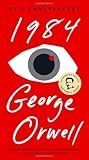
1984 — George Orwell (1949)
The defining account of totalitarianism — Big Brother, the telescreen, doublethink, Room 101. Winston Smith’s attempt to preserve a fragment of inner freedom in a state that has made thoughtcrime impossible by controlling language is the most influential political novel of the twentieth century. Orwell wrote it while dying of tuberculosis, drawing on his experience in the Spanish Civil War and his analysis of Stalinist show trials, and every specific mechanism of control he describes — the revision of history, the two-minutes hate, the manufactured enemy — is documented in historical authoritarian practice.
Brave New World — Aldous Huxley (1932)
The alternative dystopia — a World State that maintains control not through terror but through pleasure, conditioning, and the elimination of everything that produces dissatisfaction (family, religion, history, literature). Huxley’s argument: the soft tyranny of consumer capitalism and distraction is more insidious than the hard tyranny of the boot, because those controlled by it don’t feel controlled. Published seventeen years before 1984, and its critique of Western liberal society’s own tendency toward comfortable conformity is at least as prescient.
It Can’t Happen Here — Sinclair Lewis (1935)
Lewis’s novel imagines the rise of American fascism — a charismatic demagogue, Buzz Windrip, wins the presidency and immediately dismantles democratic institutions. Written in 1935 when fascism was already established in Europe, Lewis’s novel is a warning about American exceptionalism: the complacent assumption that authoritarianism can’t happen here because of the Constitution, the culture, or the tradition. The novel is uneven as fiction but important as a political argument.
The Psychological Account
Darkness at Noon — Arthur Koestler (1940)
The most psychologically acute novel about totalitarianism — Rubashov, an Old Bolshevik, is imprisoned and interrogated by the regime he helped create. Koestler’s central achievement: making Rubashov’s eventual confession comprehensible, showing how the logic of a closed system can make self-destruction rational to those inside it. The novel is the finest fictional account of how authoritarian systems break and remake individuals who have given their lives to the movement.
Four Books, Four Mechanisms of Control
What makes this quartet a complete education rather than four variations on one warning is that each book isolates a different mechanism by which freedom actually dies. Orwell’s mechanism is fear and epistemic control: the state that owns the past, the language, and ultimately the contents of your head, so that resistance becomes literally unthinkable. Huxley’s mechanism is appetite: no censor is needed where no one wants to read, no torture is needed where pleasure does the pacifying, and the cage is upholstered so comfortably that its occupants would vote to keep it. Koestler’s mechanism is belief itself: the loyal revolutionary destroyed not despite his faith in the system but through it, confessing because the Party’s logic — which he spent his life internalizing — demands it. And Lewis’s mechanism is the ordinary election: tyranny arriving not by coup but by ballot, carried in by economic resentment, a folksy demagogue, and the fatal confidence that institutions enforce themselves. Surveillance, distraction, ideological capture, democratic self-destruction — most real authoritarian episodes of the past century have run on some blend of the four, which is why reading any one of these books without the others leaves the picture dangerously incomplete.
Written from the Inside
These books carry an authority that later dystopian fiction rarely matches, because their authors were not speculating — they were reporting, at one remove, on systems they had touched personally. Orwell had been shot through the throat in Spain and then watched the very militia he served with be slandered as fascist agents in the Communist press; the Ministry of Truth’s rewritten history is his Spanish experience institutionalized. Koestler had been a Communist Party member for seven years, had sat in one of Franco’s death cells expecting execution, and had watched friends from the movement confess to absurdities in Moscow; Darkness at Noon is the testimony of a man explaining his own former mind. Lewis wrote with American demagogues of the 1930s — Huey Long’s machine and the radio priest Father Coughlin — operating at full volume around him; Buzz Windrip required almost no invention. Even Huxley, the furthest from direct political violence, was extrapolating from the assembly lines, advertising, and mass entertainment he saw consolidating in interwar consumer society. This grounding is what separates the four from generic dystopia: every horror has a documented ancestor, which is also why historians keep returning to them as primary sources for the political psychology of their era.
Reading Them as Diagnostics, Not Prophecies
The least useful way to read these books is as a prediction contest — arguing whether the present resembles Orwell or Huxley misses how the authors intended them. They are diagnostic instruments: each trains the reader to recognize a specific early symptom while the disease is still treatable. From Orwell, the symptom is linguistic — watch what happens to words, because power that intends to abuse always degrades the vocabulary needed to describe the abuse first. From Huxley, the symptom is attentional — measure not what citizens are forbidden to know but what they can no longer be bothered to know. From Koestler, the symptom is the loyalty test — the moment a movement demands you affirm something you know to be false as proof of belonging. From Lewis, the symptom is institutional complacency — the assurance that constitutions, courts, and traditions will hold without anyone having to defend them. Read this way, the four books stop being grim period pieces and become permanently useful equipment, which is the real reason they have never gone out of print: every generation finds the symptoms worth checking for, and every generation is right to.
Reading Order
Essential start: 1984 → Brave New World → Darkness at Noon.
American focus: It Can’t Happen Here → 1984 → Brave New World.
Historical and fictional: Darkness at Noon → 1984 → Brave New World → It Can’t Happen Here.
Frequently Asked Questions
What is the best book about totalitarianism?
1984 by George Orwell is the most influential account of totalitarianism and the one that has most shaped how we understand state surveillance, propaganda, and the mechanisms of political control. Darkness at Noon by Arthur Koestler is the most psychologically acute — a fictional account of a Stalinist show trial that is the finest portrayal of how authoritarian systems break individuals and make them confess to crimes they did not commit. Hannah Arendt's The Origins of Totalitarianism is the most analytically rigorous, though it requires more patience than either novel.
What is 1984 about?
1984 (1949) by George Orwell is set in a Britain under the totalitarian rule of the Party, led by the figurehead Big Brother. Winston Smith, a low-ranking Party official, begins to question the regime and falls into a secret love affair with a woman named Julia. The novel's central achievement is its account of how the Party maintains control: through surveillance (the telescreens), through the continuous rewriting of history (Winston's own job), through language manipulation (Newspeak, designed to make thoughtcrime literally impossible), and ultimately through the destruction of the self in the Ministry of Love's torture chambers.
What is Darkness at Noon about?
Darkness at Noon (1940) by Arthur Koestler follows Rubashov, an Old Bolshevik who has devoted his life to the Party, as he is imprisoned, interrogated, and tried by the very regime he helped build. Koestler's central question: how did the show trials of the 1930s produce confessions from loyal Communists who had done nothing wrong? His answer is that the Party's logic was internally consistent — Rubashov confesses because, on his own terms, the confession makes sense. The novel is the most psychologically acute account of how totalitarian systems destroy their own believers.
What is the difference between Orwell's 1984 and Huxley's Brave New World?
1984 (1949) depicts a tyranny that operates through pain, surveillance, and terror — the state maintains control through force. Brave New World (1932) depicts a tyranny that operates through pleasure, comfort, and distraction — people are conditioned to enjoy their servitude. Both traditions of critique are relevant: authoritarian states use both methods. Neil Postman's Amusing Ourselves to Death argues that Western democracies are more threatened by the Huxleyan scenario — not that they will become 1984 but that distraction and entertainment will render citizens incapable of engagement — than by Orwellian surveillance.