Best Cold War Books: Essential Fiction and Non-Fiction
The best Cold War books — from The Spy Who Came In from the Cold and Doctor Zhivago to Darkness at Noon and Animal Farm. Essential Cold War reading.
By Oliver Kane

The Cold War produced a literature of moral complexity that remains essential — not just as historical document but as the most sustained investigation of political betrayal, institutional cynicism, and the individual’s relationship to the state that fiction has produced. The books below cover both sides of the conflict and both genres — fiction and non-fiction — that the period generated.
The Spy Novel as Moral Investigation
The Spy Who Came In from the Cold — John le Carré (1963)
The most important espionage novel ever written — Alec Leamas’s mission to East Germany and the devastating revelation of what British intelligence is actually doing. Le Carré’s contribution to the spy genre was to strip it of glamour: his spies are compromised, exhausted, and ultimately betrayed by the institutions they serve. The moral equivalence between East and West — the novel’s core argument — was shocking in 1963 and remains uncomfortable.
Tinker Tailor Soldier Spy — John le Carré (1974)
Le Carré’s most complex novel — George Smiley’s return from retirement to identify a Soviet mole at the top of British intelligence. The novel is structured as a gradual revelation, each layer of deception exposing another, until the identity of the mole and the personal cost of the betrayal are simultaneously revealed. The most technically accomplished spy novel and the most psychologically rich.
The Soviet Experience in Fiction
Doctor Zhivago — Boris Pasternak (1957)
The great Russian novel of the revolutionary period — Zhivago’s love for Lara, and the way the Revolution destroys private life in the name of collective goals. Pasternak was a lyric poet, and the novel’s prose is the most beautiful of any on this list; the poems attributed to Zhivago at the novel’s end are among the finest Russian poetry of the century. Banned in the USSR; smuggled to the West; Nobel Prize refused under Soviet pressure.
Darkness at Noon — Arthur Koestler (1940)
The most penetrating account of Stalinist terror — Rubashov’s interrogation and his eventual confession to crimes he did not commit, explained through the logic of a man who has so completely internalised the Party’s worldview that individual survival seems genuinely less important than Party unity. The most psychologically searching political novel of the twentieth century.
One Day in the Life of Ivan Denisovich — Alexander Solzhenitsyn (1962)
The first literary account of the Gulag published in the Soviet Union — a single day in the life of a prisoner in a Stalinist labour camp, rendered with a precision and humanity that made the system impossible to deny. Published during the Khrushchev thaw; Solzhenitsyn was expelled from the USSR in 1974.
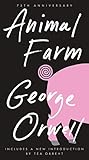
Animal Farm — George Orwell (1945)
The most widely read allegorical critique of Stalinism — the animals’ revolution against Farmer Jones and the pigs’ gradual assumption of everything they revolted against. Orwell’s political fable is the most economical literary account of how revolutionary movements become the tyrannies they displaced.
Non-Fiction
The Gulag Archipelago — Alexander Solzhenitsyn (1973)
Solzhenitsyn’s monumental account of the Soviet prison camp system — drawing on his own experience, interviews with hundreds of former prisoners, and documents obtained at great personal risk. The most comprehensive literary document of Soviet state terror; it changed Western understanding of the Soviet system.
American Prometheus — Kai Bird and Martin Sherwin (2005)
The life of J. Robert Oppenheimer — the physicist who led the Manhattan Project, saw what he had created, and was later stripped of his security clearance in a McCarthyite show trial. The most complete account of the atomic bomb’s development and of the paranoid political culture that destroyed Oppenheimer’s career. Won the Pulitzer Prize.
A War of Ideas Fought in the Shadows
The Cold War was unlike any conflict before it: a decades-long global confrontation in which the two superpowers never fought each other directly, waging instead a struggle conducted through proxy wars, espionage, propaganda, and above all an ideological contest over which system — liberal capitalism or Soviet communism — represented the future of humanity. The literature gathered here is essential precisely because this was a war of ideas as much as of arms, and ideas are the natural territory of books. To understand the period is to understand what each side believed, feared, and claimed about itself and its adversary, and the novels and histories on this list reconstruct that mental landscape with a vividness no summary of events can match. The conflict’s distinctive features — the absence of direct combat, the centrality of secrecy and deception, the constant threat of nuclear annihilation hovering over everything — produced a correspondingly distinctive literature, one preoccupied with ambiguity, paranoia, and the moral costs of a struggle in which both sides claimed righteousness while practising ruthlessness. What makes the Cold War so rich a subject is exactly this gap between the grand ideological claims and the grubby, often brutal reality of how the war was actually prosecuted. The best books refuse to take either side’s self-justification at face value, examining instead how the imperatives of the struggle corroded the values it was supposedly defending. Reading across them, one grasps the period not as a simple contest between good and evil but as a tragic and dangerous entanglement in which two systems, each convinced of its own virtue, brought the world repeatedly to the edge of catastrophe in the name of competing visions of the human future.
Behind the Iron Curtain
No account of the Cold War is complete without the testimony of those who lived inside the Soviet system, and the fiction that emerged from behind the Iron Curtain offers something the Western perspective cannot: the lived, interior experience of life under totalitarian communism. These works — written under censorship, often at great personal risk, sometimes smuggled out for publication abroad — bear witness to the texture of daily existence in a society built on surveillance, ideological conformity, and the constant threat of denunciation. They convey what it actually felt like to inhabit a world where the state claimed dominion over thought itself, where history was continuously rewritten, where private conscience had to be hidden, and where the gap between official optimism and actual hardship was a permanent feature of life. This perspective is indispensable as a corrective to any abstract or merely geopolitical understanding of the conflict, because it restores the human reality that the great-power chess game obscures: the millions of individual lives shaped, constrained, and too often destroyed by the system the Cold War was, in part, about. The literature of the Soviet experience also performs a moral function, preserving the memory of repression against the regime’s own efforts to erase it, and insisting on the dignity and inner freedom of individuals the state tried to reduce to instruments. For Western readers especially, these books puncture the temptation to treat the Cold War as a contest of equivalent abstractions, grounding the ideological argument in the concrete experience of those who paid its price. To read them alongside the Western spy fiction is to see the conflict whole, from both sides of the divide.
History After the Archives Opened
The end of the Cold War transformed the historiography of the conflict, because the collapse of the Soviet Union and the opening of long-sealed archives gave historians access to evidence that had been unavailable while the struggle was underway. The non-fiction on this list reflects this richer, more documented understanding — an account of the period informed by what we now know about the decisions made in the Kremlin and the White House, the true scale of the nuclear danger at moments like the Cuban Missile Crisis, the inner workings of the intelligence services, and the realities behind the propaganda of both sides. This retrospective vantage is enormously valuable, because contemporary accounts of the Cold War were necessarily written in partial ignorance, shaped by the secrecy and disinformation that were intrinsic to the conflict itself. The best modern histories can weigh the actual intentions and miscalculations of the protagonists, separate genuine threats from manufactured ones, and assess with hindsight which fears were justified and which were the products of paranoia. They also benefit from emotional distance, able to treat the period as history rather than as an ongoing existential struggle, and thus to render judgments that participants could not. Yet the finest of them preserve a sense of how genuinely dangerous and uncertain the era felt to those living through it, resisting the false clarity that hindsight can impose. Reading this documented history alongside the fiction produces the fullest understanding: the novels convey the felt experience and moral atmosphere of the Cold War, while the histories supply the verified record of what was actually happening behind the secrecy. Together they let the reader comprehend both the inner and the outer truth of a conflict that shaped the modern world.
Reading Order
Essential: The Spy Who Came In from the Cold → Darkness at Noon → Animal Farm.
Soviet focus: Animal Farm → Doctor Zhivago → One Day in the Life of Ivan Denisovich → The Gulag Archipelago.
Complete: Animal Farm → Darkness at Noon → Doctor Zhivago → One Day in the Life of Ivan Denisovich → The Spy Who Came In from the Cold → Tinker Tailor Soldier Spy → American Prometheus.
Frequently Asked Questions
What is the best Cold War novel to start with?
The Spy Who Came In from the Cold (1963) by John le Carré is the essential starting point — Alec Leamas's mission to East Germany and the moral catastrophe that results is the definitive fictional account of Cold War espionage, its cynicism, and its human cost. Le Carré writes spy fiction as moral investigation: his spies are not glamorous but compromised, used, and finally betrayed by the institutions they serve. Darkness at Noon (1940) by Arthur Koestler is the most psychologically penetrating Cold War novel — the interrogation and show trial of Rubashov, an old Bolshevik, is an investigation of how a revolutionary comes to confess to crimes he did not commit.
What is The Spy Who Came In from the Cold about?
The Spy Who Came In from the Cold (1963) by John le Carré follows Alec Leamas, a British intelligence officer who appears to have burned out, as he is sent on a mission to East Germany — to discredit the head of East German counter-intelligence by feeding false information through a network of double agents. What Leamas discovers is that the mission is not what he thinks it is, and that British intelligence is capable of exactly the same moral compromises as the East Germans they are fighting. The novel's ending is the most devastating in spy fiction. Won the Gold Dagger; made le Carré the most important espionage novelist of the twentieth century.
What is Darkness at Noon about?
Darkness at Noon (1940) by Arthur Koestler follows Nikolai Rubashov, an old Bolshevik and former high official who has been arrested during the Stalinist purges. The novel is structured as his interrogation: why does an intelligent man who knows he is innocent eventually confess to crimes he did not commit? Koestler's answer — that Rubashov has internalised the Party's logic so completely that the individual's life seems genuinely less important than the Party's survival — is the most penetrating psychological explanation of Stalinist terror and the show trial confessions. Written by a former Communist who had lost his faith.
What is Doctor Zhivago about?
Doctor Zhivago (1957) by Boris Pasternak follows Yuri Zhivago, a poet and doctor, through the Russian Revolution, the Civil War, and the early Soviet period. The novel is a love story (Zhivago's obsessive love for Lara, across decades of separation and revolution) and a meditation on the relationship between individual life and historical force — specifically, the way that the Revolution, with its demand for total commitment to collective goals, destroys the private life. Pasternak was forced to decline the Nobel Prize in 1958 under Soviet pressure; the novel was banned in the USSR until 1988.