Best Russian Literature: Essential Reading List
The best Russian literature — from Tolstoy, Dostoevsky, and Chekhov to Bulgakov, Nabokov, and beyond. Where to start with Russian fiction and what makes it distinctive.

Russian literature developed in relative isolation from European literary traditions and arrived at its distinctive character — the moral seriousness, the scale, the appetite for ideas, the identification of suffering with spiritual depth — partly through that isolation. The nineteenth century produced four of the greatest novelists who have ever lived (Tolstoy, Dostoevsky, Turgenev, Goncharov) within a single generation; the twentieth century produced, under conditions of extraordinary repression, two more (Bulgakov, Nabokov) who deserve to stand alongside them.
What unites them, across very different styles and periods, is a sense that fiction is a serious business — that novels are the appropriate vehicle for the most important questions a culture can ask itself about guilt, faith, freedom, love, and what it means to live well.
The Nineteenth-Century Classics
Crime and Punishment — Fyodor Dostoevsky (1866)
The most propulsive of the Russian classics and the most accessible starting point. Raskolnikov, an impoverished student in St. Petersburg, murders a pawnbroker he considers parasitic — testing his theory that extraordinary individuals are above ordinary morality. The novel follows his psychological deterioration after the murder, his relationship with the detective Porfiry who suspects him, and his eventual confrontation with guilt and the possibility of redemption.
Dostoevsky wrote the novel in the style of a thriller without sacrificing the philosophical weight that was his real subject. The detective plot keeps the narrative taut; the philosophical argument (is the superior man above moral law?) is never resolved in the way Raskolnikov expects. Essential.
Anna Karenina — Leo Tolstoy (1878)
Often cited as the greatest novel ever written — a claim that is easier to make than to refute. Anna Karenina, married to a senior government official, falls in love with Count Vronsky and destroys her social position and eventually herself in the process. In counterpoint, Konstantin Levin — the novel’s other central character, drawn from Tolstoy himself — struggles to find meaning in work, love, and eventually faith.
The novel is Tolstoy at his most formally balanced: the Anna plot and the Levin plot illuminate each other without either reducing to allegory, and the ending — not a resolution but a recognition — is among the most honest in fiction.
War and Peace — Leo Tolstoy (1869)
The longest major novel in the Western tradition and, for many readers who persist through it, the greatest. Three aristocratic Russian families — the Rostovs, the Bolkonskys, and Pierre Bezukhov’s circle — are followed through the Napoleonic invasion of Russia from 1805 to 1812. Tolstoy interleaves the personal drama with philosophical essays on historical causation, arguing that “great men” do not make history — history makes itself through the accumulated decisions of millions of ordinary people.
The novel requires commitment (1,300 pages in most translations) but rewards it: by the end, the characters feel as real and as known as anyone the reader has actually met.
The Brothers Karamazov — Fyodor Dostoevsky (1880)
Dostoevsky’s final and most ambitious novel, written at the end of his life. The murder of Fyodor Karamazov by one of his sons — and the question of which son, and what the murder means morally and spiritually — is the framework for an examination of faith, doubt, free will, and the Russian soul. Ivan Karamazov’s “Rebellion” — his argument that no theodicy can justify the suffering of children — and the “Legend of the Grand Inquisitor” are among the most philosophically dense passages in fiction.
More demanding than Crime and Punishment, and more rewarding for readers willing to stay with it.
The Twentieth Century
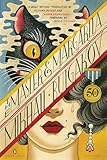
The Master and Margarita — Mikhail Bulgakov (1967)
Written in secret during the Stalin era — Bulgakov knew it could not be published in his lifetime and died before it was — The Master and Margarita is the great Soviet satirical novel: the devil visits Moscow in the 1930s and exposes the corruption, cowardice, and bureaucratic stupidity of the Soviet literary and professional classes. Simultaneously, a second narrative set in first-century Jerusalem follows Pontius Pilate’s encounter with Yeshua Ha-Nozri (Jesus).
The novel is funny, surreal, philosophically serious, and angry in a way that only makes sense knowing that its author was writing under conditions designed to destroy intellectual honesty. It is the most accessible Russian novel of the twentieth century and the most direct introduction to what Soviet literature achieved under censorship.
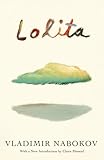
Lolita — Vladimir Nabokov (1955)
Nabokov wrote in Russian and then in English; Lolita is his English masterpiece and, by many accounts, the finest prose style in twentieth-century fiction. Humbert Humbert’s first-person account of his obsession with twelve-year-old Dolores Haze — who he calls “Lolita” — is a work of extraordinary literary self-consciousness: the reader must hold Humbert’s beautiful, self-justifying rhetoric at a distance while attending to the crime it is designed to obscure.
Lolita is not a comfortable novel and is not intended to be. It is a demonstration of what prose style can do — seduce, distort, obscure — and a warning about the same.
Pale Fire — Vladimir Nabokov (1962)
Nabokov’s most formally inventive novel. A 999-line poem by an American poet named John Shade, followed by a commentary by his neighbour Charles Kinbote — who gradually reveals himself to be a deposed king of an imaginary country, and whose commentary has almost nothing to do with the poem it claims to annotate. Pale Fire is a puzzle, a comedy, and a meditation on obsession, interpretation, and the relationship between art and the critic who claims to explain it.
Reading by Approach
Start here (new to Russian literature): Crime and Punishment → The Master and Margarita → Anna Karenina.
Dostoevsky first: Crime and Punishment → The Idiot → The Brothers Karamazov.
Tolstoy first: Anna Karenina → War and Peace.
Twentieth century: The Master and Margarita → Lolita → Pale Fire.
Frequently Asked Questions
What Russian novel should I start with?
Crime and Punishment by Dostoevsky is the standard starting point — it is more propulsive than most Russian classics (it reads almost like a psychological thriller), under 600 pages, and introduces the essential themes of Russian literature: guilt, redemption, suffering as moral education, and the question of whether a superior intellect is above ordinary morality. The Master and Margarita by Bulgakov is the more accessible option for readers who find nineteenth-century prose daunting — it is funny, satirical, and wildly inventive.
Is War and Peace worth reading? It's so long.
Yes, but it requires the right approach. War and Peace is approximately 1,300 pages in most translations and follows over 500 characters through the Napoleonic invasion of Russia. Tolstoy alternates between deeply personal family drama and broad philosophical essays on the nature of historical causation. The family drama — the Rostovs, the Bolkonskys, Pierre Bezukhov — is immediately compelling; the historical philosophy requires patience. Most readers who persist find it not merely readable but gripping. The right moment to read it is when you have a month and are willing to commit.
What is the difference between Tolstoy and Dostoevsky?
The two great nineteenth-century Russian novelists represent different aspects of the tradition. Tolstoy is epic, psychological, and concerned with social life — how people navigate class, family, love, and moral obligation within the real world. Dostoevsky is metaphysical, intense, and concerned with the soul — guilt, faith, free will, and the relationship between intellect and goodness. Tolstoy's characters are recognisable social beings; Dostoevsky's are philosophical extremes made human. Both are essential.
Is Lolita morally acceptable to read?
Lolita is narrated by a paedophile who is attempting to justify and aestheticise his crimes. Nabokov is not endorsing Humbert Humbert's perspective — the gap between what Humbert claims and what the reader understands is the moral content of the novel. The question of whether this makes the novel acceptable is one readers must answer for themselves. What is not in question is that it is one of the finest literary achievements in the English language: Nabokov's prose is among the most beautiful in twentieth-century fiction.
Is The Master and Margarita difficult to read?
Less difficult than its reputation suggests. Bulgakov's novel is satirical, comic, and wildly inventive — it is the easiest entry to Russian literature for readers who find nineteenth-century prose daunting. It helps to know a little about Stalin's Soviet Union (the novel was written in secret during the 1930s and not published until 1967) and about the Faust legend, which is its primary literary reference point. But the story of the devil visiting Moscow and causing chaos is immediately entertaining without that context.