Best Eastern European Literature: Essential Novels from Central and Eastern Europe
The best Eastern European literature — from The Master and Margarita and The Trial to The Unbearable Lightness of Being and Drive Your Plow. Essential fiction.
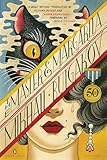
Eastern and Central European literature — Czech, Polish, Hungarian, Russian, German (Austrian), and Balkan — produced some of the most important fiction of the twentieth century, shaped by the specific historical experience of totalitarianism, occupation, and exile. Kafka, Bulgakov, Kundera, Tokarczuk: these writers developed new formal strategies (surrealism, black comedy, metafiction) because the conventional realist novel could not capture the specific absurdity and terror of the political systems they lived under.
The Foundational Works
The Master and Margarita — Mikhail Bulgakov (completed 1940, published 1966)
The greatest Soviet-era novel — the Devil visits Moscow, exposes the corruption and cowardice of the literary establishment, and the novel interleaves with a reimagining of Pontius Pilate’s interrogation of Jesus. Bulgakov wrote and revised the novel for twelve years while knowing it could never be published; his wife preserved the manuscript and it was published (in a censored version) in 1966, twenty-six years after his death. The funniest and the most surreal novel in this list, and the best starting point for readers new to Eastern European literature.
The Trial — Franz Kafka (1925)
The essential Kafka novel — Josef K.’s arrest, his encounter with an incomprehensible legal system, and his eventual execution ‘like a dog.’ Kafka left the novel unfinished at his death; Max Brod assembled and published it. The vision of a bureaucratic system that is simultaneously omnipresent and inaccessible, that judges without revealing its criteria, has become the defining fictional account of totalitarian absurdity and modern institutional alienation.
The Metamorphosis — Franz Kafka (1915)
Kafka’s most immediate work and the easiest entry into his vision — Gregor Samsa wakes to find himself transformed into a giant insect. The story is not about why this happens (no explanation is offered or required) but about how Gregor’s family responds: initially with concern, then with resentment, then with relief when he dies. A novella of about 60 pages and the most concentrated expression of Kafka’s central theme: the individual as burden to those who claim to love him.
Contemporary Eastern European Fiction
The Unbearable Lightness of Being — Milan Kundera (1984)
The essential Czech novel of the post-1968 period — two couples in Prague during the Soviet invasion, and Kundera’s philosophical meditation on lightness and weight, on freedom and commitment. Already described in the Milan Kundera guide; essential here as a representative of the specifically Czech experience of 1968.
Drive Your Plow Over the Bones of the Dead — Olga Tokarczuk (2009)
The most immediately accessible of Tokarczuk’s novels — a literary thriller narrated by an eccentric elderly woman who translates Blake and believes animals are exacting revenge on hunters. The most readable entry into Polish Nobel laureate Tokarczuk’s work, and a novel that works both as a genre thriller and as an ecological argument.
The Books of Jacob — Olga Tokarczuk (2014)
Tokarczuk’s masterwork — an 900-page historical novel about Jacob Frank, the eighteenth-century Jewish mystic and false messiah who led his followers across Poland, Turkey, and the Habsburg Empire, converting first to Islam and then to Catholicism. The most ambitious Polish novel of the twenty-first century; demanding but extraordinary.
German-Language Central Europe
The Tin Drum — Günter Grass (1959)
The foundational West German novel — Oskar Matzerath, who decides at age three to stop growing and retains the mind of a child while watching the adults around him participate in Nazism. Grass’s black comedy about German complicity in the Third Reich is the most formally inventive German novel of the twentieth century and the one that most directly confronts what Germany did and failed to do.
The Magic Mountain — Thomas Mann (1924)
Already described in the Thomas Mann guide — the most intellectually ambitious German novel of the century. Included here as the representative of the Austro-German tradition that produced Kafka, Mann, Rilke, and Musil.
Literature Under Pressure
The literature of Eastern and Central Europe was forged under conditions of extraordinary pressure — war, occupation, totalitarianism, censorship, and the constant proximity of historical catastrophe — and this crucible has given it a distinctive intensity, moral seriousness, and depth. Writers in this part of the world could rarely take for granted the freedoms and stabilities that their Western counterparts often assumed; they wrote under regimes that policed expression, in nations whose borders and political systems were repeatedly overturned, amid histories scarred by the century’s worst violence. These conditions, terrible as they were, produced a literature of unusual power and significance, because they invested writing with an importance it does not always carry in more comfortable circumstances. Where the state controlled public truth, literature became one of the few places where truth could be told, however obliquely, and the writer assumed an almost sacred role as a keeper of conscience and reality against official lies. The pressure of circumstance sharpened the work, lending it a weight and urgency, a sense that something vital was at stake in the act of writing, that more sheltered literatures can lack. It also forced a particular inventiveness, since direct statement was often impossible and meaning had to be conveyed through allegory, irony, and indirection that could elude the censor while reaching the attentive reader. To read this literature is to encounter writing that has been tested against the hardest realities of the twentieth century and has emerged with a moral and artistic seriousness commensurate with what it survived. The conditions that produced it were a curse to those who lived through them, but they yielded a body of work whose intensity and human depth are among the great achievements of modern letters.
The Absurd as Survival
A distinctive and recurring mode in the literature of this region is the absurd — a sensibility that finds, in the surreal and irrational quality of life under totalitarian and bureaucratic systems, both a source of dark comedy and a means of survival. The absurd is not merely a literary style here but a faithful representation of a reality in which official logic was genuinely deranged, in which the gap between proclaimed ideals and actual experience yawned grotesquely, and in which individuals were subjected to the arbitrary, the nonsensical, and the Kafkaesque as a matter of daily routine. Writers of the region turned this lived absurdity into a powerful artistic resource, using surreal humor, irony, and the techniques of the grotesque to capture truths that straightforward realism could not, and to do so in ways that could slip past censorship by cloaking critique in apparent fantasy or comedy. The absurd also served a psychological function for both writers and readers: to laugh at the insanity of one’s circumstances is to refuse to be wholly crushed by them, to assert a sliver of freedom and sanity in the face of a system designed to deny both. This is the dark, defiant comedy of the powerless, a way of preserving the spirit and the critical intelligence under conditions meant to extinguish them. The literature of the absurd that emerged from Central and Eastern Europe is thus simultaneously hilarious and harrowing, its laughter inseparable from its horror, and its surreal flights grounded in the all-too-real experience of life under regimes that had themselves abandoned reason. It stands as one of the region’s most original contributions to world literature, and as testimony to the human capacity to find, even in the bleakest circumstances, the saving grace of irony.
Borderlands and Shifting Maps
To understand the literature of Eastern and Central Europe, one must grasp the peculiar historical condition of the region itself: a vast borderland of overlapping peoples, languages, and cultures, whose maps have been redrawn again and again by war and empire, and whose very identity has been a matter of perpetual flux and contestation. This is a part of the world where national borders have shifted repeatedly within living memory, where cities have changed their names and their countries multiple times, where populations have been displaced, mingled, and divided, and where the question of where one place ends and another begins has rarely had a stable answer. This condition of in-betweenness — caught historically between larger powers to the east and west, composed of peoples whose homelands did not align neatly with any state — profoundly shapes the literature, giving it recurring preoccupations with exile, displacement, lost homelands, mixed and contested identities, and the persistence of memory against the erasures of political change. The writers of the region often inhabit multiple languages and cultural traditions, and their work bears the marks of this plurality, resisting the neat categories of national literature. The very label “Eastern European” is itself a simplification of a far more intricate cultural geography, a region better understood as a dense mosaic than as a bloc. Reading across this literature, one becomes attuned to a sensibility shaped by impermanence and mixture, by the experience of living where the ground of identity and belonging is perpetually shifting. This borderland condition, with all its loss and instability, has proven extraordinarily generative for literature, producing work of unusual richness about memory, identity, and the human need for a home in a world that keeps redrawing its maps.
Reading Order
New to the tradition: The Master and Margarita → The Metamorphosis → The Unbearable Lightness of Being.
Kafka in full: The Metamorphosis → The Trial → The Castle.
The Nobel laureates: Drive Your Plow Over the Bones of the Dead → The Books of Jacob → The Unbearable Lightness of Being.
Frequently Asked Questions
What is the best Eastern European novel to start with?
The Master and Margarita (completed 1940, published 1966) by Mikhail Bulgakov is the best starting point — a satirical fantasy in which the Devil visits Soviet Moscow, causing chaos and exposing the pettiness, cowardice, and corruption of the Soviet bureaucratic class. It is funny, surreal, and immediately engaging. The Trial (1925) by Franz Kafka is the other essential starting point — the story of Josef K., who is arrested one morning without being told what he is charged with, and his increasingly futile attempts to understand and contest the charge. Kafka's novel is shorter (around 200 pages) and more concentrated than Bulgakov's.
What is The Master and Margarita about?
The Master and Margarita (completed 1940, published 1966) by Mikhail Bulgakov has two interleaved narratives: in contemporary Moscow, the Devil (Woland) and his retinue — including a giant talking black cat named Behemoth — arrive and systematically humiliate the corrupt and petty members of Moscow's literary establishment; in ancient Jerusalem, Pontius Pilate interrogates Jesus before his crucifixion. The Moscow sections are the most inventive comic fiction in Russian literature; the Jerusalem sections are a rewriting of the Gospels that takes seriously both the historical reality of the Crucifixion and the moral cowardice of those who permitted it.
What is The Trial about?
The Trial (1925) by Franz Kafka follows Josef K., a senior bank clerk who is arrested on his thirtieth birthday without being told what he is charged with. The court system he encounters is labyrinthine, inaccessible, and apparently arbitrary: the proceedings take place in attic rooms and suburban houses; the court officials are corrupt or incompetent; no one can tell Josef K. what he has done. Kafka's novel is a parable of bureaucratic oppression and of the existential condition of being judged by standards one does not understand and cannot contest. Written before the rise of the totalitarian regimes that would make its vision seem prophetic.
What is Drive Your Plow Over the Bones of the Dead about?
Drive Your Plow Over the Bones of the Dead (2009) by Olga Tokarczuk follows Janina Duszejko, an elderly woman who lives alone in a remote area of Polish mountains, teaches English, translates William Blake, and is convinced that the animals are taking revenge on the hunters who kill them. When hunters and locals begin dying in mysterious circumstances, Janina becomes the unlikely investigator. The novel is a literary thriller, an ecological argument, and a portrait of an eccentric woman whose worldview — in which animals have rights and the universe is governed by astrological patterns — may be more rational than the world around her believes. Tokarczuk won the Nobel Prize in 2018.


