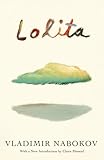
Vladimir Nabokov was a Russian-American novelist whose Lolita — one of the most brilliantly written and morally challenging novels of the twentieth century — remains essential and deeply contested.
Vladimir Nabokov was born in St Petersburg in 1899, fled Russia after the Revolution, lived in Europe, and finally settled in the United States, where he wrote Lolita — first published by the Olympia Press in Paris in 1955 after being rejected by multiple American publishers — and became one of the most celebrated novelists of his era. He wrote in English with a command of the language that most native speakers do not possess, and Lolita demonstrates that command on almost every page: the prose is genuinely beautiful, witty, and elaborate in ways that can make readers forget, briefly, what they are reading.
That is precisely the problem, and Nabokov understood this. Lolita is a novel narrated by Humbert Humbert, a paedophile who abuses a twelve-year-old girl over several years while constructing an elaborate aesthetic justification for what he does. The brilliance of the novel lies in the gap between Humbert’s eloquence and what the reader is required to see through it — Dolores Haze’s actual experience, glimpsed in fragments beneath the narrator’s self-serving prose. Some readers experience this as a profound moral investigation of the way art and beauty can be complicit in harm; others argue that the novel’s pleasures are inseparable from the abuse it aestheticizes, and that this makes it irredeemably problematic.
Both responses are defensible. Lolita is a novel that demands its readers do the work of ethical reading — of seeing through a beautiful surface to what it conceals and what it costs. It is not a comfortable read and is not meant to be.
Vladimir Nabokov was one of the most brilliant and distinctive prose stylists of the twentieth century, a Russian-American author whose dazzling command of language, intricate formal designs, and playful intelligence made him a giant of modern literature. Writing masterfully in both Russian and English, Nabokov produced novels of extraordinary verbal richness, structural ingenuity, and wit, combining the precision of an artist with the curiosity of the scientist he also was. His work is celebrated for its beauty, its complexity, and its insistence on the supreme value of art, and he remains one of the most admired and influential writers of his era.
A Dazzling Stylist
Nabokov’s prose is among the glories of English literature, all the more remarkable for being written in his third language. He wrote with an exuberant precision and a love of language that produced sentences of astonishing beauty, wit, and inventiveness, rich in wordplay, allusion, and sensory detail. His style is both intensely controlled and endlessly playful, delighting in puns, patterns, and verbal surprises, and his mastery of English vocabulary and rhythm surpassed that of most native writers. For many readers, the sheer pleasure of his prose, sentence by sentence, is the supreme attraction of his work.
Lolita and Its Difficult Subject
Nabokov’s most famous and controversial novel, Lolita, is narrated by Humbert Humbert, a cultured European who is also a predatory abuser of a young girl. The novel is emphatically not an endorsement of its narrator; rather, it is a study of a monster told through his own seductive, self-justifying, deeply unreliable voice, and much of its power and difficulty lies in the gap between his beautiful language and his appalling acts. Readers should approach it with this firmly in mind: Nabokov uses Humbert’s eloquence to implicate and unsettle, exposing how art and rhetoric can be used to disguise cruelty. The novel’s brilliance is inseparable from its moral seriousness about the harm its narrator inflicts and refuses to see.
Games, Patterns, and Structure
Nabokov delighted in elaborate structures, hidden patterns, and literary games, and his novels are intricately designed puzzles that reward close attention and rereading. Pale Fire, perhaps his most audacious work, takes the form of a poem accompanied by a deranged commentary, inviting the reader to piece together a story from its fragments. He embedded allusions, traps, and concealed meanings throughout his fiction, treating the novel as a kind of game between author and reader. This love of pattern and design, drawn in part from his passion for chess problems, is central to the distinctive pleasure of his work.
Memory and Exile
The experience of exile and the workings of memory are recurring concerns in Nabokov’s fiction and in his celebrated memoir, Speak, Memory. Forced to flee revolutionary Russia and later Nazi Europe, Nabokov knew the loss of homeland and the persistence of the past, and his work is suffused with nostalgia for a vanished world and a fascination with the way memory preserves and transforms experience. This elegiac dimension, the longing for lost time and place rendered with luminous precision, gives his often-playful fiction an underlying emotional depth and poignancy.
Art for Art’s Sake
Nabokov was a fierce believer in the autonomy and supremacy of art, scornful of fiction that served political, moral, or ideological purposes, and devoted instead to the values of beauty, originality, and aesthetic delight. He prized what he called “aesthetic bliss,” the shimmer of art that connects to states of being where art is the norm. This conviction shaped his entire body of work and his criticism, and while it has been debated, it reflects a singular and uncompromising artistic vision that places the crafted beauty of the work above all other considerations.
The Vladimir Nabokov Legacy
Vladimir Nabokov’s influence on modern literature is profound, and his combination of stylistic brilliance, formal daring, and intellectual playfulness has inspired generations of writers. For newcomers, the memoir Speak, Memory and the comic, poignant Pnin offer accessible and rewarding entry points, while Pale Fire and the demanding Lolita represent his most ambitious achievements. For readers seeking fiction of unmatched verbal beauty, ingenuity, and depth — approached, in the case of his most notorious novel, with full awareness of its dark subject — Nabokov remains one of the supreme artists of the modern novel.
Going Deeper
Vladimir Nabokov’s work runs deeper than the famous titles, as The Defense attest.
Reading Guides