Best Books Set in London: Essential Reading List
The best books set in London — from Great Expectations and Mrs Dalloway to White Teeth and Neverwhere. London in literature, from Dickens to contemporary fiction.

London has been the setting for more great novels than any other city in English — partly because it has been the centre of English literary life for centuries, partly because its scale (eight million people, two thousand years of history, fifty distinct neighbourhoods) provides an inexhaustible geography, and partly because its class system and its multiculturalism have made it the site of the social conflicts that the English novel has most wanted to examine.
The books below range from Dickens’s Victorian London of fog and poverty to Woolf’s modernist London of consciousness and class to the contemporary multicultural London of Zadie Smith — and to the fantasy London that exists beneath all of them.
The Great London Novels
Great Expectations — Charles Dickens (1860-61)
The London novel. Pip’s movement from the Kent marshes to the city — to the Inns of Court, to Newgate Prison, to the Thames — enacts the specific fantasy that London offers: the possibility of reinvention, of becoming someone different from who you were born. Dickens knew London with extraordinary completeness, and the city’s geography (the fog, the river, the contrast between the drawing rooms of the wealthy and the streets of the poor) is as much a character as any of the human figures.
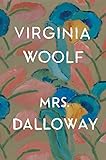
Mrs Dalloway — Virginia Woolf (1925)
The greatest modernist London novel. Clarissa Dalloway walks through Westminster on a June morning in 1923 to buy flowers for her party, and the novel tracks her consciousness — its movements between past and present, between the life she chose and the lives she might have led — alongside the consciousness of Septimus Warren Smith, the shell-shocked veteran she never meets. Woolf maps the city as a space of memory and possibility, a geography that is inseparable from the minds that move through it.
Multicultural London
White Teeth — Zadie Smith (2000)
The defining novel of multicultural London. Smith follows two families — the Bangladeshi Iqbals and the white English Joneses — across three generations of North London life, tracking the ways that immigration, religion, and cultural identity are negotiated by people who are simultaneously British and not-British, products of both their origins and their environment. The novel is comic and warm and formally ambitious, and its portrait of London’s diversity feels more accurate than anything written before it.
Fantasy London
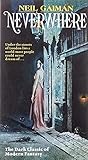
Neverwhere — Neil Gaiman (1996)
London Below — the world of the forgotten, the discarded, the people who have fallen through the cracks — exists beneath the city’s surface, with its own geography of forgotten stations, dangerous courts, and ancient powers. When Richard Mayhew, an ordinary Londoner, helps a girl called Door who has been injured on the street, he finds himself drawn into London Below and must navigate it to find his way back. Gaiman uses London’s actual geography (the Angel, the Earl’s Court, the Black Friars) to create a fantasy world that feels genuinely rooted in the city’s physical and historical reality.
Contemporary London
High Fidelity — Nick Hornby (1995)
The most beloved novel about North London’s record-shop-and-flat-share world. Rob Fleming’s obsession with music and lists, his emotional immaturity, his struggling record shop in Islington — Hornby renders a very specific London (the 1990s, working-class creative culture, the specific rituals of male friendship and relationship failure) with warmth and precision. The London it describes has been gentrified out of existence, which makes it a period document as well as a novel.
London Fields — Martin Amis (1989)
Amis’s most ambitious novel and his most London-specific — a postmodern meditation on decline, violence, and the millennium set in a near-future version of the city. The novel’s London — its pubs, its class anxiety, its specific toxicity — is rendered with a stylistic intensity that makes it the most demanding, and most rewarding, portrait of late-twentieth-century London in fiction.
London as the Great Subject
Few cities have inspired as vast and various a literature as London, and to read the fiction set there is to encounter one of the great recurring subjects of the novel in English. London’s literary richness flows from its sheer scale, age, and complexity — a city that has been the capital of literature in English for centuries, the home or subject of an extraordinary procession of writers, and a place dense enough with history, contradiction, and human variety to sustain endless reimagining. The city has been written so many times, by so many hands, that it exists almost as much in fiction as in fact, and each new novel enters into conversation with the vast accumulated body of London writing that precedes it. This depth of literary history is part of what makes the city so generative a setting: a writer setting a story in London works within and against a tradition that includes the metropolis of countless predecessors, and the city on the page carries the echoes of all those previous versions. London’s appeal as a subject also lies in its inexhaustible variety — it is too large and too multifarious to be captured whole, so that every novel illuminates only a fragment, and the fragments never exhaust the place. The city contains every extreme of wealth and poverty, every period of history layered visibly on the streets, every culture of the world represented in its neighborhoods, and this density of material means there is always another London to be written. The fiction gathered here represents only a sampling of this immense tradition, but it conveys why London has been, and remains, one of the supreme subjects available to the novelist: a city so deep, various, and storied that it can absorb any quantity of imaginative attention and still hold more.
The Many Cities Within the City
One of the most important truths about London, and one the best fiction set there grasps completely, is that it is not a single city but many — a collection of distinct worlds, often existing side by side yet barely touching, divided by class, wealth, geography, ethnicity, and history. The London of the wealthy and the London of the poor occupy the same map but are effectively separate countries; the London of one immigrant community and that of another, the financial City and the residential suburb, the tourist’s London and the native’s, the historic center and the sprawling outer boroughs — each is a different place with its own life, and the metropolis is the sum of all these parallel worlds. The richest London fiction explores this multiplicity, either by inhabiting one of these distinct worlds with deep particularity or by dramatizing the collisions and contrasts between them, the moments when the separate Londons intersect. This fragmentation is a source of the city’s literary fertility, because it means there is no single London to be written but an endless array of them, and each writer can discover a metropolis that no predecessor has captured. It also makes London an ideal setting for fiction concerned with class and social division, since the city renders these divisions with peculiar visibility, the extremes of British society pressed into the same crowded space. The best London novels use this quality to examine how people are shaped by which London they belong to, how the invisible walls between the city’s worlds are maintained and occasionally breached, and what happens at the points of contact. To read across them is to understand that the unity implied by the city’s single name is an illusion, and that London’s truth lies in its multiplicity.
Walking the City Through Fiction
There is a distinctive pleasure that London fiction offers above almost any other: the sense of walking the city’s streets, of moving through its actual geography, of mapping the real metropolis through the routes its characters take. London writers have long been preoccupied with the physical fabric of the place — its named streets and squares, its river and bridges, its particular districts each with its own character — and the best of them embed their stories so precisely in this geography that the reader can trace the characters’ movements on a map and feel the texture of the specific places they pass through. This grounding in real, walkable space is one of the great satisfactions of London fiction, lending it a vivid concreteness and allowing readers who know the city to recognize its streets and those who do not to feel they are coming to know them. The tradition of the urban walker — the figure who moves through the city observing, the streets themselves becoming a kind of text to be read — runs deep in London writing, and the city’s intricate, ancient, endlessly varied geography rewards this attention as few places can. To read these novels is to acquire a literary map of London, a version of the city overlaid with the stories set in its various quarters, so that afterward the real streets carry the memory of the fictions enacted upon them. This fusion of imagined narrative and actual place is among the deepest pleasures the city’s literature affords, transforming London from a mere setting into a space the reader comes to inhabit, street by street, through the act of reading. For the visitor and the resident alike, London fiction becomes a way of walking the city more richly, every location layered with the stories it has held.
Reading Order
Classic London: Great Expectations → Oliver Twist → Mrs Dalloway.
Contemporary London: White Teeth → High Fidelity → London Fields.
Fantasy London: Neverwhere → then The Adventures of Sherlock Holmes for a different kind of London Below.
Frequently Asked Questions
What is the best novel set in London?
Great Expectations by Dickens is the greatest London novel — Pip's journey from the Kent marshes to London society, and the disillusionment that follows, uses the city's geography (Newgate Prison, the Inns of Court, the river) with a specificity that makes it inseparable from its setting. Mrs Dalloway by Virginia Woolf is the greatest modernist London novel — Clarissa Dalloway's walk through Westminster over the course of a single June day is among the finest accounts of urban consciousness in fiction. White Teeth by Zadie Smith is the best contemporary multicultural London novel.
What Dickens novels are set in London?
Most of Dickens's major novels use London as their primary setting or a central one: Great Expectations, Oliver Twist, Bleak House, Our Mutual Friend, The Pickwick Papers, Dombey and Son, Little Dorrit, and Nicholas Nickleby all use London extensively. A Tale of Two Cities is split between London and Paris. David Copperfield moves between rural England and London. Dickens knew London more completely than any other novelist — as a journalist, as a social reformer, as a walker who covered twenty miles a night — and his rendering of its geography is documentary as well as novelistic.
What fantasy novels are set in London?
Neverwhere by Neil Gaiman is the definitive fantasy novel set in London — the 'London Below' of forgotten stations and discarded people that exists beneath the city's surface is one of the most inventive uses of London's actual geography in fiction. The Harry Potter series uses London (King's Cross, Diagon Alley, the Ministry of Magic) as its Muggle-world anchor. Good Omens by Terry Pratchett and Neil Gaiman ends in London. V for Vendetta uses a fascist future London. Jonathan Strange and Mr Norrell uses Georgian London.
What is London Fields about?
London Fields by Martin Amis (1989) is a postmodern novel set in a near-future London — the year 1999, as the millennium approaches and the world seems to be ending in a variety of ways simultaneously. Nicola Six, who has seen her own murder approaching, narrates through the writer Samson Young, who is also watching and recording. The novel involves a dart-playing lout, a handsome upper-class crook, and a mild American milkmaid, all orbiting Nicola. It is Amis at his most stylistically extreme — dense, allusive, deeply concerned with Englishness and decline.