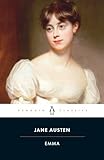
Jane Austen Books in Order: Complete Novels & Best Starting Points
Jane Austen wrote six complete novels in a career of less than two decades. This guide covers her complete bibliography, the best book to start with, and how her novels relate to each other thematically and chronologically.

Jane Austen published four novels in her lifetime and two more posthumously. She did not seek fame, published anonymously, and died at forty-one having completed six of the most studied novels in the English language. The fact that these novels are about provincial English social life in the early nineteenth century — about courtship, class, money, and the limited options available to women of the gentry — has not prevented them from being read continuously for two hundred years by readers who have nothing in common with their characters except the experience of navigating social worlds whose rules matter enormously but are rarely stated.
What makes Austen endure is not the period details. It is the precision of her intelligence about human behaviour — about the stories people tell themselves, the motivations they cannot acknowledge, the ways that social convention both constrains and reveals character. Her novels are comedies in the classical sense: they end in marriage and social resolution. The journey there is a sustained exercise in moral irony, and her narrators are among the most knowing in English fiction.
Jane Austen’s Complete Bibliography in Order
| # | Title | Written | Published | Note |
|---|---|---|---|---|
| 1 | Sense and Sensibility | c.1795 | 1811 | First published novel; revised from earlier draft “Elinor and Marianne” |
| 2 | Pride and Prejudice | c.1796 | 1813 | Her most popular novel; revised from “First Impressions” |
| 3 | Mansfield Park | 1811–13 | 1814 | Most morally serious; most debated |
| 4 | Emma | 1814–15 | 1815 | Most technically accomplished |
| 5 | Northanger Abbey | c.1798 | 1817† | Gothic parody; written early, published posthumously |
| 6 | Persuasion | 1815–16 | 1817† | Final novel; most emotionally intense |
†Published posthumously, after Austen’s death in July 1817.
Lady Susan (a novella) and Sanditon (unfinished) were also published posthumously and provide interesting context for her development, but are not considered part of her major work.
The Essential Starting Points
Pride and Prejudice (1813)
The place to start. Elizabeth Bennet is Austen’s most fully realised heroine — witty, confident in her own judgement, and, as the plot slowly reveals, wrong about the most important person she has met. Fitzwilliam Darcy is the original “aloof and wealthy hero who is not what he seems,” the template for a character type that has appeared in countless novels since, almost always less successfully.
What makes Pride and Prejudice the ideal starting point is not only its plot — though the central reversal, in which both Elizabeth and Darcy are forced to recognise how mistaken their first impressions were, is beautifully engineered — but its tone. Austen’s irony is at its most accessible here: the comic observation of social folly (Mrs. Bennet, Mr. Collins, Lydia) is broad enough to enjoy immediately, while the more subtle ironies directed at Elizabeth’s own blind spots reward rereading.
The opening sentence — “It is a truth universally acknowledged, that a single man in possession of a good fortune, must be in want of a wife” — is probably the most analysed first sentence in English fiction. What it announces is not a truth but an irony: the “universally acknowledged” truth belongs to the village mind that the novel is simultaneously celebrating and dissecting.
Emma (1815)
The consensus choice among Austen scholars for her greatest novel, and the hardest sell to new readers. Emma Woodhouse is “handsome, clever, and rich,” as the first sentence tells us, and also wrong about almost everything she is confident about. The novel is structured around Emma’s misreadings — of characters, of situations, of her own feelings — and the extraordinary technical achievement is that the reader often misreads alongside her, complicit in the same errors.
This is not an accident. Austen uses free indirect discourse — a technique in which the narrator’s voice and the character’s thoughts blend together — more brilliantly in Emma than anywhere else. The reader is inside Emma’s head, sharing her confidence, and is therefore as startled as she is when reality corrects her. The revelation near the novel’s end — one of the most famous plot moments in Austen — works as well as it does because Austen has hidden everything in plain sight.
Read Emma after Pride and Prejudice. It rewards patience and repays rereading.
The Rest of the Canon
Sense and Sensibility (1811)
Austen’s first published novel, and the one that most clearly shows its origins as an early draft (“Elinor and Marianne”). The contrast between the rational, self-controlled Elinor Dashwood and the emotionally unguarded Marianne is the formal engine of the book. Elinor has the better of the argument by the end, but Marianne is the more interesting character. The novel is more didactic than the others — it is the only Austen novel that feels like it is making an explicit moral argument rather than dramatising one.
Worth reading, but not first.
Northanger Abbey (1817)
Written early but published posthumously, Northanger Abbey is Austen’s literary parody — a comic response to the Gothic novel, particularly Ann Radcliffe’s The Mysteries of Udolpho. Catherine Morland is Austen’s least sophisticated heroine, a seventeen-year-old who reads too many Gothic novels and applies their conventions to the wrong circumstances. The result is both funny and, in its ending, quietly serious about what naive readers of fiction — and naive readers of character — risk.
Easier to read than the other novels because the comedy is broader, and a better starting point than Sense and Sensibility for readers who find Austen’s style initially difficult.
Mansfield Park (1814)
The novel that divides Austen readers most sharply. Fanny Price, unlike every other Austen heroine, is not witty, confident, or assertive. She is quiet, morally scrupulous, and almost entirely passive in a world where the more entertaining characters — the Crawfords — are charming, clever, and corrupt. This makes the novel difficult: it asks you to find value in stillness, and to resist the charm of characters Austen clearly intends you to enjoy before distrusting.
For readers who have finished the other five novels, Mansfield Park is the one most likely to generate lasting discussion. Its moral structure is Austen’s most austere, and its treatment of the amateur theatrical episode — in which the rehearsal of a play becomes a sustained metaphor for social performance and self-revelation — is one of the most closely analysed passages in her work.
Persuasion (1817)
Austen’s last completed novel is her most emotionally direct. Anne Elliot is the only Austen heroine who begins the novel having already made a serious mistake — breaking off an engagement under family pressure, recognising too late that she was wrong — and who spends the novel in the presence of the man she still loves without being able to address it.
The novel is shorter and quieter than the others, and its ending — including Captain Wentworth’s letter (“You pierce my soul. I am half agony, half hope”) — is considered by many readers the most affecting passage Austen ever wrote. Those who find the other novels too concerned with social comedy often find Persuasion the most personally resonant.
Reading Order Recommendations
First-time reader: Pride and Prejudice → Emma → Persuasion. Those three cover the full range of Austen’s achievement.
Complete reading: Sense and Sensibility → Pride and Prejudice → Mansfield Park → Emma → Northanger Abbey → Persuasion. Publication order minus the posthumous reordering — this is the sequence in which Austen’s published reputation developed.
Short on time: Pride and Prejudice + Persuasion. Two novels, completely different emotional registers, and between them they contain everything essential about what Austen was doing.
Frequently Asked Questions
What is the best Jane Austen novel to read first?
Pride and Prejudice is the near-universal recommendation for first-time readers — it has the most immediately engaging plot, the wittiest dialogue, and the most compelling central relationship in all of Austen's work. If you find Austen's style difficult at first, Northanger Abbey is a slightly easier entry point because of its gothic parody elements and self-aware humour. Sense and Sensibility, though written first, is a harder read than either.
Do Jane Austen's novels need to be read in order?
No. All six novels are completely standalone, with no shared characters or narrative connections. However, reading in publication order does give you a sense of Austen's development as a novelist — from the relative roughness of Sense and Sensibility to the extraordinary mastery of Emma and Persuasion. Most readers find the order doesn't matter: start with what interests you most.
Is Emma or Pride and Prejudice better?
Pride and Prejudice is the more immediately enjoyable novel. Emma is the more technically accomplished one. Austen herself said Emma contained a heroine 'whom no one but myself will much like,' and she was nearly right — Emma Woodhouse is brilliant, controlling, and often wrong, and the pleasure of the novel is watching her come to understand her own limitations. Most readers who love Austen eventually rate Emma highest; most first-time readers prefer Pride and Prejudice.
What is Persuasion about, and is it Austen's best?
Persuasion is Austen's final completed novel, written when she was seriously ill. It follows Anne Elliot, who was persuaded by family and friends to break off an engagement with the naval officer Frederick Wentworth eight years earlier, and who meets him again when his ship returns. It is quieter and more melancholy than the earlier novels, and its famous 'letter' scene is considered by many critics to be the most emotionally powerful moment in all of Austen. Those who find the other novels too light often find Persuasion the most affecting.
Is Mansfield Park worth reading?
Mansfield Park is Austen's most debated novel — its heroine, Fanny Price, is passive and morally conventional in ways that strike many modern readers as frustrating, and the novel deals with slavery (obliquely) and theatricals in ways that have generated extensive critical debate. It is not a starting point. But for readers who have worked through the other five novels, it is the one most likely to change how you think about Austen — its moral seriousness is unlike anything in the others, and Fanny's stillness is more deliberate than it first appears.