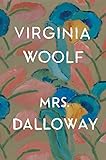
Editors Reads Verdict
Woolf's formal masterpiece — a single London day rendered through the flowing consciousness of multiple characters — is one of modernism's greatest achievements. The parallel between Clarissa's social life and Septimus's psychological disintegration is a study in how the same world produces radically different experiences.
What We Loved
- The stream-of-consciousness technique is managed with extraordinary control and clarity
- The Clarissa-Septimus parallel is one of modernism's great structural achievements
- The rendering of London — the buses, the parks, the social surfaces — is precise and beautiful
- At under 200 pages, it rewards multiple readings without overwhelming
Minor Drawbacks
- The stream-of-consciousness style requires active participation — passive readers will find it frustrating
- The social world Clarissa inhabits can feel claustrophobic in its class-consciousness
- The novel rewards rather than delivers — first readings are necessarily partial
Key Takeaways
- → Consciousness is not linear — the mind ranges freely across time, associating rather than narrating
- → Social performance (the party, the flowers, the conversation) is both hollow and genuinely sustaining
- → Shell shock — what we now call PTSD — was a real wound that the postwar social order refused to see
- → The self is not a unified thing but a series of momentary coalescences, constantly dissolving and reforming
- → Time does not pass uniformly — memory and anticipation coexist with the present moment
| Author | Virginia Woolf |
|---|---|
| Publisher | Harcourt |
| Pages | 194 |
| Published | May 14, 1925 |
| Language | English |
| Genre | Fiction, Classic Literature, Modernism |
| Difficulty | Intermediate |
| Best For | Readers prepared to engage with modernist formal experimentation — and those interested in how fiction can render the texture of consciousness rather than simply narrating events. |
How Mrs Dalloway Compares
Mrs Dalloway at a glance against 3 similar books readers weigh alongside it.
| Book | Author | Rating | Best for |
|---|---|---|---|
| Mrs Dalloway (this book) | Virginia Woolf | ★ 4.5 | Readers prepared to engage with modernist formal experimentation — and those |
| The Hours | Michael Cunningham | ★ 4.1 | Readers of literary fiction who have read or are familiar with Mrs Dalloway, |
| To the Lighthouse | Virginia Woolf | ★ 4.6 | Readers willing to surrender to a prose that creates meaning through rhythm and |
| Ulysses | James Joyce | ★ 4.0 | Committed readers of literary fiction willing to invest in one of the most |
A Day in London, A Revolution in Form
Virginia Woolf published Mrs Dalloway in 1925, the same year as Fitzgerald’s The Great Gatsby — and together the two novels announced that literary fiction had permanently changed. Where Fitzgerald extended and perfected the nineteenth-century narrative, Woolf abandoned it altogether: no omniscient narrator, no sequential plot, no psychological summary. Instead, a technique of immersion — moving in and out of characters’ consciousness as they move through a single day, rendering thought as it actually occurs, associative and layered and full of the past.
Clarissa Dalloway is preparing a party. She walks through Westminster to buy flowers. She greets old friends. She prepares the house. She gives the party. This is the entire plot of one of the twentieth century’s most significant novels.
The Two Consciousnesses
Running parallel to Clarissa’s day is the day of Septimus Warren Smith, a World War I veteran suffering from what his doctors call “deferred shell shock” and what we would now recognise as severe PTSD. Septimus and his Italian wife Rezia move through the same London streets, visiting the same parks, passing through the same postwar social world — but experiencing it as something entirely different. Where Clarissa experiences the June day as beautiful and fleeting, Septimus experiences it as persecution and hallucination.
Woolf designed the parallel carefully: Clarissa and Septimus never meet, but they share a function — they are the same self split by gender, social class, and the war. Clarissa represents the social surface that postwar Britain maintains; Septimus represents what that surface is built on top of.
The Party and Its Meaning
Clarissa’s party is both absurd and genuine: a social ritual that she both clings to and is slightly ashamed of, a performance of civilization that she performs knowing it is a performance. Woolf’s ambivalence about Clarissa — her sympathy and her mild irony — is one of the novel’s most sophisticated effects.
When Clarissa hears, at her own party, of a young man’s suicide — Septimus has thrown himself from a window — her response is unexpected: not horror but a kind of recognition. She slips away from the party and stands at the window, experiencing Septimus’s death as something clarifying, a confrontation with the reality that her social life is arranged to avoid.
Woolf’s Technical Achievement
The stream-of-consciousness technique Woolf employs in Mrs Dalloway is more controlled than its predecessors in Joyce or Richardson: the transitions between minds are managed through external cues (the same sound heard by different characters, the same object seen from different perspectives), and the prose maintains a lyrical clarity that makes it accessible despite its formal difficulty.
Our rating: 4.5/5 — Modernism’s most accessible masterpiece — formally revolutionary and humanly vivid in equal measure.
A Single Day, the Whole of Life
Virginia Woolf’s Mrs Dalloway unfolds across a single June day in London, following Clarissa Dalloway as she prepares for a party — yet within that narrow frame Woolf contains entire lives. Through her revolutionary technique, the narrative moves fluidly in and out of the consciousness of her characters, tracing memories, regrets, and impressions that reach back across decades, so that one ordinary day opens onto the whole of a life and an era. The compression is the achievement: by attending to the texture of a few hours, Woolf captures the way the past lives inside the present and the way a mind ranges across time even as the clock ticks forward.
The Stream of Consciousness
The novel is one of the defining works of literary modernism, and its method — the famous stream of consciousness — is central to its power. Woolf abandons conventional plot to follow the flow of thought and perception, and she moves between minds with a fluidity that mirrors how consciousness actually works. The result is a prose of extraordinary beauty and subtlety, attentive to the smallest movements of feeling and the way meaning gathers in apparently trivial moments. Readers willing to surrender to this method rather than searching for incident find it deeply rewarding.
Clarissa and Septimus
Beneath the surface of the party preparations runs a darker counter-current. The novel pairs Clarissa with Septimus Warren Smith, a traumatised veteran of the First World War whose breakdown and fate shadow the bright social world Clarissa moves through, and whose story touches hers at the day’s end. This juxtaposition gives the book its emotional depth and its quiet anguish, setting the surface of English social life against the suffering it would rather not see, and against the ever-present awareness of mortality.
Why It Endures
Mrs Dalloway remains one of the essential modernist novels because it does something few books attempt and fewer achieve: it renders the inner life — memory, perception, the passage of time, the nearness of death — with luminous precision and beauty. It rewards slow, attentive reading rather than a search for plot, and for readers willing to meet it on its terms it offers an experience of consciousness rendered into art that has rarely been equalled. As an accessible entry point to one of the twentieth century’s greatest novelists, it is the natural place to begin, and a book that repays rereading as fully as any in the modern canon — each return revealing more of the design beneath its shimmering surface.
A Quiet Revolution in the Novel
It is worth remembering how radical Mrs Dalloway was, and in some ways remains. Woolf set out to do away with the scaffolding of conventional fiction — the elaborate plots, the chapter divisions, the explanatory narrator — and to capture instead the actual movement of a mind through a day. In place of external event she offered the inner weather of thought and feeling, and in place of a single hero she offered a web of consciousnesses touching one another in passing. This was a deliberate reinvention of what the novel could do, and its influence runs through nearly all the serious fiction that followed. To read it is to encounter one of the foundational experiments of modern literature, still fresh a century later.
Frequently Asked Questions
What is "Mrs Dalloway" about?
A single day in the life of Clarissa Dalloway, preparing a party in postwar London — intercut with the experiences of Septimus Warren Smith, a shell-shocked veteran she will never meet.
Who should read "Mrs Dalloway"?
Readers prepared to engage with modernist formal experimentation — and those interested in how fiction can render the texture of consciousness rather than simply narrating events.
What are the key takeaways from "Mrs Dalloway"?
Consciousness is not linear — the mind ranges freely across time, associating rather than narrating Social performance (the party, the flowers, the conversation) is both hollow and genuinely sustaining Shell shock — what we now call PTSD — was a real wound that the postwar social order refused to see The self is not a unified thing but a series of momentary coalescences, constantly dissolving and reforming Time does not pass uniformly — memory and anticipation coexist with the present moment
Is "Mrs Dalloway" worth reading?
Woolf's formal masterpiece — a single London day rendered through the flowing consciousness of multiple characters — is one of modernism's greatest achievements. The parallel between Clarissa's social life and Septimus's psychological disintegration is a study in how the same world produces radically different experiences.
Ready to Read Mrs Dalloway?
Check the current price on Amazon.
Check Price on Amazon (paid link)Prices and availability are subject to change. See Amazon for current price.
Review last updated: