Where to Start with Virginia Woolf: A Reading Guide
Where to start with Virginia Woolf — whether to begin with Mrs Dalloway, To the Lighthouse, or Orlando. A complete reading guide to Woolf's novels and essays.
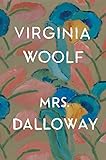
Virginia Woolf (1882–1941) is the defining figure of English literary modernism — the novelist who, more than any other, developed techniques for rendering the full complexity of consciousness in prose. Her major novels — Mrs Dalloway, To the Lighthouse, Orlando, and The Waves — are among the most formally innovative works in English fiction and among the most beautiful in their use of language.
Where to Start
The Best Entry Point: Mrs Dalloway (1925)
The best first Woolf novel. A single June day in London in 1923, following Clarissa Dalloway’s preparations for her party and the parallel story of Septimus Warren Smith, a traumatised veteran whose fate touches Clarissa at the evening’s end. The novel is more immediately accessible than To the Lighthouse because its social subject is clear and its two characters’ perspectives are distinct and interacting. Woolf’s stream-of-consciousness technique — the fluid movement between present sensation and associated memory — is developed here with a particular lucidity. At around 200 pages, it is also the most compact of the major novels.
The novel rewards rereading: the connection between Clarissa and Septimus (who never meet but whose consciousness mirrors each other, and whose divergent fates constitute the novel’s central argument about society’s treatment of the vulnerable) becomes clearer on a second reading.
The Alternative Entry Point: Orlando (1928)
The most enjoyable first Woolf novel for readers who prefer plot and wit. Orlando is a fantastical biography — dedicated to Woolf’s lover Vita Sackville-West — of a young Elizabethan nobleman who lives for 400 years (through the Elizabethan, Georgian, Victorian, and modern periods) and changes sex in the eighteenth century. The novel is simultaneously a parody of biography, a meditation on gender and identity, and Woolf’s most playful and exuberant work. Less formally demanding than the other major novels; more immediately enjoyable.
The Masterpiece: To the Lighthouse (1927)
Woolf’s most autobiographical novel and, for many readers, her greatest. The Ramsay family’s summer house in the Hebrides — the afternoon of The Window, with its complex social negotiations around Mr Ramsay’s need for sympathy and Mrs Ramsay’s gift for managing everyone around her — is one of the most fully realised domestic worlds in fiction. The novel’s structure (the long afternoon of The Window, the devastating brevity of Time Passes, the incomplete return of The Lighthouse) is her most formally daring arrangement; the section ‘Time Passes’, in which the war occurs and Mrs Ramsay dies in parentheses, is one of the most astonishing passages in English prose.
Best approached after: Mrs Dalloway. Readers who have already adjusted to Woolf’s prose will find the movement between consciousness in To the Lighthouse easier to follow.
The Most Ambitious Novel: The Waves (1931)
Woolf’s most formally radical novel — and the one that most explicitly abandons conventional narrative. Six characters (Bernard, Susan, Rhoda, Neville, Jinny, Louis) speak in alternating soliloquies from childhood through old age, against a backdrop of waves and light that marks the passage of time. The novel dispenses with dialogue, plot, and narrative third-person; it is pure consciousness, pure voice. The most demanding of Woolf’s major novels, and the most extraordinary. Best read after Mrs Dalloway and To the Lighthouse.
Why Mrs Dalloway Is the Ideal First Book
For a reader new to Virginia Woolf, Mrs Dalloway is the ideal first novel because it is among her most accessible and beloved works and a perfect expression of her distinctive gifts, the luminous prose, the innovative stream-of-consciousness technique, and the profound attention to the inner life. Mrs Dalloway follows a single June day in London in 1923, moving through the consciousness of Clarissa Dalloway as she prepares for a party and of the traumatized veteran Septimus Smith, whose fate touches hers. As an entry point it is ideal, for it is one of her finest and most approachable novels and a perfect introduction to her modernist method and her vision. It welcomes the newcomer with its beautiful prose, its rich inner worlds, and its emotional depth, drawing the reader into her distinctive art. It is among her masterpieces and a fine representation of her gifts, so the new reader encounters Woolf at her best. For the newcomer, then, Mrs Dalloway is the natural and ideal starting point.
What to Expect as a New Reader
As a new reader, you can expect Mrs Dalloway to be a luminous, inward, and emotionally profound modernist novel. You can expect a single-day structure, for the novel unfolds over one June day in London, following Clarissa Dalloway’s preparations for a party. You can expect stream of consciousness, for Woolf moves fluidly through the inner thoughts, memories, and impressions of her characters, capturing the texture of consciousness itself. You can expect luminous prose, for Woolf writes with extraordinary beauty, subtlety, and sensitivity. You can expect emotional depth, for beneath the surface lie profound currents of memory, mortality, love, and the traumatized veteran Septimus, whose fate haunts the day. You can expect attention to the inner life over external plot. You should expect a novel that rewards slow, attentive reading. Expect, in short, a luminous, inward, and emotionally profound modernist novel, a superb introduction to Woolf’s gifts.
Going Deeper After Your First Book
Once Mrs Dalloway has introduced you to Woolf’s gifts, the reader who wishes to go deeper can explore her other novels and her essays, which continue her luminous prose, her innovative technique, and her profound attention to consciousness, time, and the inner life. To the Lighthouse, often considered her masterpiece, deepens her exploration of memory, time, and the inner lives of a family, while Orlando and her other novels reveal the range of her imagination, and her landmark essay on women and writing remains essential. Reading these after Mrs Dalloway deepens your appreciation of Woolf’s distinctive gifts, the luminous prose, the modernist technique, and the profound attention to the inner life. Her characteristic qualities run through her work. Building your reading journey through Woolf is a matter of following her fiction from Mrs Dalloway into To the Lighthouse, her other novels, and her essays. The reader who begins here and continues will encounter one of the greatest and most innovative novelists of the twentieth century.
Woolf’s Essays
Woolf’s essays — especially A Room of One’s Own (1929), the extended essay arguing that women have been excluded from literary creation by their lack of economic independence and private space — are among her most important and most accessible works. A Room of One’s Own can be read before any of the novels; it provides the philosophical context for Woolf’s fiction and demonstrates her prose’s combination of wit and seriousness.
Frequently Asked Questions
Where should I start with Virginia Woolf?
Mrs Dalloway (1925) is the best starting point — a single day in the life of Clarissa Dalloway as she prepares for a party, interwoven with the story of Septimus Warren Smith, a shell-shocked veteran. It is Woolf's most accessible major novel: shorter than To the Lighthouse and The Waves, its stream-of-consciousness technique is easier to follow because it moves between two characters whose perspectives illuminate each other. Orlando (1928) is an alternative starting point for readers who prefer plot: a fantastical biography of a character who lives for 400 years and changes sex.
What is Mrs Dalloway about?
Mrs Dalloway (1925) follows Clarissa Dalloway through a single June day in 1923 London, as she prepares for the party she is giving that evening. Intercut with her memories and observations is the parallel story of Septimus Warren Smith, a traumatised veteran of the First World War who is being treated (mistreated) by a psychiatrist. Clarissa and Septimus never meet — they occupy the same city at the same time, and their lives rhyme — but Septimus's fate reaches Clarissa at the party, where she absorbs it in the novel's climax. Woolf's account of consciousness — its movement between past and present, its susceptibility to sensation — is the formal achievement of the novel.
What is To the Lighthouse about?
To the Lighthouse (1927) is divided into three sections: 'The Window' (an afternoon at the Ramsay family's summer house in the Hebrides, where ten people revolve around Mrs Ramsay's social intelligence and Mr Ramsay's philosophical anxiety), 'Time Passes' (ten years during which the war occurs and Mrs Ramsay dies), and 'The Lighthouse' (the surviving family members return and the postponed trip to the lighthouse is finally made). The novel is Woolf's most autobiographical — the Ramsays are based on her parents — and her most formally ambitious. The middle section, 'Time Passes,' is one of the most extraordinary passages in English prose.
Is Virginia Woolf difficult to read?
Virginia Woolf is not difficult if approached correctly — her difficulty is of a specific kind. She does not use obscure vocabulary or convoluted syntax; her sentences are syntactically clear. Her difficulty is perceptual: she renders consciousness rather than event, so the reader must follow a flow of impressions, memories, and associations rather than a sequence of actions. Readers who try to extract a plot will be frustrated; readers who surrender to the consciousness of the character and trust the prose will find Woolf's world immediately recognisable. The best preparation is to read the first few pages very slowly and without expectation of 'what happens next.'


