Best Stream of Consciousness Novels: The Greatest Works of Interior Fiction
The best stream of consciousness novels — from Ulysses to Mrs Dalloway to The Sound and the Fury. Fiction that renders the interior life in its full complexity.

Stream of consciousness — the attempt to render the interior life as it actually occurs, in its full associative complexity, without the organizing conventions of conventional narration — is the central formal innovation of literary modernism. The novel, writers of the early twentieth century argued, had been lying about how experience feels: the ordered scenes, the summarizing narration, the psychologically coherent characters of the realist tradition were fictions about experience, not experience itself. What Virginia Woolf called ‘an ordinary mind on an ordinary day’ was nothing like what novelists had been representing. The works that follow are the most significant attempts to capture what the mind actually does.
Ulysses — James Joyce (1922)
The summit of the stream of consciousness tradition — and one of the most celebrated and most demanding novels in the English language. Joyce follows Leopold Bloom (a Jewish advertisement salesman) and Stephen Dedalus (a young writer) through a single day in Dublin, 16 June 1904, rendering their experiences with unprecedented interior depth across eighteen episodes, each with its own style and formal schema. The novel moves from third-person narration through interior monologue to free indirect discourse to formal parody to the forty-page unpunctuated soliloquy of Molly Bloom that closes the book.
The difficulty is real and the rewards are proportionate. Beginning readers are best served by a guide or companion; the work repays rereading across a lifetime.
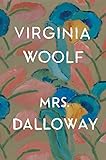
Mrs Dalloway — Virginia Woolf (1925)
Woolf’s most celebrated novel — one day in post-war London, filtered through the consciousnesses of Clarissa Dalloway, preparing for a party she is giving that evening, and Septimus Warren Smith, a shell-shocked veteran of the First World War whom she never meets. Woolf moves between these two figures with extraordinary fluency — a word, a sound, a smell transports the narrative from one character to another, from present to memory, from street to drawing room.
The novel’s formal achievement is to make the movement of consciousness feel natural rather than imposed: the reader inhabits these minds rather than observing them. More accessible than Ulysses; no less serious in its formal ambition.
To the Lighthouse — Virginia Woolf (1927)
Woolf’s most autobiographical novel — centred on the Ramsay family at their summer house in Scotland, with particular attention to Mrs Ramsay and her relationship with the painter Lily Briscoe. The novel is divided into three parts: ‘The Window’ (an afternoon and evening), ‘Time Passes’ (a decade rendered in eight pages of devastating lyric prose), and ‘The Lighthouse’ (a morning ten years later). The stream of consciousness technique here is not interior monologue but free indirect discourse — narration that filters external event through the consciousness of whoever is perceiving it, shifting from character to character with barely perceptible transitions.
Woolf’s most technically accomplished novel; arguably the finest demonstration of free indirect discourse in English fiction.
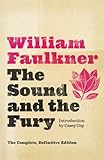
The Sound and the Fury — William Faulkner (1929)
Faulkner’s most formally ambitious novel — the decline of the Compson family in Mississippi told in four sections, each from a different perspective and in a radically different style. The first section, narrated by Benjy — intellectually disabled, unable to distinguish past from present — is the most disorienting stream of consciousness in American fiction: time shifts without warning, identifiable only by context. The second section (Quentin, preparing for his suicide at Harvard) is elegiac and associative. The third (Jason, bitter and mercenary) is almost satirically lucid. The fourth moves to a third-person perspective.
A novel that rewards and requires patient rereading; the experience of its first section is unlike anything else in the tradition.
As I Lay Dying — William Faulkner (1930)
Fifteen narrators — including a dead woman, a child, a hired hand, and the dead woman’s son who is secretly building her coffin — tell the story of the Bundren family’s journey across Mississippi to bury their matriarch, Addie Bundren, in her home county. The stream of consciousness here is radically subjective: each narrator perceives events differently, and the same events appear multiple times, each rendering irreconcilably at odds with the others.
Shorter and more immediately accessible than The Sound and the Fury, and in some ways its most extreme formal experiment: the multiplicity of voices makes clear that consciousness is always partial, always unreliable.
Molloy — Samuel Beckett (1951)
The first of Beckett’s Trilogy — and the point at which the stream of consciousness tradition arrives at its philosophical extreme. Molloy’s narration is not a stream so much as an uncertain attempt to narrate: he does not know where he is, does not know if his memories are accurate, cannot determine whether the journey he is describing is happening. The consciousness here is not merely subjective but fundamentally in doubt about its own existence.
Beckett takes the central modernist discovery — that consciousness is the only reliable ground of knowledge — and asks what happens when consciousness itself becomes unreliable.
The Waves — Virginia Woolf (1931)
Woolf’s most radical and most abstract novel — six voices, six friends across a lifetime, rendered entirely through interior monologue. There is no conventional narration: the novel is composed of speeches beginning ‘said Bernard,’ ‘said Susan,’ ‘said Rhoda,’ interspersed with italicized interludes describing the sea and the sun at different times of day. No external events are described; we know the characters only through the quality of their consciousness.
The most formally extreme of Woolf’s novels and the most purely poetic: less a novel than an extended prose poem about consciousness and time.
A Portrait of the Artist as a Young Man — James Joyce (1916)
Joyce’s first novel and his most autobiographical — following Stephen Dedalus from infancy through university, tracking his developing consciousness with the precision that would be fully realized in Ulysses. The novel begins in the simplest possible prose (the consciousness of a very small child) and grows in complexity as Stephen grows, ending in the complex interiority and flights of aesthetic theory of a young man about to leave Ireland.
The essential preparation for Ulysses, and a complete and moving novel in its own right.
Reading Stream of Consciousness Fiction
The key to stream of consciousness fiction is relinquishing the expectation of external event as the primary source of meaning: these novels are about the movement of consciousness through time, and the events that occur are significant insofar as they are perceived, remembered, or anticipated by the minds at the centre of the narrative. Begin with Mrs Dalloway or To the Lighthouse for the most elegant and the most accessible demonstrations; approach Ulysses with patience and a companion text; read Faulkner for the most formally disorienting American version of the technique; encounter Beckett’s Trilogy when you want to understand where the tradition leads.
Frequently Asked Questions
What is stream of consciousness in fiction?
Stream of consciousness is a narrative technique that attempts to render the continuous flow of a character's thoughts, perceptions, memories, and feelings as they occur — without the organizing frameworks (scene-setting, summarizing narration, dialogue tags) of conventional fiction. The term was coined by the psychologist William James in 1890 to describe the mind's continuous, associative flow; writers including Virginia Woolf, James Joyce, William Faulkner, and Samuel Beckett developed literary techniques to capture this flow on the page. Interior monologue (presenting thoughts directly), free indirect discourse (filtering narration through a character's consciousness), and the abolition of conventional punctuation are among the techniques used.
What are the best stream of consciousness novels?
The best stream of consciousness novels include: Ulysses by James Joyce (one day in Dublin on 16 June 1904, rendered with unprecedented interior depth); Mrs Dalloway by Virginia Woolf (one day in post-war London, filtered through the consciousness of Clarissa Dalloway and Septimus Warren Smith); The Sound and the Fury by William Faulkner (the Compson family's decline told through four radically different consciousnesses); As I Lay Dying by Faulkner (fifteen different narrators, including a dead woman and her child); and the Beckett Trilogy (Molloy, Malone Dies, The Unnamable) — which takes the technique to its philosophical extreme.
Is stream of consciousness fiction difficult to read?
Stream of consciousness fiction varies considerably in difficulty. Virginia Woolf (Mrs Dalloway, To the Lighthouse) is demanding but consistently accessible — her sentences are long but grammatically conventional, and her narrative always orients the reader in time and space. William Faulkner (especially the Benjy section of The Sound and the Fury, narrated by a man with intellectual disabilities) is more challenging: the disruption of chronology and the radical subjectivity of the voice require patience and rereading. James Joyce's Ulysses increases in difficulty across its eighteen episodes, with the final Molly Bloom soliloquy (unpunctuated, forty pages, no paragraphs) being the most formally extreme. Beckett's Trilogy is the most philosophically radical but not necessarily the hardest prose.
Why do writers use stream of consciousness?
Stream of consciousness allows writers to do things conventional narration cannot: to render the simultaneous complexity of consciousness (a thought and a memory and a sensory perception and an anxiety all occurring at once), to show how experience is structured by subjectivity rather than external event, and to give the reader a sense of inhabiting another mind rather than observing it from outside. It also allows writers to reveal character indirectly — what a character notices, what they remember, what they fear, without the author having to explain it. The technique was central to modernism's project of representing the true texture of human experience as opposed to the simplified version that conventional narrative provides.