Best Epistolary Novels: Books Told in Letters, Diaries, and Documents
The best epistolary novels — from Dracula to The Color Purple to Frankenstein. Books told entirely through letters, diary entries, and found documents.
The epistolary novel — fiction told through letters, diary entries, legal documents, newspaper clippings, chat logs, or other documents supposedly produced by the characters themselves — is one of the oldest and most flexible modes in literature. It began as the dominant serious form in the eighteenth century (Samuel Richardson’s enormous Pamela and Clarissa set the standard), was central to Gothic horror in the nineteenth century, and has never gone away: the form’s ability to create intimacy, to establish multiple perspectives without an omniscient narrator, and to suggest authenticity makes it perpetually useful. What follows are the greatest epistolary novels, from the canonical to the contemporary.
Dracula — Bram Stoker (1897)
The greatest horror novel in English, and a masterpiece of the epistolary form: assembled from Jonathan Harker’s Transylvanian journal, Mina Murray’s diary, Dr. Seward’s phonograph recordings, Lucy Westenra’s letters, and telegrams, newspaper clippings, and ship’s logs, it gives the reader all the evidence simultaneously while letting the characters piece the horror together gradually, and too slowly. The form is not a device but the novel’s method: the rationalist, document-collecting Victorian characters are destroyed by something that cannot be documented, measured, or contained by their scientific categories.
One of the most atmospheric novels in any language; its epistolary structure is inseparable from its effect.
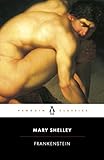
Frankenstein — Mary Shelley (1818)
Shelley frames her central narrative — Frankenstein’s creation of the creature and its terrible consequences — within multiple layers of letters: the Arctic explorer Robert Walton writes to his sister about his strange encounter with a man named Frankenstein; Frankenstein tells Walton his story; the creature tells Frankenstein his story. The nested structure is itself part of the novel’s argument: each narrator believes his own account, and the reader must hold all three in tension, unable to assign sympathy cleanly to any one of them. The most formally sophisticated of the early Gothic novels.
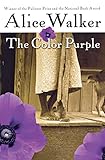
The Color Purple — Alice Walker (1982)
Walker’s Pulitzer Prize-winning epistolary novel is told almost entirely through the letters of Celie, a poor Black woman in rural Georgia in the 1930s, who writes first to God (because she has no one else to tell) and later to her sister Nettie in Africa. The letters trace Celie’s movement from silence and submission toward selfhood and voice — and Walker makes the epistolary form the novel’s central argument: to write a letter is to assert that your experience matters, that someone exists who is worth addressing. The novel is a masterpiece.
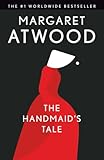
The Handmaid’s Tale — Margaret Atwood (1985)
Atwood frames Offred’s account of life in the theocratic Republic of Gilead as a found document: the ‘Historical Notes’ at the novel’s end reveal that her testimony has been transcribed from audio cassettes found after the fall of Gilead. This framing device — minimal but precise — transforms the novel: Offred is writing for a future reader in a world she hopes will no longer exist, and the frame confirms that she was right. It is one of the most effective uses of the found-document structure in fiction, simultaneously giving Offred’s account the urgency of the present tense and the pathos of a historical document.
Flowers for Algernon — Daniel Keyes (1966)
One of the most formally ingenious uses of the diary form: Charlie Gordon, a thirty-two-year-old man with an intellectual disability, is the subject of an experimental surgical procedure designed to increase intelligence, and the novel is told through his ‘progress reports’ — written before, during, and after the operation. The reports’ spelling and grammar change as Charlie’s intelligence rises and then falls, and the formal technique is the emotional engine of the novel: we read Charlie becoming aware of what he never knew he was missing, and then losing it. The saddest novel on this list, and the most precisely constructed.
The Screwtape Letters — C.S. Lewis (1942)
Lewis’s most formally inventive work — a series of letters from Screwtape, a senior devil, to his nephew Wormwood, a junior devil tasked with corrupting a young English man who has recently become a Christian. The epistolary form allows Lewis to conduct sustained moral and spiritual argument through Screwtape’s advice, which is always technically right (about how to undermine virtue, faith, and love) and always morally inverted. The wit is consistent and the spiritual insight is genuine; the form makes abstract theological argument into comedy.
We Need to Talk About Kevin — Lionel Shriver (2003)
Shriver’s most formally sophisticated and most disturbing novel: Eva Khatchadourian writes letters to her absent ex-husband Franklin about their son Kevin, who has committed a school massacre. The letters are Eva’s attempt to reconstruct how Kevin became what he became — and her own role in it — and the epistolary form is essential to the novel’s effect: Eva is an unreliable narrator whose account reveals far more about her relationship with Kevin than she consciously intends, and the gaps in her self-knowledge are the novel’s real subject. One of the most unsettling novels in recent fiction.
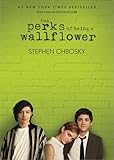
The Perks of Being a Wallflower — Stephen Chbosky (1999)
Chbosky’s novel follows Charlie, a fifteen-year-old beginning high school, through letters written to an anonymous adult ‘friend’ he has never met. The letters record Charlie’s first real friendships, his first love, his encounters with literature and music, and the trauma from his past that he gradually becomes able to face. The epistolary form gives Chbosky access to Charlie’s voice directly — without the mediation of a more conventional narrative — and allows the reader the experience of being confided in. One of the most enduring coming-of-age novels of its generation.
Reading Epistolary Novels
The epistolary form creates a particular kind of intimacy — the sense of reading something not meant for you, of being trusted with a private voice — that traditional narration cannot duplicate. Its deepest effect is to make the reader aware of perspective: these characters can only tell us what they know, see, and choose to disclose, and the gaps between what they tell us and what the reader can infer are often where the most important meaning lives. Begin with Dracula or The Color Purple — both are immediately gripping; both use their form with complete mastery.
Frequently Asked Questions
What is an epistolary novel?
An epistolary novel is a novel written in the form of documents — letters, diary entries, emails, newspaper clippings, or other documents supposedly written by the characters themselves. The word comes from the Greek 'epistolē' (letter). The form was the dominant mode of serious fiction in the eighteenth century (Samuel Richardson's Pamela and Clarissa are the canonical examples) and has been used continuously since, with particular effectiveness in horror (Dracula, Frankenstein) and in novels that need an intimate first-person voice without the conventions of traditional narration.
What are the best epistolary novels?
The essential epistolary novels are: Dracula (1897), which uses letters, diaries, and newspaper clippings to build one of the most atmospheric horror narratives ever written; Frankenstein (1818), which embeds its central narrative within multiple layers of letters; The Color Purple (1982), narrated through letters Celie writes to God and her sister Nettie; and Flowers for Algernon (1966), told through the progress reports of Charlie Gordon, a man with an intellectual disability who undergoes experimental surgery to increase his intelligence. We Need to Talk About Kevin uses letters from a mother to her absent husband to reconstruct events leading to a school shooting.
Why is Dracula written as letters and diary entries?
Bram Stoker used the epistolary form for Dracula to give the horror novel scientific credibility and to create dramatic irony: the characters documenting events as they happen do not understand what they are dealing with, while the reader, who can see all the documents together, can see the pattern they cannot. The form also allows multiple perspectives (Jonathan Harker's journal from Transylvania, Mina Murray's diary in England, Dr. Seward's phonograph recordings) that together gradually reveal the nature of the threat. The format also implies authenticity — these are 'real documents,' not a fiction.
Are there modern epistolary novels?
Yes — the epistolary form has adapted well to contemporary settings. We Need to Talk About Kevin (2003) uses letters from a mother to her ex-husband to reconstruct events leading to a school shooting. The Perks of Being a Wallflower (1999) is narrated through letters from a teenager to an anonymous 'friend.' Where the Crawdads Sing (2018) uses a combination of journal entries and third-person narration. Many thrillers and psychological suspense novels use documents, chat logs, emails, or social media posts as structural elements — a natural extension of the epistolary tradition.