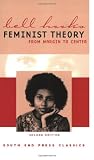
bell hooks was an American author, professor, and cultural critic whose writing on love, race, gender, and community challenged readers to think more honestly about human connection.
bell hooks — who wrote her name in lowercase as a deliberate choice to keep attention on ideas rather than personality — was one of the most distinctive intellectual voices in American public life for four decades. She wrote across an extraordinary range: feminism, race, education, spirituality, and love, always from a position that combined scholarly rigor with personal accessibility and a willingness to challenge her own community as readily as those outside it.
All About Love, published in 1999, is probably her most widely read and beloved book among general audiences. It is a meditation on what love actually requires — as opposed to what popular culture tells us it is — drawing on M. Scott Peck, Erich Fromm, and her own experience to argue that love is a practice and a commitment rather than a feeling, and that a society that confuses the two will struggle to build genuine connection, whether between individuals or in communities. The book addresses romantic love, familial love, spiritual love, and community love with equal seriousness.
hooks writes with an unusual quality of directness — she says what she means and expects readers to meet her there. All About Love is not a book that flatters; it asks the reader to examine their own avoidance of real intimacy with a clarity that can be uncomfortable. Some readers find her prescriptions idealistic or her spiritual dimension not to their taste. But as a diagnosis of why modern people struggle with love despite wanting it so badly, the book is clear-eyed and genuinely illuminating.
A Pioneering Voice of Cultural Criticism
bell hooks was one of the most influential and beloved intellectuals and writers of her generation, a pioneering feminist theorist, cultural critic, and educator whose accessible, passionate work transformed how many people think about race, gender, class, and love. Writing under a name she deliberately styled in lowercase to focus attention on her ideas rather than herself, hooks produced a vast and influential body of work that brought feminist and critical theory to a wide audience. Her commitment to accessibility, her intersectional analysis, and her deep concern with love and community made her a singular and cherished figure in American intellectual life.
Intersectional Analysis
A central contribution of hooks’s work is her pioneering analysis of the interconnections among race, gender, and class. She insisted that these systems of oppression could not be understood in isolation, and she critiqued forms of feminism that ignored the experiences of Black women and the poor. Her influential book Ain’t I a Woman: Black Women and Feminism examined the impact of racism and sexism on Black women and challenged the feminist movement to address race and class. This intersectional approach, central to her thought, profoundly shaped feminist theory and remains essential to contemporary discussions of oppression and justice.
Accessible Theory
A defining feature of hooks’s work is her commitment to accessibility. She believed deeply that ideas and theory should be available to everyone, not confined to academia, and she wrote in a clear, direct, engaging style intended to reach a broad audience. She critiqued the inaccessible jargon of much academic writing and sought to make critical and feminist theory understandable and useful to ordinary people. This dedication to accessibility, to bringing transformative ideas to the widest possible audience, was central to her mission as a writer and educator and a key reason for her enormous influence and beloved status.
Writing About Love
In her later work, hooks turned influentially to the subject of love, exploring it as a force for personal and social transformation. Her bestselling book All About Love: New Visions examined love in its many dimensions, critiquing a culture she saw as lacking genuine understanding of love and offering a vision of love as an ethical practice essential to justice, healing, and community. This focus on love, connecting the personal and the political, reached an especially wide audience and has been deeply meaningful to many readers. Her writing on love represents a distinctive and cherished dimension of her broader project of liberation and human flourishing.
Education and Liberation
hooks was a passionate and influential thinker about education, which she saw as a practice of freedom and a means of liberation. Drawing on her own experience as a teacher and on critical pedagogy, her book Teaching to Transgress explored education as a transformative, liberatory practice that could empower students and challenge oppression. Her vision of engaged, critical, and compassionate teaching has been deeply influential among educators. This concern with education as a path to freedom reflects her broader conviction that ideas and learning are essential tools in the struggle for justice and human dignity.
A Vast and Varied Body of Work
Over her career, hooks produced an enormous and varied body of work spanning feminist theory, cultural criticism, education, memoir, poetry, and children’s books. She wrote on subjects ranging from media and popular culture to masculinity, art, spirituality, and self-recovery, always bringing her distinctive blend of critical insight, accessibility, and passion. This breadth reflects the range of her concerns and her commitment to engaging with all dimensions of culture and human experience. Across this vast output, her central commitments to justice, love, accessibility, and liberation remained constant, giving her work a powerful coherence.
Why bell hooks Still Matters
bell hooks’s influence on feminism, cultural criticism, and education is profound and enduring, and her accessible, passionate work has empowered and inspired countless readers. For newcomers, All About Love offers an accessible and beloved entry point, with Feminism Is for Everybody providing a clear introduction to her feminist thought and Ain’t I a Woman her foundational analysis. For readers seeking accessible, passionate, and transformative writing on race, gender, class, love, and liberation, bell hooks remains one of the most influential and cherished intellectuals of her time.
Reading Guides