Where to Start with bell hooks: A Reading Guide
Where to start with bell hooks — whether to begin with All About Love, The Will to Change, or Ain't I a Woman. A complete reading guide to the feminist theorist.
By Aisha Patel

bell hooks (1952–2021) was the American author, feminist theorist, and cultural critic whose work — across more than thirty books of theory, memoir, and cultural criticism — addressed the intersecting oppressions of race, gender, and class with unusual accessibility and moral force. Born Gloria Jean Watkins in Hopkinsville, Kentucky, hooks published her first major work Ain’t I a Woman: Black Women and Feminism in 1981, before Kimberlé Crenshaw had formalised the concept of intersectionality; she spent four decades developing the most comprehensive body of feminist cultural criticism in American letters. Her later books — particularly All About Love (1999) and The Will to Change (2004) — reached a vast popular audience; her academic works remain foundational in feminist theory, cultural studies, and critical race theory.
Where to Start: All About Love (1999)
The essential hooks for most new readers — and the book through which a new generation discovered her work. All About Love argues that the contemporary crisis in relationships (romantic, familial, political, communal) stems from a fundamental confusion about what love is. Love is not a feeling, hooks argues, drawing on Erich Fromm’s The Art of Loving and M. Scott Peck’s The Road Less Travelled: it is a practice, an action, a commitment to the well-being of another that includes honesty, care, responsibility, respect, and the willingness to name and challenge the harmful as well as celebrate the good.
The book moves through romantic love, family, community, and the possibility of a culture of love, showing how each domain has been distorted by the conflation of love with romance, possession, and comfort rather than growth and truth-telling. hooks writes with unusual personal directness — she is candid about her own failures in love and the ways she has had to unlearn the patterns of her childhood — and with a gentleness that her more academic work sometimes lacks.
All About Love became a foundational text for readers who found the academic feminist literature inaccessible; it reaches the same political analysis through personal and spiritual questions rather than theoretical argument.
Ain’t I a Woman (1981)
hooks’s foundational feminist theory text — an analysis of the intersecting oppressions facing Black women that anticipated the intersectional analysis formalised by Crenshaw a decade later. The title (from Sojourner Truth’s 1851 speech) sets the argument: mainstream feminism has historically centred the experiences of white women, making Black women invisible. Ain’t I a Woman documents this exclusion historically and theoretically and argues for a feminist politics that takes race and class seriously rather than treating them as complications of ‘the women’s issue’. Demanding but essential.
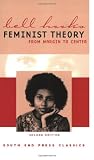
Feminist Theory: From Margin to Center (1984)
hooks’s most explicitly theoretical book — a critique of mainstream feminism and a proposal for what an intersectional feminist theory would look like if it placed marginalised women at its centre rather than its edges. Her most academic work; best read after Ain’t I a Woman.
Teaching to Transgress (1994)
hooks’s collection of essays on education as the practice of freedom — drawing on Paulo Freire, her own experience in academic institutions, and the specific challenges of teaching race and gender across difference. Essential for educators and students; the most practically focused of her academic books.
Why All About Love Is an Ideal First Book
For a reader new to bell hooks, All About Love is an ideal first book because it is among her most beloved and accessible works and a fine expression of her distinctive gifts, the clear and passionate prose, the searching insight, and the engagement of profound questions with both intellectual rigor and warmth. All About Love examines what love really is and why our culture so often fails at it, offering a thoughtful, hopeful vision of love as a practice and a force for personal and social transformation. As an entry point it is ideal, for it is one of her best-known books and a perfect example of her accessible, insightful, and humane writing. It welcomes the newcomer with its profound subject, its clear prose, and its hopeful vision, drawing the reader into her distinctive thought. It is among her major works and a fine representation of her gifts, so the new reader encounters hooks at her most accessible. For the newcomer, then, All About Love is an excellent starting point.
What to Expect as a New Reader
As a new reader, you can expect All About Love to be a clear, passionate, and insightful meditation on love. You can expect a searching central question, what love really is and why our culture so often fails at it. You can expect clear, accessible prose, for hooks writes with directness, warmth, and clarity. You can expect intellectual rigor joined to feeling, for hooks brings both sharp insight and genuine emotion to her subject. You can expect a vision of love as a practice and a force for personal and social transformation, not merely a feeling. You can expect engagement with culture, family, relationships, and self. You can expect a thoughtful, hopeful, and humane vision. You can expect a book that has resonated deeply with many readers. Expect, in short, a clear, passionate, and insightful meditation on love, a fine introduction to hooks’s gifts.
Going Deeper After Your First Book
Once All About Love has introduced you to hooks’s gifts, the reader who wishes to go deeper can explore her wider body of work, which ranges across love, feminism, race, education, and culture, all marked by her clear prose, her searching insight, and her commitment to liberation and justice. Her other books on love continue the themes of All About Love, while her influential writing on feminism makes the movement accessible and inclusive, and her work on race, class, education, and culture offers searching, transformative insight. Reading these after All About Love deepens your appreciation of hooks’s distinctive gifts, the clear and passionate prose, the searching insight, and the engagement of profound questions with rigor and warmth. Her characteristic concerns run through her work. Building your reading journey through hooks is a matter of following her thought from All About Love into her writing on feminism, race, and culture. The reader who begins here and continues will encounter one of the most influential and accessible thinkers on love, feminism, and justice.
Reading bell hooks
Begin with All About Love — it is the most accessible and most personally engaging of her books, and the best introduction to her voice and moral sensibility. Read Ain’t I a Woman for her foundational feminist analysis; Feminist Theory: From Margin to Center for the full theoretical argument; Teaching to Transgress for her educational philosophy. The order matters somewhat — starting with the theory before the personal writing can make the latter feel like a departure, when it is actually the same thinking applied to the most intimate domains.
Frequently Asked Questions
Where should I start with bell hooks?
All About Love: New Visions (1999) is the most widely recommended starting point — hooks's meditation on love as a practice, drawing on Erich Fromm, M. Scott Peck, and her own experience to argue that love is not a feeling but an action: a commitment to the well-being of another that requires honesty, care, responsibility, respect, and the willingness to challenge as well as comfort. The book became one of hooks's most widely read, particularly among younger readers who found it transformative in understanding their relationships. Ain't I a Woman is the essential starting point for her feminist theory.
What is Ain't I a Woman about?
Ain't I a Woman: Black Women and Feminism (1981) is hooks's first major book — an analysis of the intersecting oppressions of race and gender, arguing that mainstream feminism has historically been dominated by white middle-class women who excluded the experiences of Black women, and that Black nationalism has similarly excluded women's perspectives. The book introduced what would later be formalised as intersectional analysis (before Kimberlé Crenshaw coined the term) and remains a foundational text in feminist theory and critical race studies.
What is Feminist Theory: From Margin to Center about?
Feminist Theory: From Margin to Center (1984) is hooks's most explicitly theoretical book — a critique of mainstream feminism and a proposal for an intersectional feminist politics that addresses race, class, and gender simultaneously. She argues that putting the experiences of those at the margins (Black women, working-class women, women of colour) at the centre of feminist theory produces a more accurate and more useful analysis than centering the experiences of privileged women. Her most academic work and her foundational theoretical text.
Why does bell hooks not capitalise her name?
Bell hooks (born Gloria Jean Watkins, 1952–2021) chose to write under a pseudonym derived from her great-grandmother's name, deliberately not capitalised, to signal that the ideas in her work were more important than the author's identity. She wanted the work to speak for itself, without the authority attached to a conventional capitalised name. The lowercase name is consistent across all her published work and should be maintained in all references to her.