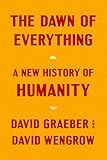
David Graeber and David Wengrow were an anthropologist and archaeologist duo whose The Dawn of Everything radically challenges standard narratives about human prehistory and social evolution.
David Graeber was an American anthropologist at the London School of Economics and one of the most prominent anarchist intellectuals of his generation — best known for his earlier work on debt and bureaucracy — before his sudden death in 2020. David Wengrow is a professor of comparative archaeology at University College London. The Dawn of Everything, their joint project published posthumously for Graeber in 2021, is the product of a decade of collaboration and represents one of the most ambitious attempts in recent years to rethink the deep history of human societies.
The book’s central argument is a sustained attack on what the authors call the “standard narrative” of social evolution — the idea that humans lived in small egalitarian hunter-gatherer bands, then invented agriculture, then inevitably developed hierarchy, cities, and states. Drawing on recent archaeological evidence, they argue that prehistoric societies were far more diverse, experimental, and consciously political than this story allows. Ancient cities appear to have sometimes been governed without kings; seasonal transitions between political forms were common; the emergence of hierarchy was not inevitable. The Dawn of Everything is genuinely revisionary scholarship, and its engagement with the actual archaeological record is serious.
The book is also long, discursive, and at times polemic — it is as interested in dismantling Jean-Jacques Rousseau and Thomas Hobbes as in presenting new evidence. Some archaeologists and anthropologists have pushed back on specific claims and on the authors’ reading of the evidence. But as an invitation to think differently about human possibility and the contingency of social arrangements, The Dawn of Everything is a remarkable and intellectually vital work.
Reading Guides