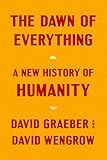
Editors Reads Verdict
The Dawn of Everything is one of the most intellectually stimulating and genuinely disorienting history books in years — a sustained attack on the conventional story of human social evolution that draws on recent archaeology to argue that our ancestors were far more politically imaginative than we have given them credit for.
What We Loved
- The archaeological evidence for political experimentation in ancient societies is genuinely revelatory
- The book dismantles just-so stories about social evolution with rigorous empirical evidence
- Graeber and Wengrow's collaborative voice is engaging and intellectually playful
- The Kandiaronk and Indigenous critique of European civilization chapters are extraordinary
Minor Drawbacks
- At 704 pages, the argument is sometimes made at greater length than the evidence requires
- The book is better at demolishing conventional narratives than at constructing alternatives
- Some specialists dispute specific archaeological interpretations
Key Takeaways
- → The conventional story of human social evolution (bands to tribes to states) is largely a nineteenth-century myth
- → Ancient humans experimented with an enormous variety of social and political arrangements — far more than we have assumed
- → Agriculture did not lead inevitably to hierarchy and the state — many agricultural societies were egalitarian
- → The concept of 'the origin of inequality' is the wrong question — inequality has always been contested and contingent
- → Indigenous critics of European civilization made sophisticated political arguments that influenced Enlightenment thought — not the other way around
| Author | David Graeber and David Wengrow |
|---|---|
| Publisher | Farrar, Straus and Giroux |
| Pages | 704 |
| Published | November 9, 2021 |
| Language | English |
| Genre | History, Anthropology, Non-Fiction |
| Difficulty | Advanced |
| Best For | History and anthropology readers; those interested in human origins, social evolution, and the political possibilities available to humans; readers of Sapiens who want a counterargument. |
How The Dawn of Everything Compares
The Dawn of Everything at a glance against 3 similar books readers weigh alongside it.
| Book | Author | Rating | Best for |
|---|---|---|---|
| The Dawn of Everything (this book) | David Graeber and David Wengrow | ★ 4.1 | History and anthropology readers |
| Sapiens | Yuval Noah Harari | ★ 4.6 | Curious readers of all backgrounds who want to understand how Homo sapiens came |
| The Silk Roads | Peter Frankopan | ★ 4.4 | World history readers who want a genuinely non-Eurocentric perspective |
| Why Nations Fail | Daron Acemoglu and James Robinson | ★ 4.4 | Economics and political science readers |
The Story We Tell Ourselves
Human history, as it is usually told, proceeds in stages: bands of hunter-gatherers, then farming villages, then chiefdoms, then states. Each stage is more complex than the last; hierarchy and inequality emerge inevitably from this progression; and the modern nation-state is the endpoint of a developmental sequence that was, in retrospect, inevitable. This is the story David Graeber and David Wengrow spent 704 pages demolishing.
The Dawn of Everything is a collaboration between an anarchist anthropologist (Graeber, who died in 2020 shortly before the book’s publication) and an archaeologist (Wengrow) who argue that the conventional narrative is wrong in its premises, wrong in its evidence, and wrong in its political implications. Human beings, they demonstrate, have always been politically imaginative, capable of choosing from an enormous range of social arrangements, and frequently did exactly that.
The Archaeological Evidence
The book’s empirical core draws on recent archaeology that has overturned previous assumptions about early human societies. Catalhöyük, a large Neolithic settlement in Anatolia, shows evidence of thousands of people living together with no apparent hierarchy over centuries. The mound-building cultures of North America operated sophisticated political systems that deliberately avoided centralized power. Cities in the ancient world — Teotihuacan, Mohenjo-daro — show evidence of deliberate egalitarianism maintained over long periods.
These are not exotic exceptions; they are, Graeber and Wengrow argue, the evidence of a basic truth: human beings have always chosen their political arrangements, rather than having them imposed by evolutionary necessity.
Kandiaronk and the Enlightenment
One of the book’s most striking chapters concerns Kandiaronk, a Wendat statesman and diplomat who engaged with French colonizers in the early eighteenth century and whose sophisticated critiques of European political and social arrangements influenced Enlightenment thought more profoundly than is usually acknowledged. The “myth of the noble savage” was not European invention but a systematic misrepresentation of Indigenous political philosophy.
What Human Freedom Means
The book’s political argument — drawn from its historical argument — is that the fact of human political creativity means that different arrangements are possible. If our ancestors regularly chose egalitarianism, hierarchy, and everything in between, then the present order is a choice, not a necessity. This is what the demolition of the conventional narrative is for.
The Three Freedoms
The most original conceptual contribution of The Dawn of Everything is its attempt to define what political freedom actually consisted of for most of human history, and the authors propose three concrete freedoms that they argue were once widespread and have since been lost: the freedom to move away, the freedom to disobey commands, and the freedom to reimagine and reshape social relations from scratch. The first depended on a world in which a person dissatisfied with their community could leave and be received elsewhere, making domination difficult because subjects could simply walk away. The second describes societies in which authority was situational and could be refused without catastrophe. The third — the most ambitious — describes the capacity of a people to consciously rebuild their entire social order, sometimes seasonally. Graeber and Wengrow argue that the slow disappearance of these three freedoms, rather than the invention of agriculture or cities as such, is the real story of how humanity became “stuck” in rigid hierarchies. It is a framework that reframes the question of inequality as a question about lost options rather than inevitable progress.
Seasonal States and Political Flexibility
Among the book’s most striking empirical claims is that many early societies were not fixed in a single political mode at all but oscillated deliberately between forms — egalitarian in one season, hierarchical in another. Drawing on ethnographic and archaeological evidence, the authors describe peoples who concentrated authority in a chief or police society during the communal buffalo hunt or the ceremonial season, then dissolved that authority entirely when the group dispersed, refusing to let temporary command harden into permanent rule. This seasonal alternation matters enormously to their argument, because it demonstrates that early humans understood hierarchy as a tool to be picked up and put down rather than a destiny to be endured. The capacity to live under a king for part of the year and as equals for the rest reveals a political self-awareness that the conventional evolutionary story denies our ancestors entirely. Inequality, on this evidence, was not a trap people fell into through ignorance but a condition some societies consciously experimented with, contained, and walked back.
The Critics and the Counterarguments
Intellectual honesty requires acknowledging that The Dawn of Everything has drawn serious scholarly criticism, and a fair assessment cannot present its sweeping claims as settled fact. Specialists in archaeology and anthropology have charged the authors with selective use of evidence — foregrounding cases that support their thesis while underplaying the considerable body of data suggesting that, once established, large agrarian states did tend strongly toward entrenched hierarchy. Others argue that the book sets up an exaggerated version of the conventional narrative in order to demolish it, and that few serious scholars actually hold the crude stage-theory of progress the authors attack so vigorously. There are also questions about how representative the chosen examples are, and whether the freedoms the authors celebrate were as durable as they imply. None of this voids the book’s value, but it does mean readers should approach it as a provocative, agenda-setting argument rather than a neutral synthesis — a brilliant case for the prosecution that invites, and has received, vigorous rebuttal.
An Invitation to Reimagine
Whatever one concludes about its contested particulars, the lasting power of The Dawn of Everything lies in what it does to the reader’s sense of possibility. The conventional story of social evolution carries an implicit politics of resignation: if hierarchy and inequality are the price of civilization, the inevitable outcome of growing scale and complexity, then there is little point dreaming of alternatives. Graeber and Wengrow’s purpose, pursued across seven hundred pages of evidence, is to dissolve that resignation by showing that human beings have always been the authors of their social worlds, capable of choosing radically different arrangements and frequently doing so. The book is long, digressive, and sometimes maddening in its refusal to resolve into a tidy thesis, and its scholarly disputes are real. But as a work of intellectual liberation — a sustained effort to restore to the human past its genuine strangeness, variety, and freedom — it is exhilarating, and it leaves the attentive reader permanently less willing to accept that the way things are is the only way they could be.
Our rating: 4.1/5 — One of the most intellectually stimulating history books of recent years — a sustained, empirically grounded demolition of the conventional story of social evolution that opens genuinely new imaginative space.
Frequently Asked Questions
What is "The Dawn of Everything" about?
An anarchist anthropologist and an archaeologist argue that conventional narratives of social evolution — from bands to tribes to states — are wrong, and that human history shows far more political experimentation and freedom than we have assumed.
Who should read "The Dawn of Everything"?
History and anthropology readers; those interested in human origins, social evolution, and the political possibilities available to humans; readers of Sapiens who want a counterargument.
What are the key takeaways from "The Dawn of Everything"?
The conventional story of human social evolution (bands to tribes to states) is largely a nineteenth-century myth Ancient humans experimented with an enormous variety of social and political arrangements — far more than we have assumed Agriculture did not lead inevitably to hierarchy and the state — many agricultural societies were egalitarian The concept of 'the origin of inequality' is the wrong question — inequality has always been contested and contingent Indigenous critics of European civilization made sophisticated political arguments that influenced Enlightenment thought — not the other way around
Is "The Dawn of Everything" worth reading?
The Dawn of Everything is one of the most intellectually stimulating and genuinely disorienting history books in years — a sustained attack on the conventional story of human social evolution that draws on recent archaeology to argue that our ancestors were far more politically imaginative than we have given them credit for.
Ready to Read The Dawn of Everything?
Check the current price on Amazon.
Check Price on Amazon (paid link)Prices and availability are subject to change. See Amazon for current price.
Review last updated: