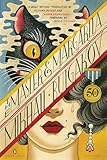
Mikhail Bulgakov was a Soviet-era Russian novelist and playwright whose satirical masterpiece The Master and Margarita was suppressed during his lifetime and published only decades after his death.
Mikhail Bulgakov worked as a physician before turning to writing, and spent much of his career in Soviet Russia under conditions of censorship and official hostility. His plays were banned, his manuscripts seized, and he wrote several letters to Stalin pleading to be allowed to emigrate or work freely. The Master and Margarita, his most ambitious novel, was written between the 1930s and his death in 1940 but was not published until 1966 — and then only in a censored form. A full text did not appear until the 1970s.
The novel weaves together two storylines: the Devil’s chaotic visit to Stalin-era Moscow, where he exposes hypocrisy and corruption with sardonic glee, and a parallel narrative set in ancient Jerusalem depicting Pontius Pilate’s encounter with Yeshua Ha-Nozri. A third thread follows a novelist — the Master — and his passionate relationship with Margarita. The book is wildly inventive, darkly comic, and deeply serious beneath its absurdist surface. Its portrait of Soviet bureaucracy and intellectual cowardice remains devastatingly precise.
Bulgakov’s prose dances between registers — farcical set pieces, lyrical love scenes, and philosophical dialogue — with remarkable control. The novel is not an easy read in every translation, and some of its satirical targets require historical context to land fully. But The Master and Margarita is one of the great novels of the twentieth century: a defiant, joyful, morally serious work produced under conditions that would have silenced lesser artists.
Deeper Cuts
Devoted readers should not overlook Black Snow.
Reading Guides