Belarusian journalist and Nobel laureate who created a new literary form—the polyphonic documentary novel—from thousands of interviews with survivors of Soviet and post-Soviet catastrophe.
Svetlana Alexievich was born in 1948 in western Ukraine, grew up in Belarus, and spent decades doing something that fell between journalism, oral history, and literature: she interviewed hundreds, sometimes thousands, of ordinary people about the catastrophes that had defined Soviet life, then assembled their testimonies into books that read with the emotional force of the best novels. The Swedish Academy, awarding her the 2015 Nobel Prize in Literature, called her a creator of “a new kind of literary genre” — a polyphonic form in which individual voices accumulate into something larger than any single story could achieve.
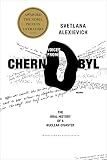
Her major works map the hidden costs of Soviet history. The Unwomanly Face of War, completed in 1985 but suppressed and then censored before publication, gathered the testimonies of Soviet women who had fought in World War II — a subject official memory preferred to sentimentalize rather than examine honestly. Zinky Boys documented the voices of soldiers and mothers from the Afghan War that Moscow had tried to keep invisible. Voices from Chernobyl assembled survivors of the 1986 nuclear disaster — liquidators, evacuees, the wives of dying men — in accounts that made the catastrophe comprehensible in human rather than political terms. Secondhand Time, her final major work, traced the collapse of the Soviet Union through the voices of those who had believed in it, capturing what it felt like to lose not just a government but an entire framework of meaning.
After supporting the mass protests against Alexander Lukashenko’s fraudulent 2020 election, Alexievich — long a target of state harassment in Belarus — went into exile in Europe. She had spent her career recording what happens when ordinary people are caught inside history’s worst moments. In 2020, she was living one of those moments herself. Her books have been translated into more than sixty languages; they are primary sources for anyone trying to understand what the Soviet century actually felt like from inside.
A Chronicler of Voices
Svetlana Alexievich is a Belarusian writer and journalist who won the Nobel Prize in Literature for a body of work unlike any other, a series of documentary books built from the voices of ordinary people who lived through the great catastrophes of the Soviet and post-Soviet era. Rejecting conventional narrative, Alexievich constructs her books from hundreds of interviews, weaving together personal testimonies into powerful collective portraits of historical trauma. Her Nobel Prize honored what the committee called her “polyphonic writings, a monument to suffering and courage in our time,” and she has created a distinctive new form of literary witness.
Alexievich’s great innovation is her documentary, polyphonic method, which assembles the testimonies of many individuals into a single work that captures the collective experience of an event or era. Drawing on extensive interviews conducted over years, she shapes the raw voices of ordinary people, their memories, feelings, and reflections, into carefully composed books that achieve the emotional power of literature while retaining the authenticity of direct testimony. This blending of journalism and art, of individual voice and collective portrait, constitutes a genuinely original literary form, and it has expanded the very definition of what literature can be.
Bearing Witness to Catastrophe
Alexievich’s books bear witness to the major catastrophes and upheavals of the Soviet and post-Soviet experience, from the Second World War to the war in Afghanistan, the Chernobyl disaster, and the collapse of the Soviet Union. Through the voices of those who lived through these events, she captures the human reality of history, the suffering, courage, confusion, and resilience of ordinary people caught up in vast and terrible events. This commitment to recording and preserving the testimony of the forgotten and the silenced gives her work its profound moral seriousness and its lasting historical importance.
Voices from Chernobyl
Among Alexievich’s most powerful works is her book on the Chernobyl nuclear disaster, which assembles the testimonies of survivors, liquidators, and those who lost their homes and loved ones to the catastrophe. The result is a devastating portrait of one of the great disasters of the modern age, conveyed not through statistics or analysis but through the intimate human voices of those who endured it. The book exemplifies her method and its power, transforming a historical event into an overwhelming human reality and demonstrating her unique ability to give voice to collective trauma.
The Unwomanly Face of War
In The Unwomanly Face of War, Alexievich gathered the testimonies of Soviet women who fought in the Second World War, recovering a perspective that official histories had ignored. By presenting the war as experienced by women, she revealed dimensions of the conflict, its intimate horrors, its emotional truths, that conventional accounts had silenced or erased. This recovery of marginalized and overlooked voices, particularly those of women, is characteristic of her work and its purpose, and the book stands as a powerful example of her commitment to telling history from below, through the experiences of those usually left out.
Memory and Truth
Underlying all of Alexievich’s work is a deep concern with memory, truth, and the moral importance of bearing witness. She seeks to preserve the human reality of historical experience against forgetting and official distortion, insisting on the value of individual testimony and the dignity of ordinary lives. Her work has at times brought her into conflict with authorities, and she has faced pressure for her independent stance. This dedication to truth and remembrance, pursued with courage and compassion, gives her writing its ethical weight and confirms her role as one of the great moral witnesses of contemporary literature.
Where to Begin with Svetlana Alexievich
Svetlana Alexievich’s Nobel Prize recognized the originality and importance of her documentary art, and her work has expanded the boundaries of literature while bearing essential witness to the catastrophes of her era. For newcomers, Voices from Chernobyl offers a powerful and accessible introduction to her method and its impact, with The Unwomanly Face of War and Secondhand Time providing further entry into her polyphonic portraits. For readers seeking literature of profound moral seriousness, historical importance, and overwhelming human power, Svetlana Alexievich is rightly counted among the most original and essential writers of our time.
Reading Guides