Where to Start with Svetlana Alexievich: A Reading Guide
Where to start with Svetlana Alexievich — whether to begin with Voices from Chernobyl, Secondhand Time, or The Unwomanly Face of War. A complete reading guide.
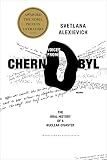
Svetlana Alexievich (born 1948) is the Belarusian author who received the Nobel Prize in Literature in 2015 — the first time the prize had been awarded to a writer working primarily in documentary prose rather than fiction or poetry. Over four decades, she developed a distinctive form she calls the ‘chorus of individual voices’ or ‘documentary novel’: oral histories assembled from hundreds of interviews, edited and arranged to create works that have the emotional density of literature and the authority of direct testimony. Her subjects are the major catastrophes and upheavals of Soviet and post-Soviet life — the Second World War, the Soviet-Afghan War, Chernobyl, the collapse of the USSR — rendered through the voices of the people who lived through them.
Where to Start: Voices from Chernobyl (1997)
The essential Alexievich — the book the Nobel Committee cited specifically as exemplary of her art. In 1986, reactor number four at the Chernobyl nuclear power station exploded, releasing radioactive contamination across Ukraine, Belarus, and much of Europe. Alexievich spent years interviewing survivors, widows, liquidators (the workers sent to contain the disaster), and scientists. Their testimonies — each one a monologue, each in its own voice — constitute the book.
The effect is unlike anything else in contemporary literature. The liquidators describe working in lethal radiation without understanding what was happening to them. The wives describe visiting their husbands in Moscow hospitals where the men were dying of acute radiation syndrome and being told not to touch them. The firefighters describe a fire that did not look like fire. Each voice is specific; the accumulation is overwhelming.
Secondhand Time (2013)
Alexievich’s most comprehensive and most ambitious book — an oral history of the end of the Soviet Union and the twenty years that followed. Assembled from hundreds of interviews conducted between 1991 and 2012, it contains the testimonies of former Communist Party members who genuinely believed in the project and cannot understand what happened; Gulag survivors; people who made fortunes in the chaos of the 1990s; people who lost everything; and people who simply miss the certainties of Soviet life. The ‘secondhand time’ is the experience of living in a history that feels borrowed — a time that doesn’t fit.
The book is Alexievich’s fullest account of the human experience of Soviet communism and its collapse, and the most important for readers who want to understand Russia and the post-Soviet world.
The Unwomanly Face of War (1985)
Alexievich’s first major book — oral histories of Soviet women who served in the Second World War, fighting as snipers, pilots, tank drivers, surgeons, and partisans. More than eight hundred thousand Soviet women served in the war; their stories had been systematically suppressed or distorted by official Soviet history, which presented the war as a male story of heroism. Alexievich interviewed hundreds of surviving women and assembled their testimonies into a book that restores their experience to the historical record.
The testimonies are harrowing and extraordinary: women who killed men in combat; women who returned home to find they were regarded as morally suspect for having served alongside men; women who cannot talk about the war without weeping, fifty years later. Her earliest major work and the one that established her method.
Zinky Boys (1990)
Alexievich’s account of the Soviet-Afghan War (1979–1989) — the war that brought Soviet soldiers home in zinc coffins, hence the title. Assembled from interviews with veterans, mothers, wives, and officials, the book captures a war that the Soviet government tried to conceal from its own people: veterans who returned home without being allowed to say where they had been, mothers whose sons died in a war that was not officially acknowledged, and survivors struggling with experiences they could not describe.
The book was denounced by Soviet authorities and subjected to legal challenges; Alexievich was sued by some interviewees who claimed their testimony had been distorted. Its publication history is itself part of its subject: a documentation of a society’s attempt to suppress the truth of its own actions.
Why Voices from Chernobyl Is an Ideal First Book
For a reader new to Svetlana Alexievich, the Nobel Prize-winning writer, Voices from Chernobyl is an ideal first book because it is among her most acclaimed works and a powerful expression of her distinctive gifts, the documentary method, the polyphonic chorus of voices, and the profound, unflinching engagement with catastrophe and the human experience. Voices from Chernobyl gathers the testimonies of those affected by the nuclear disaster, weaving many voices into a devastating, intimate, and unforgettable portrait of the catastrophe and its human cost. As an entry point it is ideal, for it is among her most celebrated works and a perfect example of her unique documentary, voice-driven nonfiction. It welcomes the newcomer with its powerful testimonies, its chorus of voices, and its profound human depth, drawing the reader into her distinctive vision. It is among her major works and a fine representation of her gifts, so the new reader encounters Alexievich at her most characteristic. For the newcomer, then, Voices from Chernobyl is an excellent starting point, on harrowing subject matter.
What to Expect as a New Reader
As a new reader, you can expect Voices from Chernobyl to be a powerful, intimate, and devastating work of documentary nonfiction. You can expect a documentary method, for Alexievich builds her books from the testimonies of ordinary people. You can expect a chorus of voices, for she weaves together many individual testimonies into a polyphonic whole. You can expect a powerful subject, for the book gathers the voices of those affected by the Chernobyl nuclear disaster. You can expect profound human depth, for the testimonies render the grief, courage, and suffering of ordinary people with overwhelming intimacy. You can expect an unflinching engagement with catastrophe and its human cost. You can expect a devastating, unforgettable, and deeply moving read. You should be prepared for harrowing material. Expect, in short, a powerful, intimate, and devastating work of documentary nonfiction, a profound introduction to Alexievich’s gifts.
Going Deeper After Your First Book
Once Voices from Chernobyl has introduced you to Alexievich’s gifts, the reader who wishes to go deeper can explore her other books, which continue her documentary method, her chorus of voices, and her profound engagement with the great catastrophes and experiences of the Soviet and post-Soviet world. Her other acclaimed works gather the testimonies of those who lived through the Second World War, including the women who fought in it and the children who endured it, the war in Afghanistan, and the collapse of the Soviet Union, each weaving many voices into a powerful, intimate portrait. Reading these after Voices from Chernobyl deepens your appreciation of Alexievich’s distinctive gifts, the documentary method, the polyphonic chorus of voices, and the profound engagement with catastrophe and human experience. Her characteristic method runs through her work. Building your reading journey through Alexievich is a matter of following her documentary works from Voices from Chernobyl into her other books. The reader who begins here and continues will encounter a singular and powerful documentary writer, and a Nobel laureate.
Reading Svetlana Alexievich
Alexievich’s books are not comfortable reading — they are assemblies of grief, trauma, and the varieties of Soviet and post-Soviet suffering — but they are among the most important works of literature produced in the late twentieth century. Her achievement is to make the largest historical events legible at the individual human scale: not statistics but voices, not history but memory. Begin with Voices from Chernobyl for the most concentrated and the most immediately powerful; read Secondhand Time for the most comprehensive and the most essential for understanding the Soviet experience.
Frequently Asked Questions
Where should I start with Svetlana Alexievich?
Voices from Chernobyl (1997) is the most accessible and most immediate starting point — the oral history of the 1986 nuclear disaster at Chernobyl, assembled from hundreds of interviews with survivors, witnesses, liquidators, and the wives of those who died. The Nobel Committee cited it specifically when Alexievich was awarded the Nobel Prize in Literature in 2015. It is the book that established her method — the 'chorus of individual voices' that she assembles into something that has the density of a novel and the authority of testimony — and the one that most powerfully demonstrates why that method matters. Secondhand Time is the best alternative for readers who want Alexievich's most ambitious and most comprehensive work.
What is Voices from Chernobyl about?
Voices from Chernobyl (1997) is assembled from hundreds of interviews conducted in the years after the 1986 nuclear disaster at the Chernobyl power station in Soviet Ukraine. Alexievich spoke with survivors in the contaminated zone, with liquidators who were sent to clean up the disaster and whose bodies were destroyed by radiation, with scientists who tried to understand what had happened, and with the wives and mothers of those who died. The book is structured as a series of monologues: each person speaks in their own voice, with their own way of seeing what happened to them. The effect is overwhelming — a catastrophe rendered not in statistics but in individual human experience.
What is Secondhand Time about?
Secondhand Time: The Last of the Soviets (2013) is Alexievich's most comprehensive and most ambitious work — an oral history of the Soviet Union's collapse and its aftermath, assembled from hundreds of interviews conducted between 1991 and 2012 with people who lived through the end of the Soviet era. The 'secondhand time' of the title refers to the experience of living in a time that feels inherited from elsewhere, that doesn't fit. The book contains testimonies from former true believers in the Soviet project, from victims of the Gulag, from people who experienced the chaos of the 1990s, and from those nostalgic for the certainties of the Soviet world. Her most essential work for understanding Russia and the post-Soviet states.
Are Alexievich's books journalism or literature?
The Nobel Prize committee placed Alexievich in the literary tradition — she won the Nobel Prize in Literature, not the Peace Prize or a journalism award — while acknowledging that her work 'has been elevated to literature.' Her books are based on interviews, carefully conducted and then edited and arranged with the attention of a novelist to structure, rhythm, and meaning. She described her own genre as 'a novel of voices' or 'documentary prose.' Her books are not conventional journalism (they do not aim for balance or objectivity) but oral histories shaped by a literary sensibility — the selection of voices, the arrangement of testimonies, and the overall architecture all reflect authorial choices as deliberate as any novelist's.